
Table of Contents
Across the United States, clinics adopt digital records to meet rising care, privacy, and audit demands. Electronic medical record software development gives teams one reliable system that stays steady on busy days. Staff work faster, leaders gain clear oversight, and patients receive accurate updates without paperwork piles.
Modern builds lean on saas development services in USA to add capacity without heavy hardware costs. Cloud delivery supports multi-site growth, remote access for approved staff, and regular version upgrades. You keep focus on care while the vendor handles uptime targets, patches, and feature releases across your locations.
With EMR development in USA, clinics store charts, orders, billing data, and reports in one record. Doctors act on complete histories, while front-office teams schedule and verify coverage with fewer callbacks. This blog explains the cost, the essential features, and the process clinics follow to go live.
What Is Electronic Medical Record Software and Why Do Clinics Need It?
Quick answer: An EMR is a digital system that keeps patient data, orders, and billing together for faster decisions. It replaces paper files with searchable records that your team updates in seconds. You get clear charts, timely claims, and consistent reports for payers and internal reviews.
Electronic records reduce duplicate entry and lost forms from intake to checkout. Staff capture demographics once, then carry that data through visits, orders, and coding. Custom EMR software for clinics adapts templates, codes, and referral paths to the specialty and local payer mix.
Security matters on day one. HIPAA-compliant EMR software applies role-based access, detailed logs, and encryption for every sensitive field. You track who viewed or changed a record, and you keep backups ready for urgent recovery needs.
Why EMR Systems Are Vital for U.S. Clinics
EMR platforms link front desk, care teams, billing, and leadership dashboards in one place. That connection shortens visit times, cuts denials, and improves patient communication through portals and reminders.
Key Benefits of EMR Systems
- Centralized data and digital access
- Automated billing and scheduling
- Quick medical record retrieval
- Improved data security
- Better coordination between doctors and staff
- HIPAA-compliant EMR software protects patient privacy
What Are the Must-Have Features of an EMR System for Clinics?
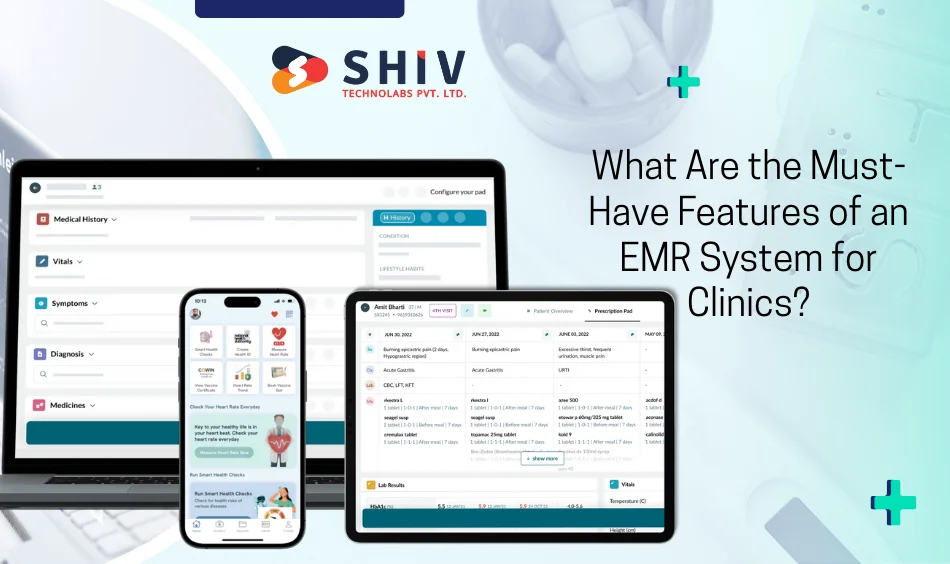
Clinics across the United States pick features that match daily tasks and strict legal needs. The right electronic medical record software features cut clicks, reduce rework, and keep billing accurate across teams. HIPAA-compliant EMR software adds guardrails that protect privacy and support fast audits during every visit.
Start with flexible templates and solid integrations, then grow into advanced modules as adoption spreads. This phased plan reduces training time, avoids overload, and helps leaders track wins in revenue and care. Below, you will find the features clinics ask for first, plus the extras that drive scale.
Core Functional Features
- Patient registration and demographics
- Appointment scheduling and reminders
- Charting and medical notes
- E-prescription and lab results tracking
- Billing and insurance claim automation
Front office teams confirm details once and stop retyping, while clinicians chart quickly with specialty-friendly templates. Billers submit cleaner claims and follow statuses without chasing missing codes across phone and email.
Security and Compliance Features
- HIPAA-compliant access control
- Data encryption and backup
- Role-based permissions
- Audit trails and consent logs
Access rules keep sensitive data away from unauthorized eyes, while encryption protects records at rest and in transit. Audit trails and consent logs give auditors clear timelines, so investigations move forward without delays.
Advanced Features
- AI analytics and report generation
- Telemedicine module integration
- Multi-device cloud access
- Data visualization dashboards
Analytics highlight bottlenecks, repeat no-shows, and high-value services across locations in near real time for managers and clinicians. Telemedicine lets patients join visits from home, with instant orders and notes captured into the chart.
Feature Summary
| Feature Type | Description | Clinic Benefit |
|---|---|---|
| Core | Patient data, billing, prescriptions | Faster workflow |
| Security | Encryption, audit trails | Protected data |
| Advanced | AI, telemedicine | Better efficiency |
How to apply this feature set in practice
Pick a vendor that can turn your intake forms and visit types into ready-to-use templates. Run a short pilot with the core set, then add analytics, dashboards, and telehealth after teams settle. This approach delivers quick impact while keeping training short and focused.
Buyer tip for clinics
Ask vendors to walk through a sample day from check-in to claim submission, using your real scenarios. Request a security demo that shows permissions, logging, and backup recovery working end-to-end. Confirm lab, pharmacy, and clearinghouse integrations for your region, and document service levels in writing.


How Much Does It Cost to Build Electronic Medical Record Software in the USA?
The cost to build electronic medical record software in the USA depends on scope, clinic size, and integrations. Prices shift with security work, data migration, and testing depth across modules. Most clinics phase delivery to reach value early and keep monthly cash flow steady.
Factors Affecting EMR Development Cost
Your estimate reflects scope choices more than anything, so align features with real users and payers first. Include HIPAA and data migration tasks in the estimate, since both influence effort and risk. Plan a single sign-on path early if your staff uses multiple systems during each visit.
- Size and number of modules (intake, charting, billing, portal)
- Design and user experience complexity across desktop, tablet, and mobile
- Integration with lab, pharmacy, and billing tools, including clearinghouse rules
- Cloud hosting type with storage, redundancy, and backup targets
- Compliance testing and maintenance for HIPAA, audit logs, and version updates
Cost Breakdown
The ranges below apply to typical clinic needs and standard integrations in the U.S. market. Actual numbers change with advanced analytics, custom reporting, and third-party agreements, especially for large networks. These ranges assume standard HL7 and FHIR connections without rare device protocols.
| Clinic Type | Estimated Cost (USD) | Duration |
|---|---|---|
| Small Clinic | $30,000 – $60,000 | 3–5 months |
| Multi-Clinic Chain | $70,000 – $120,000 | 6–9 months |
| Hospital Network | $150,000+ | 9–12 months |
Use these bands to frame budgets with leadership and set clear delivery targets.
How to Control Development Costs
Pick a narrow first release that covers intake, charting, and billing, then grow in planned sprints. This approach reduces risk, speeds staff training, and keeps leadership aligned on timelines and cash flow.
- Build MVP first with intake, charting, and basic claims
- Use reusable components and design kits across web and mobile screens
- Partner with experts offering custom software development solutions and clear milestones
What Are the Stages of Electronic Medical Record Software Development?
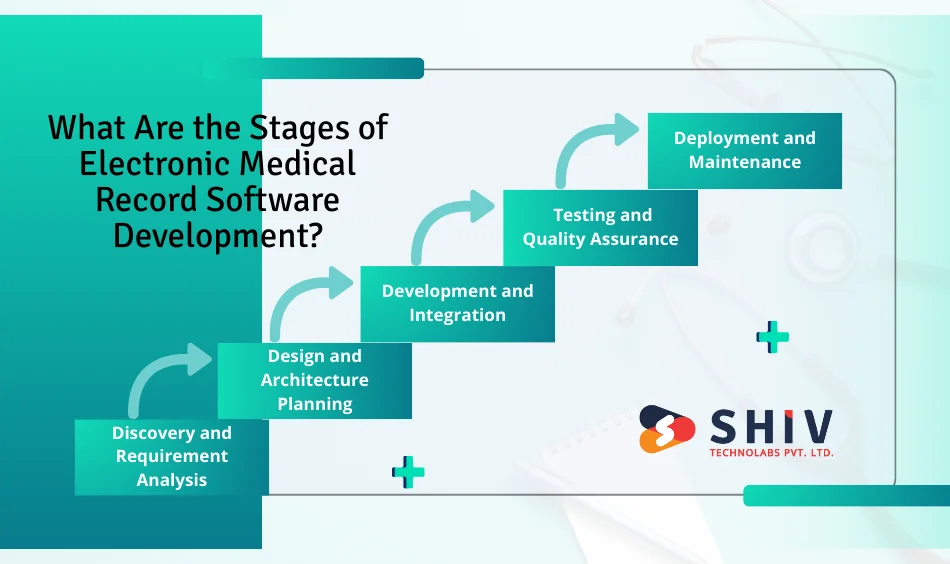
Electronic medical record software development follows clear steps that reduce risk and speed clinic adoption. These electronic medical record development stages guide teams from goals to go-live with traceable checks.
Work with a partner who documents scope, test plans, and training early in the timeline. Many clinics hire EMR software developers in the USA to match local rules, payer needs, and audit expectations.
Stage 1 – Discovery and Requirement Analysis
Teams gather clinic goals, user roles, and reporting needs through interviews and workflow mapping. They define data models, coding sets, integrations, and HIPAA controls, then lock scope, milestones, and acceptance criteria.
Stage 2 – Design and Architecture Planning
Designers create UI flows for intake, charting, orders, billing, and portal tasks with short, clear paths. Architects plan a cloud-ready structure for SaaS scalability, high availability, backups, and region-aware access rules. See our web app development services for platform planning.
Stage 3 – Development and Integration
Engineers build modules, APIs, and data services that follow standards such as HL7 and FHIR, where required. They code privacy controls, consent handling, and audit logs; many clinics hire EMR software developers in the USA for these healthcare specifics.
Stage 4 – Testing and Quality Assurance
Testers run unit, integration, and performance checks across desktop, tablet, and mobile sessions. Security reviews cover HIPAA validation, role tests, encryption, logging, and recovery drills, plus data migration trials with sample charts.
Stage 5 – Deployment and Maintenance
Teams run a pilot, train staff, and roll out in waves with a back-out plan and help desk hours. Ongoing work includes patches, upgrades, and uptime checks, keeping these electronic medical record development stages active after launch.
What to deliver at each gate
Each stage ends with artifacts that confirm progress and prepare the next step. Expect user stories, wireframes, API specs, test scripts, training guides, and runbooks for daily operations.
How clinics keep momentum during rollout
Leaders set short feedback cycles, watch adoption metrics, and adjust templates with real visit data. Weekly reviews remove blockers, track claim accuracy, and keep the schedule on course across sites.
Why U.S. Clinics Prefer SaaS-Based EMR Development Models
Modern clinics want fast rollouts, clear costs, and steady growth paths. With saas development services, teams add users, storage, and modules without buying servers. Vendors handle patches and uptime targets, while clinics focus on care and revenue across sites.
EMR development in the USA benefits from cloud builds that support pilots, staged releases, and safe backups. Clinics can start small in one location and expand features as staff gain skills. This approach shortens timelines, contains risk, and supports training with simple web access.
Advantages of SaaS EMR
- Cost-effective monthly billing
- Scalability for any clinic size
- Remote accessibility for approved staff
- Centralized updates without local installs
Business Benefits
SaaS keeps technology current across locations and devices, which protects revenue during busy seasons. New sites go live with web training, templates, and SSO, so teams become productive quickly. Central control reduces outages and keeps data consistent, while finance teams track spending with clear, predictable bills.
Most vendors sign HIPAA business associate agreements and publish security attestations for leadership review. Teams also gain disaster recovery targets, routine backups, and region-aware hosting choices for data residency needs. That mix delivers speed today and a simple growth path for tomorrow.
How to Choose the Right Partner for EMR Software Development in the USA
Pick a partner with healthcare depth, clear delivery steps, and strong support. You need a team that builds custom EMR software for clinics and documents the scope, tests, and training. Many leaders hire EMR software developers in the USA to match regional rules and payer needs.
Key Factors to Check
- Proven healthcare software experience
- HIPAA and HL7 knowledge
- Transparent cost estimates with milestones
- Long-term support and upgrades
Questions to Ask Before Hiring
- What is your record with HIPAA audits and security reviews?
- Can you provide post-launch support with response targets?
- Do you have SaaS architecture expertise for multi-site growth?
Ask for clinic references, sample runbooks, and a staffed help desk with named contacts. Confirm onshore and offshore roles, hours of coverage, and change control steps for live environments. Lock service levels and data handling terms inside a clear contract appendix.
Future Trends in Electronic Medical Record Software Development
Modern electronic medical record software development moves toward smarter, safer, and more connected care. Clinics will add custom software development solutions that plug into devices and patient apps without friction.
- AI for predictive patient analysis and risk flags
- Voice-assisted data entry for faster notes
- Blockchain for secure record exchange across networks
- Integration with wearables and home monitoring kits
- FHIR-first APIs for cleaner data sharing across systems
These trends help teams spot risks early, reduce typing time, and connect records beyond a single location. Leaders gain clearer insight while patients receive timely guidance through portals and mobile apps.
Conclusion
Modern electronic medical record software development helps clinics cut errors, increase speed, and protect privacy. A well-planned build connects intake, charting, orders, and billing, so teams move with confidence. Patients see clear visit summaries and steady communication through portals and reminders.
For specialty groups and multi-site clinics, custom EMR software for clinics delivers fit at the screen and workflow level. You can phase features, train in short cycles, and track gains from the first release. Strong reporting keeps leaders informed and ready for payer and audit reviews.
Partner with Shiv Technolabs, a trusted saas development agency in USA that understands U.S. rules and healthcare data standards. Request a pilot, a clear budget, and a realistic schedule, then expand across locations in measured phases.
Pick a timeframe that fits staffing, then keep momentum with short feedback loops. Your staff will spend more time on care while technology fades into the background.
FAQs
Q1. How long does electronic medical record software development take?
Most projects run four to eight months, based on scope, integrations, and security tasks. Pilots for a single site can go live faster, then expand in phases. Multi-site networks add time for training and data migration planning. Plan for two to three weeks of live support after launch.
Q2. What makes HIPAA-compliant EMR software necessary for U.S. clinics?
HIPAA rules protect patient privacy and set strict access and logging requirements. Following those rules reduces legal risk and supports payer and regulator reviews. It also builds patient trust through clear policies and audit-ready records.
Q3. How can clinics reduce the cost of building electronic medical record software in the USA?
Start with an MVP that covers intake, charting, and claims, then add extras. Reuse modules, confirm integrations early, and work with local teams who know U.S. standards. Keep a tight change log and review requests weekly with leadership.
Q4. What are the main electronic medical record development stages?
Plan goals and data, design the UI, build and integrate modules, test security, then launch. Train staff, gather feedback, and keep updates on a steady, published schedule. Track adoption, claim accuracy, and portal use during the first quarter.
Q5. Why choose SaaS for EMR development in the USA?
SaaS brings predictable monthly pricing, quick scale, and remote access for approved roles. Central updates cut downtime and keep every location on the same current version. Finance teams also gain clean forecasts for cash flow and growth planning. Leaders see fewer surprises during audits and busy seasonal peaks.