Table of Contents
Introduction
Two mid-market companies receive the same customer message: “Where is my order?”
The first company runs a chatbot. It reads the question and replies with a tracking link, then the work stops. The second company runs an AI agent. It checks the order, confirms a shipping delay, updates the ticket, and emails the customer a revised date.
The difference is not the message itself, but what happens after it arrives. Chatbot provides answers, while agentic AI takes action and completes the task. As businesses move beyond conversational AI toward workflow automation, AI agent development services are enabling organizations to build solutions that reason, plan, and execute across multiple systems.
That is why agentic AI vs traditional chatbots has become a real budget question in 2026, not a tech debate. Gartner reports that 40% of enterprise applications will include task-specific AI agents by the end of 2026, a jump from less than 5% a year earlier. Founders, CEOs, CTOs, and operations leaders now have to choose where to spend.
This guide compares both options on how they work, whether agentic AI is ready to ship, the cost across an app’s life, and how to choose based on your workflows and scale. You will learn what each technology does, where each one fits, and how to decide based on your workflows, budget, and goals for business automation.
What Is a Traditional Chatbot?
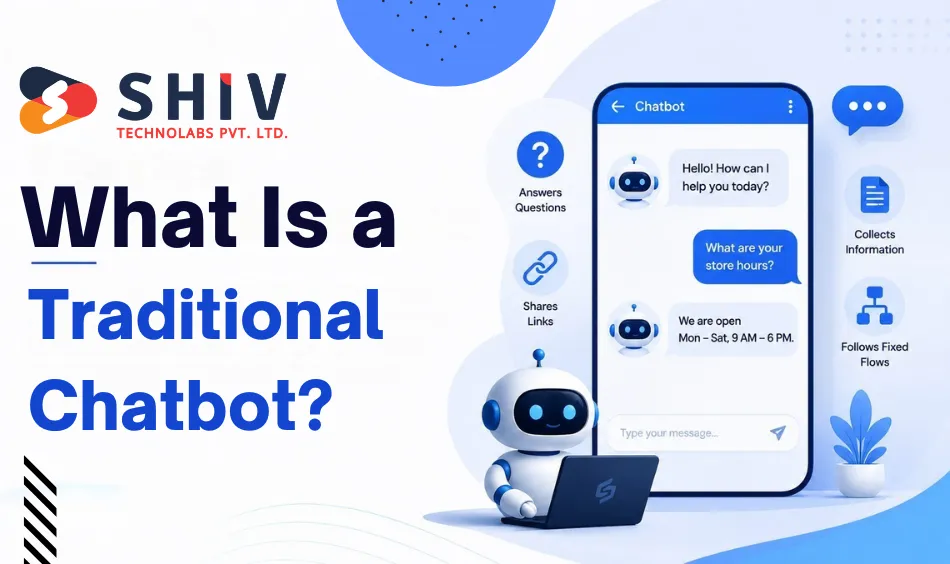
A traditional chatbot is software that answers questions, shares links, collects information, or guides users through fixed conversation flows. It follows rules or scripts that someone builds in advance. The chatbot responds, but it does not act on your systems.
Most chatbots fall into two groups. Understanding the split helps you set the right expectations.
- Rule-based chatbots follow decision trees. They match keywords and reply with preset answers.
- Conversational AI chatbots use natural language processing to read intent and respond more flexibly.
Both types work well inside clear boundaries. They handle FAQ automation, point people to the right page, and qualify a question before a human steps in. A customer support chatbot can answer billing questions, share return policies, and confirm store hours at any time of day.
Chatbots still deliver strong value in the right place. They suit FAQs, order status lookups, appointment booking, and website support where the answer already lives in your knowledge base. When the task needs a reply rather than an action, a well-built chatbot does the job at low cost.
What Is Agentic AI?
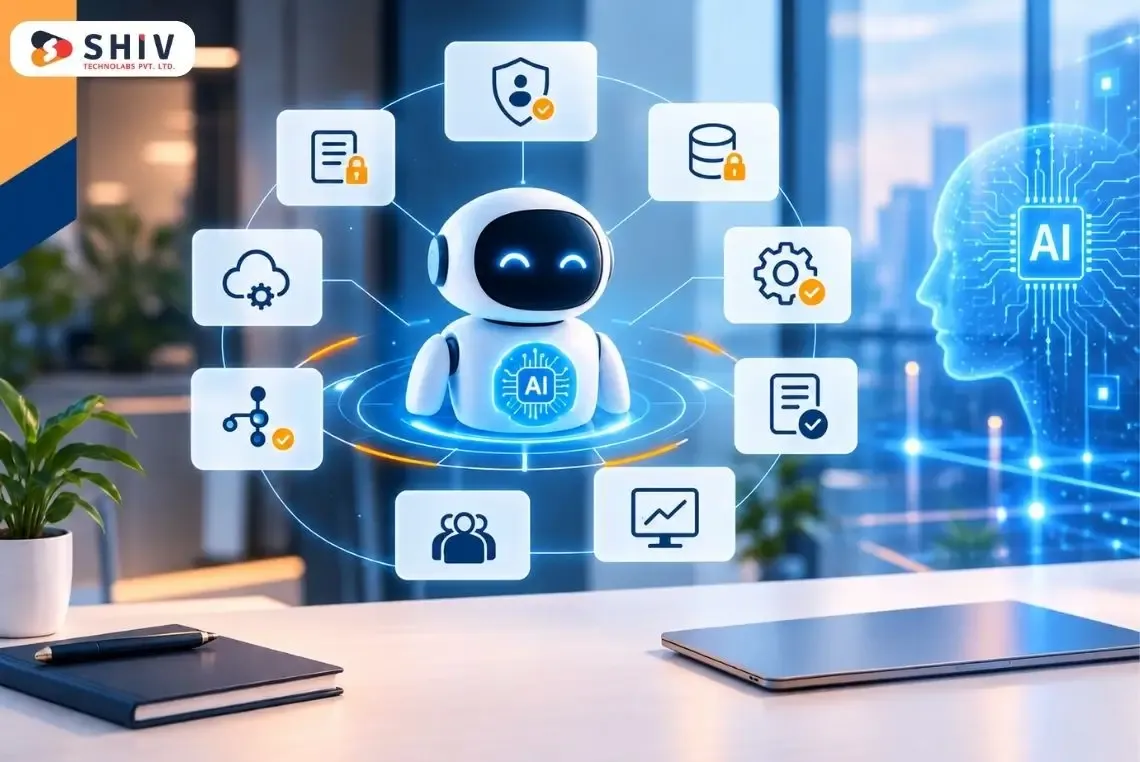
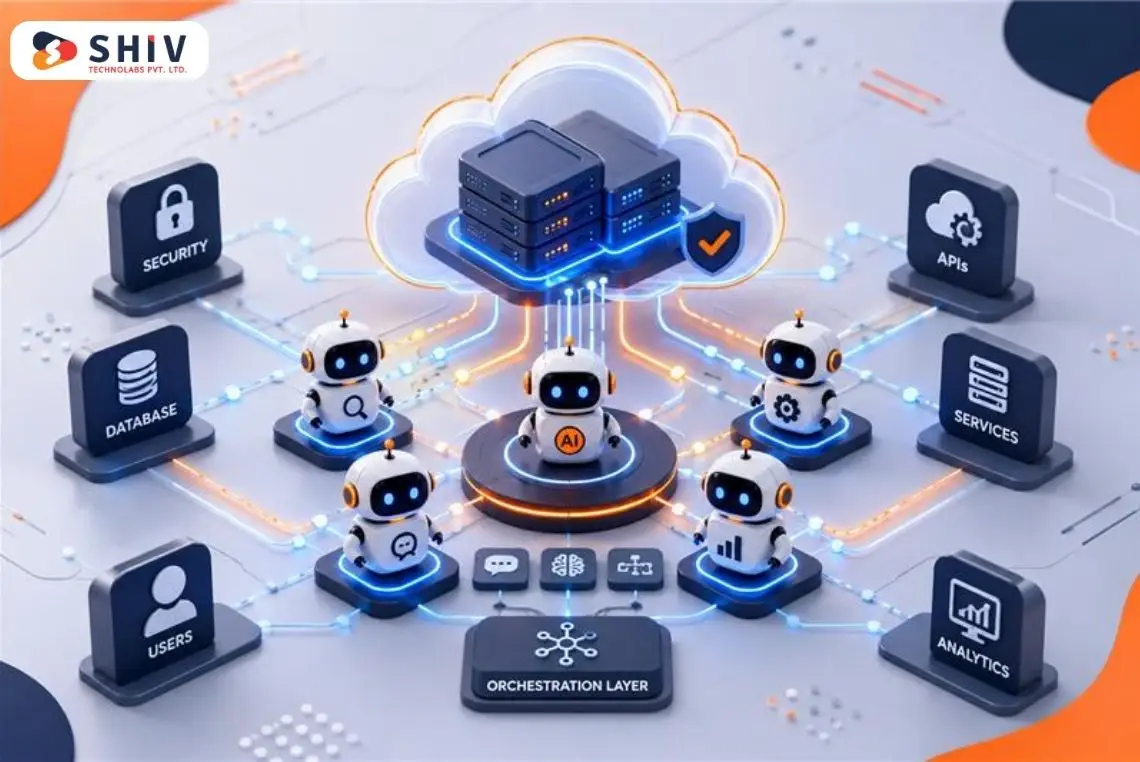
Agentic AI is an AI system that can plan, reason, use tools, access connected systems, and complete multi-step tasks with limited supervision. IBM describes it as a system made of AI agents that mimic human decision-making and coordinate their work through orchestration (IBM). The agent works toward a goal instead of answering one prompt.
Four capabilities separate an agent from a basic bot. Each one matters, so here they are in simple terms.
- Reasoning means the agent decides what to do next based on the situation, not a fixed script.
- Planning means it breaks a goal into ordered steps and adjusts when something changes.
- Memory means it remembers context across a task, such as the customer, the order, and the history.
- Tool use means it connects to your CRM, ERP, email, or APIs to take real actions.
Here is one example of an agent finishing a task. A customer asks to change a shipping address after placing an order. The agent verifies the order status, checks whether the warehouse has shipped it, updates the address in the system if it can, confirms the change by email, and logs the action for the support team. No human touches the workflow unless a rule requires approval. This is AI workflow automation in practice, and it sits at the core of modern AI agent development.
Traditional Chatbots vs Agentic AI: Which Should You Build in 2026?
The core difference is chatbots respond, while AI agents act. You can build a chatbot for simple, high-volume questions, build agentic AI for multi-step workflows across systems, and build both when you need each to handle its own job.
Everything else in this comparison flows from that line. Here is the AI chatbot vs AI agent decision at a glance. This distinction shapes cost, complexity, and value for diverse businesses
| Comparison Point | Traditional Chatbots | Agentic AI |
|---|---|---|
| Main Purpose | Answers common questions through fixed flows or trained responses. | Understands goals, plans steps, and completes tasks across business systems. |
| Best Fit For | FAQs, lead capture, order status, appointment booking, and basic support queries. | Sales automation, support resolution, workflow automation, data review, and internal task execution. |
| How It Works | Follows predefined rules, intents, scripts, or knowledge base responses. | Uses reasoning, tool access, memory, APIs, and workflow logic to act on user goals. |
| Task Complexity | Works best for simple and repetitive conversations. | Handles multi-step tasks that need context, decisions, and actions. |
| Integration Depth | Usually connects with simple tools like forms, CRM, or helpdesk. | Connects with CRM, ERP, email, calendars, databases, helpdesk, and internal apps. |
| User Experience | Good for quick answers, but can feel limited when queries become complex. | Feels more helpful because it can guide, act, update systems, and complete requests. |
| Development Cost | Lower cost because features and logic are simpler. | Higher cost because it needs planning, integrations, testing, and safety controls. |
| Development Time | Faster to build and launch. | Takes longer due to workflow mapping, API connections, and testing. |
| Maintenance Needs | Needs updates when FAQs, scripts, or business rules change. | Needs ongoing monitoring, workflow updates, model checks, and security reviews. |
| Best Example | A website chatbot that answers pricing, shipping, or booking questions. | An AI sales agent that qualifies leads, updates CRM, drafts follow-ups, and schedules calls. |
| When to Choose It | Choose this when your goal is to answer repeated questions quickly. | Choose this when your goal is to automate real business workflows. |
This is the comprehensive mapping, not a scoreboard. A chatbot that answers 5,000 simple questions a month can return more value than an agent solving the wrong problem. The right pick depends on the work, which the next sections break down by option.
How Does a Traditional Chatbot Work, and Where Does It Stop?
A traditional chatbot is the safe, low-cost pick for simple questions, and the wrong pick for anything that needs structured action. It answers, shares links, collects information, or guides users through fixed flows.
Most chatbots fall into two groups, and the split sets your expectations.
- Rule-based chatbots follow decision trees. They match keywords and reply with preset answers.
- Conversational AI chatbots use natural language processing to read intent and reply more flexibly.
The limitation is clear. A basic chatbot stops after giving an answer because it cannot use tools, remember information, or reason beyond the current interaction. According to IBM, traditional chatbots rely on continuous user input and cannot plan or take actions independently. They provide information, but they do not act.
Chatbots still earn their place inside clear boundaries. They suit FAQ automation, order status lookups, appointment booking, and website guidance where the answer already lives in your knowledge base. For lower-budget projects that need a fast win, a customer support chatbot does the job at a fair price. Treat it as a strong choice for simple work, not the default for a product you expect to scale.
How Does Agentic AI Work, and When Is It the Right Choice?
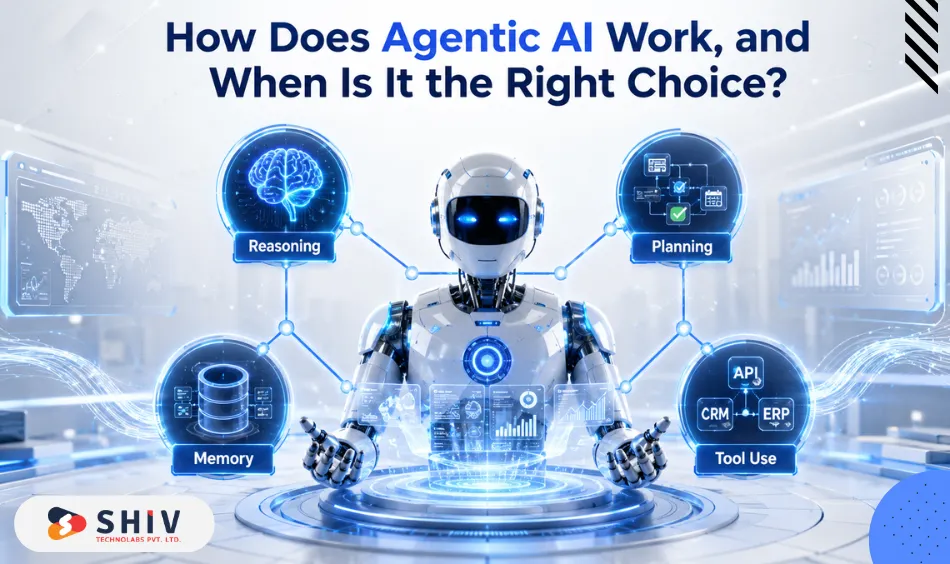
Agentic AI is best suited for workflows that involve multiple steps and interconnected systems, where generating a response alone is not enough. These AI systems can plan, reason, use external tools, and execute tasks with minimal human supervision.
Four capabilities separate an agent from a basic bot. Each one matters, so here they are in plain terms.
- Reasoning lets the agent decide the next step from the situation, not a fixed script.
- Planning lets it break a goal into ordered steps and adjust when something changes.
- Memory lets it hold context, such as the customer, the order, and the history.
- Tool use lets it connect to your CRM, ERP, email, or APIs to take real actions.
Consider how an AI agent handles a common customer service request. A customer asks to change their shipping address after placing an order. The agent verifies the order status, updates the address if the shipment has not been processed by the warehouse, sends a confirmation email to the customer, and records the action for audit purposes. Human involvement is required only when predefined rules call for approval.
This example demonstrates AI workflow automation in action and highlights the growing role of AI agents for business automation. Modern AI agent development is particularly valuable for organizations that repeatedly manage multi-step processes across interconnected systems and tools.


Agentic AI vs Traditional Chatbots: Comprehensive Comparison
As AI adoption grows, businesses are increasingly deciding between traditional chatbots and agentic AI systems. While both leverage artificial intelligence to improve efficiency and user experiences, they differ significantly in autonomy, decision-making capabilities, workflow complexity, and long-term business impact.
This comparison explores their key differences to help you determine which approach aligns best with your operational needs, budget, and growth objectives.
# How Does Each One Handle a Task?
A chatbot handles a task by answering, while an agent handles it by acting until the work is done. The chatbot reads a question and returns a reply from its scripts or knowledge base.
An agent reads the same request, plans the steps, and works across systems to complete it. Autonomous AI agents can update a record, send a follow-up, and route an approval in one flow. That shift from reply to action is the core of intelligent automation.
# Which One Connects to Your Systems?
AI agents connect to your systems, while most chatbots stay read-only. Agents use APIs to reach your CRM, ERP, and other tools, then take action inside them.
A chatbot usually pulls an answer or hands off to a human. With CRM integration and ERP integration, an agent updates records, triggers tasks, and moves work forward. Strong integration is what separates a true agent from a bot that only replies.
# Which Is Faster and Cheaper to Launch?
A chatbot launches faster and costs less upfront, while an agent takes longer and costs more to build. A chatbot needs content and a few flows, so teams ship it quickly.
An agent needs workflow mapping, integrations, and approval setup before launch. That work raises the upfront cost, which the right use case repays over time. For a quick, low-risk win, a chatbot wins on speed.
# Which One Needs More Oversight and Governance?
An AI agent needs more oversight, while a chatbot needs very little. An agent takes real actions, so it requires AI governance, AI security, and clear approval points.
A chatbot mostly shares information, so the risk stays low. Sensitive agent actions like refunds and payments need a human-in-the-loop by design. Treat an agent as a business system that touches your core tools, not a gadget.
# Which Delivers Better ROI Over Time?
A chatbot wins on day-one cost, while return on investment from agentic AI shows up in saved hours, faster resolutions, and better use of data. This is the point where the comparison shifts from features to financial impact.
Chatbots are generally more cost-effective because they handle limited tasks but their value often plateaus as business needs become more complex. AI agents require a higher initial investment, yet they deliver greater long-term returns by automating complex, multi-step workflows and saving significant operational time.
Chatbots are often the right fit for simple support use cases, while AI agents tend to deliver stronger ROI for repetitive, interconnected business processes. Our predictive AI development provides intelligent decision support that helps businesses achieve even greater returns from their AI investments.
# Which One Fits Your Team and Use Case?
A chatbot fits support and FAQ teams, while an agent fits operations-heavy teams that run work across tools. Match the tool to the job, not the trend.
A chatbot belongs on a website, a help center, or a lead form. An agent belongs in finance, sales operations, IT, and HR where steps cross systems. The wrong choice is rarely a bad tool. It is the right tool at the wrong stage of your business.
Where Do Traditional Chatbots Still Make Sense?
Chatbots remain the smart choice for many use cases. They cost less, deploy faster, and carry lower risk than full agents. For simple, high-volume questions, a chatbot often beats a complex system on value.
Several scenarios favor a chatbot over an agent. Match your need to the list before you scope a bigger build.
- FAQ chatbot use cases like store hours, shipping policy, and product specs
- Customer support chatbot tasks such as order status and basic troubleshooting
- Website guidance that routes visitors to the right page or form
- Lead capture that collects a name, email, and intent before handoff
- Lower-budget projects where a quick win matters more than deep automation
Choosing a chatbot in this scenario reflects a practical and strategic decision, not a compromise. Chatbot automation and conversational AI continue to deliver meaningful business value by solving common challenges efficiently and cost-effectively. The key is to align the solution with the specific use case, as the simplest approach is often the most effective.
For organizations evaluating broader AI opportunities, getting AI development services from experts can help identify the right balance between chatbots, AI agents, and custom solutions.
Where Does Agentic AI Create the Most Business Value?
Agentic AI creates the most value where work spans several steps and systems. The value shows up in completed tasks, not faster replies. Here are five areas where AI agents for customer service and operations deliver results.
These examples use real workflow patterns, not generic claims.
- Customer support: An agent checks order status, updates the ticket, and sends a follow-up, escalating only when a refund needs approval.
- Sales operations: An agent qualifies a lead, updates the CRM, and books a call so the rep walks into a ready meeting.
- Finance: An agent matches invoices to purchase orders, flags mismatches, and routes approvals to the right manager.
- HR: An agent supports onboarding by creating accounts, sending document requests, and answering routine questions.
- IT support: An agent diagnoses a recurring issue, applies a known fix, and opens a ticket when a specialist is needed.
The market data confirms the move. McKinsey research finds that companies experiment widely with AI agents, yet fewer than 25% have scaled them to production. That gap signals strong demand paired with a need for the right partner and process.
How Should You Decide Between a Chatbot and Agentic AI?
The decision comes down to the kind of work you need handled. Answer-only tasks point to a chatbot. Action-heavy tasks across systems point to an agent. Many companies need both.
Use the framework below to self-qualify before you scope a project.
Build a Chatbot If:
- You only need FAQ support and basic guidance.
- Your workflows are simple and live in one place.
- Your budget is limited and you want a fast win.
- You do not need the system to take actions.
Build Agentic AI If:
- You need automation across several tools.
- Your team repeats the same multi-step workflows daily.
- You need CRM or ERP actions, not just answers.
- You want smarter decision support from live data.
Build Both If:
- Chatbots can handle simple, high-volume queries.
- AI agents can manage the complex, multi-step tasks.
- You want one front door with deeper automation behind it.
| Factor | Ready-Made Tool | Custom AI Agent |
|---|---|---|
| Setup speed | Fast | Built to spec |
| Upfront cost | Lower | Higher |
| Fit to workflow | Generic | Tailored to your process |
| System integration | Limited connectors | Deep CRM and ERP integration |
| Data privacy control | Vendor-defined | You set the rules |
| Best for | Standard FAQs and support | Complex, connected workflows |
This framework helps you make the AI chatbot vs. AI agent decision based on your actual business needs. The right choice depends on the complexity of your workflows and available budget, and in some cases, a combination of both approaches delivers the best results.
Once you identify the right AI approach, the next decision is whether to build or buy. Ready-made AI tools can deliver quick results for standard requirements. While custom AI development delivers the greatest value when businesses require deep system integrations, robust data privacy controls, or support for complex workflows that off-the-shelf solutions cannot effectively address.
For those, an experienced AI agent development company builds enterprise AI automation around your business. For simple needs, a ready-made tool may be the better-value call.
What Should You Check Before You Build?
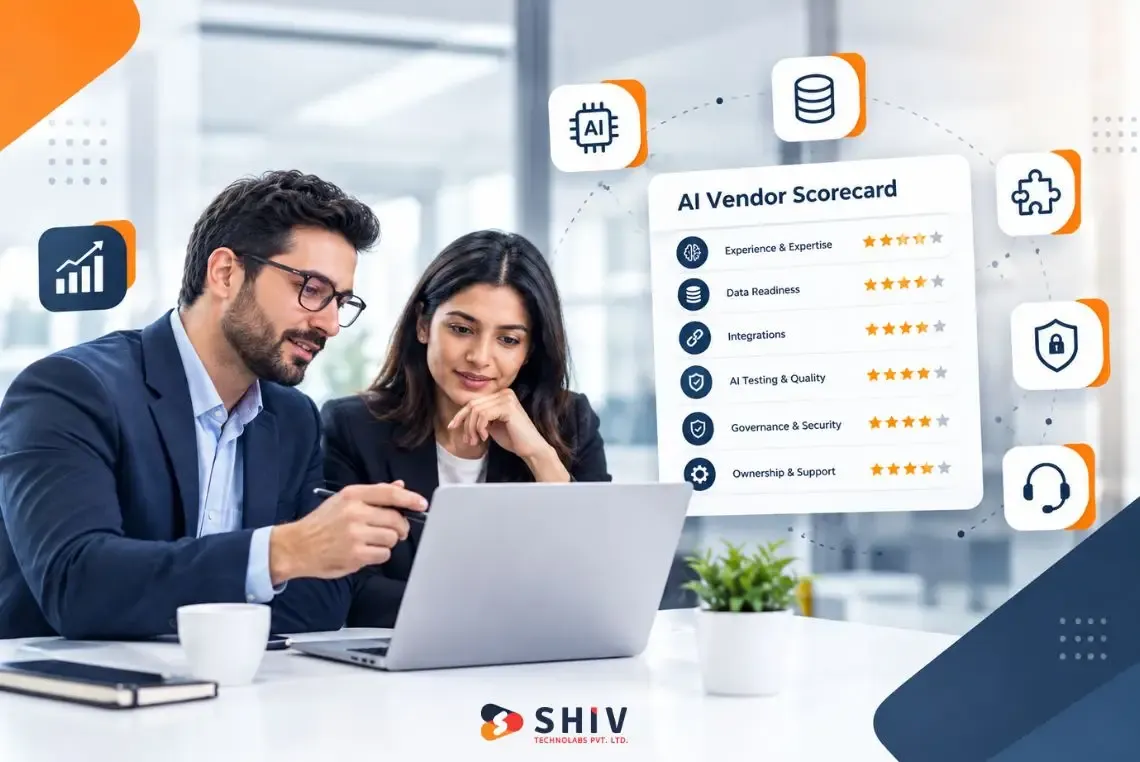
Before investing in agentic AI, run a quick readiness check. This helps you understand whether your business is ready for automation or needs some preparation first.
Ask these questions before you move ahead:
- Do we have repeatable workflows that are worth automating?
- Which systems need to connect with AI, such as CRM, ERP, email, or support tools?
- Is our data clean, updated, and easy to access?
- Who will approve AI actions, and where will humans stay involved?
- What security, privacy, or compliance rules apply to our data?
- What business result do we expect, and how will we measure success?
Clear answers show that your AI project has a strong starting point. Gaps usually point to work needed around data, process, or system integration.
A proper AI workflow assessment turns these questions into a practical roadmap. Good AI development services and AI consulting services should begin from this stage, not after the build starts.
How Shiv Technolabs Helps You Build the Right Solution
Shiv Technolabs helps mid-market companies move from idea to a working solution that delivers measurable results. We focus on outcomes you can see, such as less manual work, faster workflows, and better decisions.
Here is how we support each stage of the journey.
- Generative AI consulting guidance stresses data readiness before any build
- AI/ML development services add depth on the data side
- Custom AI agent development designed around your processes, not a template.
- Enterprise integrations with CRM, ERP, and APIs so agents act where work happens.
- Workflow automation that connects steps across departments to cut repetitive work.
- Testing and monitoring that validates agents on real cases and tracks results in production.
- Long-term support that refines agents as your business and data change.
But every business should have strong base. Our custom software development team builds the foundation when a project needs it. The result is a system that reduces manual work, sharpens decisions, and keeps operations running smoothly.
Conclusion: What Should You Build in 2026?
The agentic AI vs traditional chatbots decision is simpler than the debate suggests, as long as you choose by your workflows rather than by hype. Chatbots still answer simple questions well, at low cost and low risk. AI agents create more value when work spans multiple steps and systems through AI automation.
Evaluate both against one question: do you need answers, or do you need actions? Use the readiness check, map a real workflow, and start small with custom AI development.
The most expensive mistake is not picking the wrong tool. It is building for reasons that will not hold a year from now. Get a free AI workflow assessment to find where agentic AI can create measurable value for your business.
FAQs
What is agentic AI?
Agentic AI is an AI system that plans, reasons, uses tools, and completes multi-step tasks with limited supervision. It works toward a goal instead of answering one prompt. Agents connect to systems like CRM and ERP to take real actions, not just share replies.
How is agentic AI different from a chatbot?
A chatbot responds to questions, while an AI agent takes action across systems. Chatbots follow scripts or set flows and stop after an answer. Agents reason, plan, and complete workflows such as updating records or routing approvals with minimal human input.
Can AI agents replace chatbots?
AI agents do not replace chatbots in every case. Chatbots still suit simple, high-volume FAQ and support tasks at lower cost. Agents fit complex, multi-step workflows. Many companies run both, using chatbots for queries and agents for deeper automation.
Is agentic AI suitable for mid-market companies?
Agentic AI suits mid-market companies with repeatable workflows across multiple systems. It works best when data is clean and the goal is clear. Starting with one focused workflow keeps cost and risk low while it proves value before any wider rollout.
How much does agentic AI development cost?
Agentic AI cost depends on workflow complexity, integrations, and data readiness. A single focused agent costs far less than a multi-agent system across many tools. A discovery phase gives an accurate estimate based on your exact workflows, systems, and expected results.
Can AI agents connect with CRM and ERP systems?
Yes, AI agents connect with CRM, ERP, and other systems through APIs. This lets them update records, route approvals, and trigger actions inside your existing tools. Strong integration is what separates a true agent from a chatbot that only replies.
What industries benefit from AI agents?
Customer service and eCommerce lead AI agent adoption due to clear, measurable returns. Sales, finance, HR, IT, and supply chain teams also benefit from multi-step automation. Any business with repeatable workflows across connected systems can find a strong use case.
How long does it take to build an AI agent?
Timelines depend on scope, integrations, and data readiness. A single, well-defined agent can take a few weeks to deploy. Complex, multi-system agents take longer because they need deeper integration, testing, and approval setup before a stable production release.