Table of Contents
Omani manufacturers face daily hurdles across production, procurement, and finance that hurt margins and growth. Manual steps slow teams, force repeated entry, and create errors that spread across the plant. With custom erp software development in Oman, factories replace scattered tools with one connected system for decisions.
Leaders also struggle with poor data visibility and late reports across departments during busy production cycles. Stockouts interrupt production while excess stock blocks cash and hides quality issues in the warehouse. Delayed approvals and manual scheduling push jobs back, upsetting customers and inflating logistics costs across supply chains.
Custom ERP Software Solutions in Oman give manufacturers control over planning, shop-floor tracking, and financial accuracy. Teams view real-time data, cut repeated entry, and standardize tasks across plants and branches for better throughput. Built-in compliance for VAT and labor laws reduces risk during audits and tenders across Oman and the GCC.
In this guide, see the expected cost, project timeline, and business benefits for Omani manufacturers across multiple sectors. Review modules, features, and vendor selection tips to plan your next ERP step with confidence and clarity.

What Is a Custom ERP System and Why Does the Manufacturing Industry in Oman Need It?
A custom ERP system is business software shaped around your processes, data rules, and reporting goals. Unlike generic packages, it maps your shop-floor realities instead of forcing work to fit templates. Custom ERP System development starts with discovery workshops and ends with modules that match daily tasks.
For the manufacturing sector, every minute and unit matters in high-volume and job-shop settings. ERP Software for the Manufacturing Industry in Oman must manage production plans, raw materials, quality checks, and maintenance. A custom approach connects these parts, reduces re-entry, and provides a single version of truth across teams.
Local needs also push firms to choose customization during rapid growth and modernization. Arabic interfaces support floor operators and back-office staff for training and daily entries. VAT compliance, payroll rules, and local document formats match audits, customer contracts, and government submissions.
Integrations with weighbridges, barcode systems, and IoT sensors further support accurate planning and traceability across lines and shifts. Custom ERP System development connects these devices without breaking workflows or data integrity in critical operations.
Key Functions of a Custom ERP System
At a minimum, manufacturers should expect these core functions from a modern build in Oman today.
- Real-time production tracking
- Material resource planning (MRP)
- HR and finance integration
- Multi-plant data sync
These functions reduce blind spots, support faster decisions, and connect planning with actuals across the factory and warehouses. Together, these capabilities connect planning with execution at every step across shifts and partner sites. Leaders view exceptions early and act before issues spread, hurt output targets, or customer schedules. The result is a steady flow of accurate data from floor to finance every day.
How Do Custom ERP Software Solutions in Oman Improve Manufacturing Productivity?
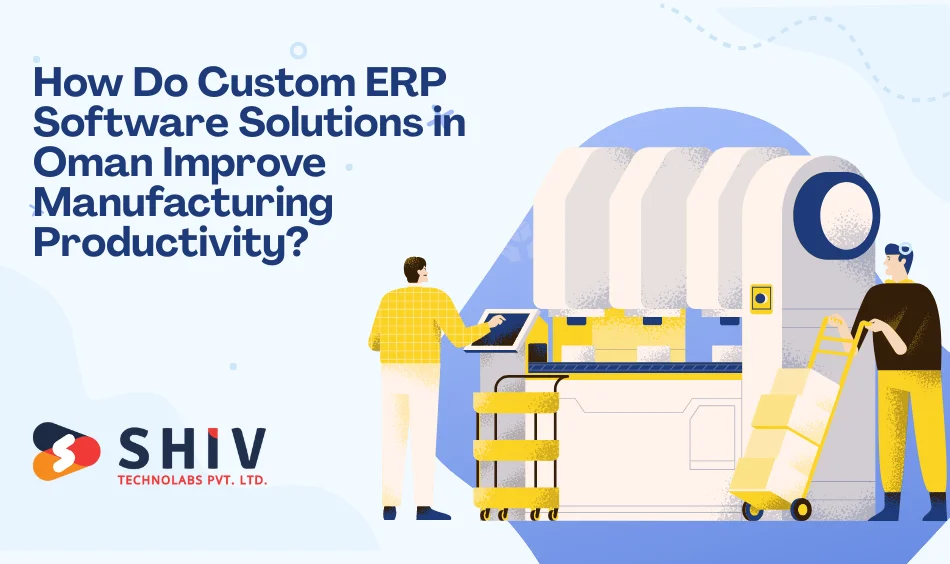
Custom ERP Software Solutions in Oman help factories raise productivity across planning, production, and customer service. Plants gain live data on jobs, materials, and assets, so teams act before issues grow. Supervisors assign work, confirm progress, and adjust schedules with clear targets and shared dashboards daily.
Automation cuts repeated entries across procurement, production, and accounts, which reduces errors and speeds handoffs. Barcode and QR support move stock accurately across inbound, WIP, and dispatch without manual sheets. Teams view reorder points, supplier lead times, and safety stock, which protects uptime during peak seasons.
Analytics converts floor data into practical insights for daily and weekly planning across departments. Leaders compare planned versus actual production, spot waste, and fix bottlenecks before deadlines slip. Sales and production work from the same truth, which reduces promise dates that hurt trust with buyers.
Arabic screens, VAT-ready formats, and local document templates shorten training and reporting for Omani teams. Plant managers control access by role, so approvals move quickly with clear audit trails. The result is predictable output, fewer surprises, and better use of people and machines across shifts.
Core Modules That Support Manufacturing Operations
Manufacturers need modules that connect planning with execution in one place. The following areas support daily work, month-end closing, and growth plans.
- Production and scheduling management
- Procurement and inventory tracking
- Quality control and reporting
- Order management and invoicing
These modules work together to cut delays and data gaps across the plant. Production pulls accurate material lists, purchase teams see live stock, and finance records real costs. Quality teams record checks at each stage, which reduces rework and complaints. Sales receives dependable delivery dates, backed by current capacity and material status.
Real Business Impact Examples
Factories report shorter changeovers, fewer rush purchases, and faster outbound processing after go-live. Teams cut downtime through better maintenance plans and parts visibility across warehouses. Dispatch hits delivery windows with fewer last-minute fixes, which protects margins and buyer trust. Forecasts improve as planners track trends by product, season, and customer, not guesses.


What Factors Affect ERP Software Cost in Oman?
ERP software cost in Oman depends on scope, user count, hosting model, and integration depth. Costs rise with shop-floor devices, advanced analytics, and multi-plant rollouts across regions. Arabic UI, VAT formats, and custom reports add effort, yet save time during audits and tenders.
Licensing and hosting influence both upfront and yearly spending for manufacturers. Cloud subscriptions spread payments over time and reduce on-site hardware work. On-premise setups give more control, yet demand internal support, backup plans, and periodic upgrades.
The number of users and roles shapes both build effort and training plans. Plants with heavy barcode use, maintenance modules, and mobile entries require added configuration. Integration with IoT sensors, weighbridges, or legacy systems adds work, yet prevents double entry and mistakes.
Implementation services—discovery, data migration, training, and post-launch support—form a major share of budgets. Good discovery lowers surprises during the build and protects timelines later. Measured rollouts, beginning with core modules, reduce risk and help teams adopt new habits. Strong support after go-live protects continuity, reporting accuracy, and audit readiness.
Example ERP Cost Breakdown
Typical ranges vary by scope, plant size, and integrations. Use these figures as planning guidance; a tailored proposal will refine numbers.
| Cost Factor | Description | Typical Range (OMR) |
|---|---|---|
| Basic ERP | Accounting, HR, inventory | 3,000 – 5,000 |
| Mid-Level ERP | Production, SCM, analytics | 6,000 – 9,000 |
| Advanced ERP | IoT, AI, mobile modules | 10,000 – 15,000+ |
SMEs can start with essential modules, then add production, analytics, and mobility later. This phased path manages total ERP software cost in Oman, supports adoption, and protects cash flow.
What Is the Typical ERP Software Development Timeline in Oman?
The ERP development timeline guides budgets, staffing, and delivery expectations across plants. A clear ERP software development timeline also reduces rework and keeps decisions on track during busy periods.
Projects begin with discovery to map goals, data rules, and success metrics across departments. Teams confirm workflows for production, inventory, finance, and quality, then agree on scope and priorities.
Design follows with architecture, data models, and user journeys for floor and back-office teams. This stage fixes integration points and reporting views, which keeps later work stable. Developers then configure modules, build custom features, and connect devices such as scanners or sensors.
Testing covers unit checks, user acceptance, and pilot runs on selected lines. Teams validate reports, barcodes, approvals, and user roles before go-live. The rollout finishes with training, data migration, and a support plan to protect daily operations.
Timelines vary by scope, user count, and integrations across sites. Single-plant builds finish faster than multi-plant programs with mobile and IoT. A phased release limits risk, speeds adoption, and keeps core functions stable from day one.
Step-by-Step ERP Development Process
| Step | Phase | Typical Duration |
|---|---|---|
| 1 | Requirement gathering | 2–3 weeks |
| 2 | System design | 3–4 weeks |
| 3 | Custom ERP System development | 8–10 weeks |
| 4 | Testing & deployment | 3–5 weeks |
| 5 | Support & maintenance | Ongoing |
Most custom software development solutions reach first go-live in four to six months. Larger programs with advanced analytics or multi-plant rollouts may need added waves. A phase plan protects production and keeps teams confident during change.
Why Are Businesses in Muscat Choosing ERP Solutions for Manufacturing Operations?
ERP solutions in Muscat appeal to manufacturers that want fast response, local knowledge, and clear communication. Local teams meet on-site, review lines, and align change plans with plant realities. That visibility speeds approvals and keeps stakeholders focused on shared targets.
Omani regulations and VAT rules shape reporting formats and audit trails across departments. Local providers handle these needs without extra workarounds or manual steps. Arabic screens and localized documents also cut training time for operators and office staff.
Vendor proximity helps during go-live weeks and seasonal peaks across sectors. Engineers can visit quickly, fix issues, and train shifts without long gaps. Logistics and time zones no longer slow problem resolution or routine updates.
Manufacturers also gain references from nearby plants using similar modules. Decision makers can visit sites, see results, and set confidence levels early. This reduces risk and supports adoption across teams and partners.
Benefits of Local ERP Providers
- On-site implementation and training
- Local server/data hosting
- VAT and tax compliance
- Easier communication and post-launch service
Local support shortens queues, keeps fixes timely, and protects reporting accuracy during audits. Teams move from issue to action faster, which stabilizes production and delivery promises. Nearby expertise helps leaders plan phase two modules with real usage in mind.
How Custom ERP System Development Helps Achieve Operational Excellence
Custom ERP System development connects planning, production, and finance around shared data and clear workflows. Leaders gain live visibility, faster decisions, and consistent execution across plants and partners. Teams move from firefighting to steady delivery backed by clear KPIs and alerts.
Stronger controls reduce rework, wastage, and rush orders that drain margins. Standard data models support accurate costing, batch traceability, and audit-ready records. These results compound over time and form the base for custom software development services in phase two.
Performance Metrics to Measure Success
- 25–30% better resource efficiency
- 20% less production delay
- 25% faster delivery cycle
- Higher accuracy in reporting
Key Things to Look for in Custom ERP Software Solutions in Oman
Custom ERP Software Solutions in Oman should fit local rules, languages, and business habits from day one. Teams need fast onboarding, accurate reporting, and room to grow without rework or forced changes later.
Focus on a design that supports plants, warehouses, and mobile users. Accurate master data, role-based access, and audit trails protect quality and margins. Real-time dashboards guide daily action and help managers spot gaps before they grow.
Must-Have ERP Features for Manufacturers
- Scalable module architecture
- Cloud/on-premise flexibility
- Role-based access & data security
- IoT & AI integration
- Real-time dashboards
How to Choose the Right Development Partner in Oman
Start with custom erp software development in Oman, partners that understand shop-floor needs and local compliance. Shortlist proven teams, such as Shiv Technolabs, that show factory references and clear technical plans. Ask for a defined scope, staged delivery milestones, and ownership of code, data, and integrations contractually agreed upon.
A strong partner documents processes, migrates data safely, and trains users by role across teams and shifts. They commit to post-launch support and report progress with dates, owners, and measurable outcomes clearly. That approach keeps momentum, protects production during change, and builds confidence across departments and plants.
Vendor Selection Checklist
- Proven experience in manufacturing ERP
- Transparent pricing and project milestones
- Post-launch support availability
- Knowledge of Omani business norms
Conclusion – Building a Future-Ready ERP Ecosystem in Oman
Custom ERP gives Omani manufacturers clearer control, quicker cycles, and confident delivery dates. Plants reduce surprises, hit targets, and serve customers with reliable timelines. Teams plan next steps using facts, not guesses.
“Collaborating with a trusted ERP software development company in Oman helps businesses design and scale reliable ERP systems.”
FAQs – Custom ERP Software Solutions for Manufacturing in Oman
Q1. What is the average ERP software cost in Oman?
OMR 3,000–15,000+, depending on modules and customization. Scope, users, hosting, and integrations drive totals.
Q2. What is the average ERP software development timeline?
Four to six months for medium-sized manufacturing systems. Multi-plant or advanced analytics may add extra waves.
Q3. Can ERP software integrate with factory equipment or IoT devices?
Yes. Custom ERP System development supports device and sensor links for real-time monitoring and traceability.
Q4. Why are ERP solutions in Muscat popular among manufacturers?
Local vendors offer faster communication, compliance alignment, and on-site assistance during go-live and audits.
Q5. Which manufacturing sectors in Oman benefit the most?
Automotive, food processing, construction materials, and textile industries. Each gains traceability, faster cycles, and better forecasts.