Table of Contents
Business leaders often hear two terms during any digital initiative—digital transformation and modernization. Both involve technology, both drive change, and both are seen as necessary for long-term growth.
Yet the two paths are not the same, and the gap between them often leads to wrong expectations, unclear budgets, and projects that miss their purpose.
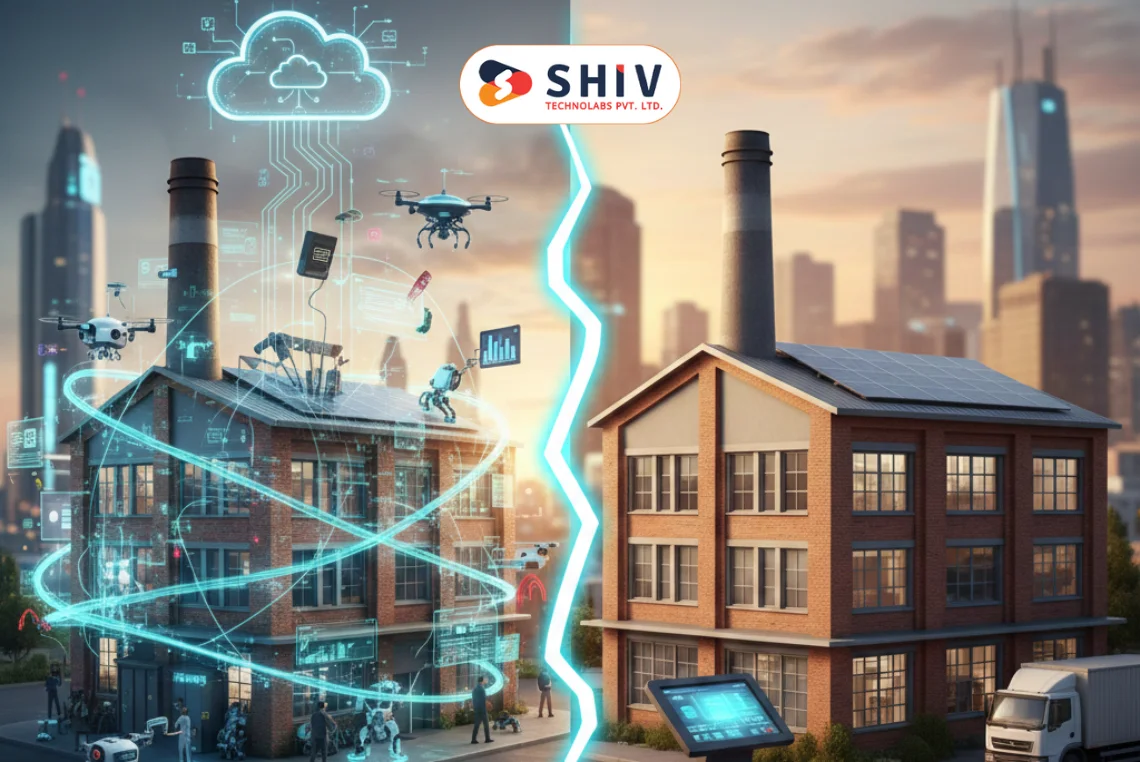
Digital transformation focuses on reshaping how a company functions, delivers value, and interacts with its customers. Modernization, on the other hand, focuses on updating aging systems so the organization can work with better speed, stability, and security.
Many companies mix these concepts, which results in short technical upgrades being mistaken for strategic business change or large initiatives being built on unstable systems.
Understanding the difference matters. It helps leaders decide where to invest, how to sequence their technology roadmap, and how to support teams that depend on reliable systems while also preparing for future growth.
This guide explains both concepts in simple terms, highlights their roles, and shows how they work together to create a strong digital foundation for any organization.
Quick View: Digital Transformation vs Modernization at a Glance
Before going deeper, it helps to view both terms side-by-side. Many teams begin by improving internal systems, while others aim to reshape customer experiences or business models. Both goals are valid, but each follows a different direction.
The table below presents a simple view that sets the foundation for the rest of the guide.
| Dimension | Digital Transformation | Modernization |
| Primary Aim | Change how the business functions and delivers value | Upgrade existing systems to current standards |
| Scope | Organization-wide: customers, processes, products, data, and people | Targeted: infrastructure, applications, security, and workflows |
| Driving Force | New opportunities, new digital channels, stronger customer expectations | Performance issues, legacy limitations, and rising maintenance effort |
| Time Horizon | Long-term, phased initiatives | Shorter cycles, focused upgrade projects |
| Impact on Teams | New skills, new ways of working, cross-functional collaboration | Smoother operations, fewer outages, better system reliability |
| Risk Level | Higher due to broader organizational change | Lower due to clear technical patterns |
| Common Examples | Digital portals, subscription models, connected experiences, and AI-driven decision support | Cloud migration, refactoring legacy apps, database upgrades, and security hardening |
Both pathways are important, but they serve different purposes. Modernization creates the technical base, while digital transformation pushes the business toward new growth directions. Understanding this difference helps teams plan smarter and avoid misaligned initiatives.
What Is Digital Transformation?
Digital transformation is a long-term shift in how an organization operates, serves customers, and creates value through digital methods. It is not limited to technology upgrades. Instead, it reshapes business goals, internal processes, and service delivery, often opening new revenue paths or new customer experiences.
Digital transformation focuses on changing the business model, not just the tools. It requires direction from leadership, readiness across teams, and a clear understanding of how digital capabilities support long-term growth.
Core Characteristics of Digital Transformation
1. Organization-Wide Scope
Digital transformation touches every part of the business.
It may influence how sales teams work, how service teams support customers, how product teams deliver features, and how data teams support decisions. The shift goes across departments, not only IT.
2. Customer-Centric Change
The primary driver is customer expectation.
People want faster service, connected experiences, and clear interactions across digital and physical touchpoints. Transformation aims to match these expectations with new functions, new channels, or new product strategies.
3. New Ways of Working
A transformed organization encourages faster decision-making, cross-functional collaboration, and more flexibility in daily operations.
Teams may adopt new workflows, automation, digital tools, and data-driven practices that support consistent improvement.
4. High Impact on Business Growth
Digital transformation opens new opportunities, such as:
- Digital self-service portals
- Online service extensions
- Subscription or pay-per-use models
- AI-assisted operations
- Real-time personalization
These initiatives often create new revenue lines or allow the organization to reach customers in new ways.
What Digital Transformation Is Not
To avoid confusion, it is important to clarify what digital transformation does not mean:
- It is not a simple software upgrade.
- It is not limited to cloud migration.
- It is not just process automation.
Those activities can be part of the journey, but they do not represent transformation by themselves.
What Is Modernization?
Modernization focuses on bringing existing systems, applications, and processes up to present-day standards. It aims to reduce technical limitations, improve performance, strengthen security, and support daily operations without changing the fundamental business model.
Where digital transformation reshapes the direction of the business, modernization strengthens the foundation that supports day-to-day work.
Core Purpose of Modernization
The goal is simple: replace outdated systems, reduce risk, and create a stronger technical base.
Organizations often choose modernization when legacy systems slow down operations, create security concerns, or require high maintenance efforts.
Key Characteristics of Modernization
1. Technology-Centered Improvements
Modernization focuses on the technical side of the business.
Common initiatives include:
- Refactoring old applications
- Moving systems to cloud platforms
- Updating databases and integrations
- Replacing on-premise servers
- Strengthening security controls
These upgrades help teams operate with fewer interruptions and better reliability.
2. Lower Risk and Shorter Timelines
Unlike digital transformation, modernization usually follows clearer patterns.
Methods such as re-platforming, refactoring, containerization, or the “7R” approach allow predictable upgrades with controlled timelines.
This makes modernization suitable for organizations that need improvement without major operational shifts.
3. Focus on System Stability and Efficiency
Modernization aims to:
- Reduce downtime
- Improve speed and scalability
- Lower technical debt
- Make future changes easier
- Meet compliance and security requirements
These outcomes support internal teams and prepare the business for future digital initiatives.
4. Foundation for Further Innovation
Modernization does not change customer-facing models by itself.
However, it creates a reliable platform that can support larger transformation goals—such as new digital products, AI-driven services, or advanced automation.
What Modernization Is Not
- It is not a redesign of the business model.
- It is not a shift in customer strategy.
- It is not a full digital overhaul.
It is a structured improvement of what already exists, not the creation of something entirely new.


Core Differences Between Digital Transformation and Modernization
Digital transformation and modernization often appear similar because both involve technology-driven change. But their intentions, outcomes, and organizational impact differ significantly. Understanding these differences helps leaders select the right approach for their current goals.
Below are the key distinctions broken down into practical dimensions that matter during planning and execution.
1. Goal and Direction
Digital Transformation:
- Focuses on changing how the business creates value.
- It may redefine products, services, channels, customer experiences, and long-term strategy.
Modernization:
- Focuses on updating existing systems to improve reliability, performance, and security.
- The business model stays mostly the same.
2. Scope of Change
Digital Transformation:
- Affects multiple layers—operations, customer touchpoints, data, culture, and decision-making.
Modernization:
- Targets specific systems or processes, mainly in IT.
- The change remains controlled and technical.
3. Impact on Teams and Culture
Digital Transformation:
- Requires new skills, new workflows, and stronger collaboration across departments.
- It often leads to new roles, revised processes, and updated performance measures.
Modernization:
- Has a smaller effect on roles and responsibilities.
- Teams continue working in familiar ways but benefit from faster and more stable systems.
4. Time Frame and Investment Pattern
Digital Transformation:
- Runs over a longer duration because it alters strategic direction.
- It is often executed in stages, with multiple improvement cycles.
Modernization:
- Usually completed in shorter project waves.
- Clear technical milestones make it easier to plan and track.
5. Risk and Complexity
Digital Transformation:
- Carries a higher risk because it changes business operations, customer experience, and decision frameworks.
- It requires careful planning, leadership commitment, and strong change management.
Modernization:
- Carries a lower risk since it follows known upgrade patterns such as refactoring, re-platforming, or cloud migration.
6. Technology vs Business Orientation
Digital Transformation:
- Technology supports a broader business shift.
- The goal is not just to improve operations, but to reshape how the company delivers value.
Modernization:
- Technology is the center of the initiative.
- The focus is on system upgrades, infrastructure improvements, and reducing technical debt.
7. Example Initiatives to Show the Difference
| Area | Digital Transformation Examples | Modernization Examples |
| Customer Experience | Self-service portals, mobile-first journeys, digital subscription products | Faster website performance, updated CMS, better APIs |
| Operations | AI-driven insights, automated workflows, and new digital service lines | ERP migration, database upgrades, and containerizing legacy apps |
| Business Growth | New digital channels, new monetization models | Reducing system downtime, improving security posture |
Summary of the Difference
- Digital transformation changes the business.
- Modernization strengthens the systems that support the business.
Both approaches work best when aligned with long-term strategic priorities, not just short-term technical fixes.
How Modernization and Digital Transformation Work Together?
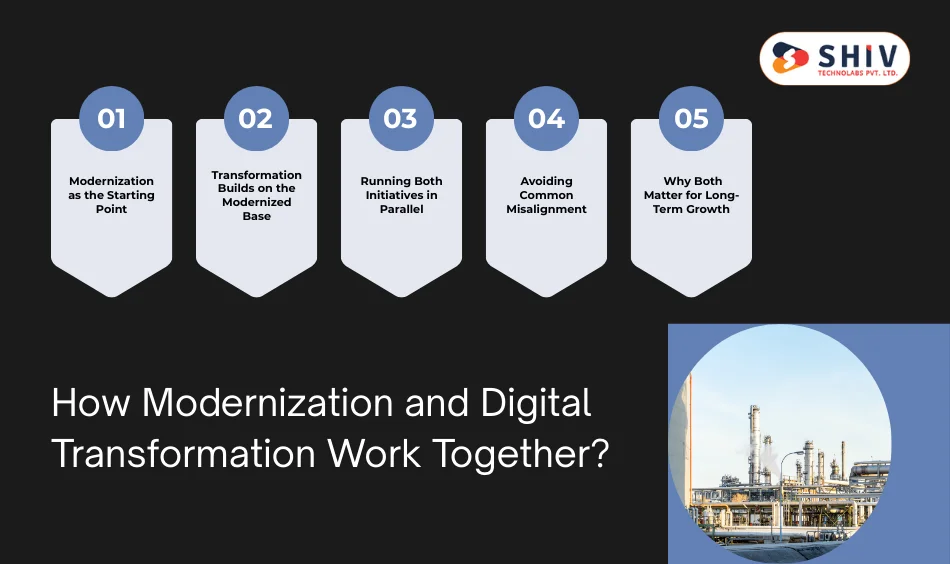
Organizations often treat modernization and digital transformation as two separate paths, but in practice, they support each other. Modernization creates a stronger technical base, while digital transformation builds on that base to introduce new ways of working, new services, and new customer experiences.
Both efforts work best when planned as a connected roadmap rather than isolated initiatives.
1. Modernization as the Starting Point
Many transformation programs fail because the underlying systems cannot support new capabilities.
When legacy platforms are slow, fragile, or tightly coupled, even small changes can cause delays, outages, or unexpected costs.
Modernization helps by:
- Reducing technical debt
- Improving system performance and reliability
- Strengthening security
- Simplifying integrations
- Allowing teams to release updates faster
These improvements prepare the organization for larger strategic moves.
2. Transformation Builds on the Modernized Base
Once systems are modernized, the business can move toward new capabilities more confidently.
Teams can introduce better digital experiences, expand product lines, or build automation without facing infrastructure limitations.
Examples include:
- Launching new digital channels
- Creating data-driven products or dashboards
- Introducing online self-service journeys
- Building mobile applications linked with modern APIs
- Supporting real-time operations through event-driven systems
Transformation becomes far more practical when the technical base is ready for change.
3. Running Both Initiatives in Parallel
Some organizations choose a hybrid approach where:
- Modernization runs in structured waves,
- While transformation pilots begin in selected areas.
This method allows the company to show early progress without waiting for every system to be upgraded.
A typical sequence looks like this:
- Stabilize critical legacy platforms
- Begin modernization of core applications
- Run small transformation pilots (e.g., customer portal, analytics dashboard)
- Scale transformation initiatives once the base is ready
This balanced approach reduces risk while keeping momentum steady.
4. Avoiding Common Misalignment
Two common issues arise when modernization and transformation are not connected:
Issue 1: Over-investing in upgrades without business value
Teams improve systems but do not introduce new capabilities, leading to limited strategic outcomes.
Issue 2: Starting transformation on unstable systems
Ambitious initiatives slow down or fail because the existing infrastructure cannot support them.
A combined plan avoids both problems, giving the organization a healthy mix of stability and innovation.
5. Why Both Matter for Long-Term Growth
- Modernization improves today’s operations.
- Transformation prepares the organization for the future.
- Together, they create a clear path from legacy constraints to digital business models.
When tied to leadership vision and measurable goals, this combination leads to stronger performance, better customer engagement, and sustainable growth opportunities.
When Does Your Organization Need Modernization First?
Modernization becomes the priority when existing systems create friction, limit productivity, or block further digital initiatives. Many companies want to move toward new digital capabilities but struggle because their current platforms cannot support the change. In such cases, modernization is the necessary first step.
Below are the signals that indicate your organization should address legacy systems before pursuing full digital transformation.
1. Frequent System Issues and Performance Slowdowns
If critical systems crash, stall, or show inconsistent performance, modernization becomes essential.
Signs include:
- Regular outages during peak usage
- Slow response times on core applications
- Long IT resolution cycles due to outdated architecture
These issues weaken daily operations and make customer-facing improvements difficult.
2. Legacy Platforms With High Maintenance Effort
Older systems often require constant support.
When the IT team spends more time fixing problems than improving capabilities, modernization is necessary.
Typical patterns include:
- Systems written in outdated languages
- Hard-coded business rules that slow down changes
- High dependency on a few individuals who understand legacy logic
This creates operational risk and slows down future roadmap planning.
3. Security and Compliance Gaps
Legacy systems struggle to meet present security standards.
Common indicators include:
- Outdated authentication methods
- Unsupported operating systems
- Limited monitoring or logging
- Difficulty passing audits
Modernization helps reduce such vulnerabilities and protects the organization from breaches or compliance issues.
4. Integration Barriers Across Applications
When systems cannot communicate smoothly, data becomes fragmented.
You may notice:
- Multiple versions of the same data
- Manual transfers between systems
- Difficulty connecting internal tools with cloud services
- Rigid interfaces that block new features
Modernization introduces API-driven integration, allowing smoother interactions between platforms.
5. Rising Operational Cost Without Added Value
If an organization pays more every year to maintain the same output, the base systems are likely outdated.
This cost may appear through:
- Vendor fees for outdated software
- Hardware replacements
- Specialized support contracts
- Extended testing cycles
Modernization helps reduce these recurring burdens and makes operations more sustainable.
6. When Modernization Supports Future Digital Goals
Some opportunities cannot be pursued until the underlying systems are modernized.
Examples:
- A cloud-based customer portal cannot run on a rigid monolithic backend
- Real-time analytics cannot function with outdated data pipelines
- Automation tools cannot connect to old legacy environments
In such cases, modernization is not optional—it’s the stepping stone for future capabilities.


When You Are Ready for Full Digital Transformation?
Digital transformation becomes the right path when the organization aims to shift its value delivery, enter new channels, improve customer experience, or introduce new digital capabilities that go beyond internal upgrades.
This stage is suitable when the business is stable enough to take on broader change and the leadership is prepared for long-term direction.
Below are the signals that your organization is ready to move beyond modernization and focus on full transformation.
1. Customer Expectations Have Moved Ahead of Current Capabilities
If customers are asking for faster, simpler, or more connected interactions than your current systems support, transformation becomes important.
Signs include:
- Demand for self-service options
- Expectation for mobile-first interactions
- Need for real-time updates, notifications, or tracking
- Pressure to offer personalized services
These expectations require more than system upgrades—they require a shift in how the business designs its services.
2. The Business Needs New Revenue Paths or Differentiated Offerings
Transformation becomes necessary when growth depends on:
- New digital product lines
- New service models
- Subscription or pay-per-use offerings
- Digital extensions to physical products
These initiatives require changes in operations, pricing, customer engagement, and sometimes even the brand direction.
3. Leadership Is Ready for Structural and Operational Change
Transformation demands strong alignment across leadership teams. Signals of readiness include:
- Willingness to redesign workflows
- Support for new cross-functional roles
- Engagement in long-term planning
- Commitment to invest in digital capabilities, talent, and process change
This readiness is critical because transformation affects people, culture, and operating patterns—not just technology.
4. The Organization Has a Clear Vision for Digital Growth
Transformation is most successful when the company knows why it wants to change.
A clear vision may include:
- Improving overall customer journeys
- Building digital-first services
- Strengthening decision-making with real-time data
- Expanding into new digital channels
- Delivering unified experiences across platforms
This clarity avoids misalignment and guides the execution path.
5. The Technical Base Is Strong Enough for Higher Ambition
Organizations ready for transformation typically have:
- Stable core systems
- Clean and dependable data
- Standardized integrations
- Cloud-ready or cloud-based components
- Teams skilled in modern delivery practices
These conditions reduce friction and allow faster rollouts of new digital capabilities.
6. Example Scenarios Where Transformation Is the Correct Step
- A services firm planning to introduce a digital product for subscription clients
- A retail business aiming to deliver unified in-store and online experiences
- A manufacturing company building connected platforms for distributors and partners
- A B2B organization creating self-service portals and digital ordering workflows
In each case, the change extends beyond technology upgrades—it shifts the way value is delivered.
Decision Guide: Transformation, Modernization, or Both?
Choosing between modernization and digital transformation is not always straightforward. Some organizations need a strong technical reset before they attempt any broader change.
Others already have a stable base and are ready to move toward new digital offerings. In many cases, the most effective path combines both approaches in a phased manner.
This decision guide helps leaders identify the right direction based on their current conditions, business goals, and system readiness.
1. Key Questions for Leadership Teams
Before deciding, leadership should assess the following:
- Is the current system stable enough to support new capabilities?
- Are customer expectations shifting faster than current offerings?
- Do we want to introduce new revenue models or strengthen existing ones?
- Is technical debt slowing down daily operations?
- Do teams spend more time fixing issues than building new features?
- Is data scattered across systems, blocking real-time insights?
- Do we have the talent and processes required for large-scale change?
The answers help determine whether the organization should begin with modernization, move directly into transformation, or run both tracks together.
2. Simple Decision Matrix
Below is a 2×2 model that makes the decision clearer:
| Technology Health | Urgency for Business Model Change | Recommended Path |
| Weak | Low | Stabilize and modernize first |
| Weak | High | Begin modernization while starting a small transformation pilot |
| Strong | Low | Modernize selectively and improve efficiency |
| Strong | High | Proceed with full digital transformation |
This matrix helps avoid two common traps:
- Attempting transformation with unreliable systems
- Focusing only on upgrades without strategic business progress
3. When Modernization Should Lead the Roadmap
Modernization should be the top priority when:
- Systems are unstable or outdated
- Security gaps pose a risk
- Change cycles are too slow
- Integration across platforms is difficult
- Rising operational cost affects growth plans
In such situations, transformation should wait until the core environment is ready.
4. When Transformation Can Lead
Transformation can take priority when:
- Customer expectations require major service improvements
- The business aims to expand into new digital channels
- Data and analytics are central to future decision-making
- Competitors offer stronger digital experiences
- The technology base is stable enough to support experimentation
These conditions allow the organization to focus on long-term strategic change.
5. When Both Should Run Together
Running modernization and transformation in parallel works well when:
- The organization is under pressure to innovate quickly
- Parts of the system can support new features, while other areas require upgrades
- Leadership wants short-term wins without delaying long-term goals
- There is enough talent and capacity to manage dual workstreams
A hybrid model helps maintain momentum while reducing the risk of large-scale disruption.
6. Sample Roadmap Paths
Path A: Modernize First → Transform Later
Ideal for organizations with legacy systems and high technical debt.
(Example: upgrade ERP → migrate to cloud → introduce digital self-service features)
Path B: Transform with Select Modernization Waves
Works for businesses needing rapid digital expansion.
(Example: launch customer portal → modernize backend in phases)
Path C: Combined Vision from Day One
Suitable for organizations with strong leadership alignment and clear digital goals.
(Example: run transformation pilots while modernizing core apps)
Building a Roadmap from Legacy Systems to Digital Business
A successful shift from legacy environments to a digitally driven model requires a structured roadmap. This roadmap should balance short-term operational priorities with long-term business goals. It must also outline how modernization and digital transformation interact through each phase.
The following framework helps organizations plan this journey practically and predictably.
Step 1: Current-State Assessment
A strong roadmap begins with a clear understanding of the present environment. This includes both technical and business assessments.
Key activities:
- Review all applications, infrastructure, and integrations
- Identify outdated components and high-risk systems
- Map business processes that depend on legacy platforms
- Document pain points, manual tasks, and frequent incidents
- Assess culture, team skills, and readiness for change
- Evaluate data quality, data flows, and reporting gaps
This assessment helps prioritize what needs attention first.
Step 2: Prioritize Modernization Waves
Modernization should be planned in structured waves rather than large, unpredictable projects.
Criteria for prioritization:
- Business criticality
- Security risks
- Regulatory pressure
- System stability
- Dependency maps
- Cost of maintenance
Typical first-wave upgrades include:
- Core transactional systems
- Customer-facing services that cannot meet traffic demands
- APIs and integrations that block new features
- Databases or servers nearing end-of-life
Smaller, low-risk upgrades can follow in later phases.
Step 3: Define Transformation Themes
Once modernization priorities are established, the organization can outline transformation themes that support long-term business direction.
Common themes include:
- Customer experience improvement
- Digital self-service models
- Modern data and analytics platforms
- Automation across sales, support, and operations
- New digital product lines
- Integration of mobile-first journeys
These themes shape long-term programs that connect business goals with digital capabilities.
Step 4: Build a Realistic Execution Plan
A practical execution structure includes:
- Phased releases with measurable outcomes
- Clear ownership across IT and business units
- Delivery processes that support frequent updates
- A governance model to track progress
- Communication plans for teams affected by change
The roadmap should be flexible enough to adjust when priorities shift or new opportunities arise.
Step 5: Measure Progress and Improve Continuously
Transformation and modernization require ongoing evaluation.
Key measurement areas include:
- System reliability and uptime
- Performance improvements
- Reduction in technical debt
- Time required to deliver new features
- Customer satisfaction across digital channels
- Adoption of new workflows by internal teams
These metrics help refine future phases and prove the value of the roadmap.
How This Roadmap Connects to Business Growth
A structured roadmap:
- Stabilizes legacy systems
- Creates room for innovation
- Supports digital revenue opportunities
- Strengthens customer experience
- Allows faster response to competitive pressure
The combination of modernization and transformation leads to a clear, controlled shift from outdated systems to a digitally aligned business model.
Role of Cloud, Data, and Low-Code Platforms
Modernization and digital transformation depend on strong technical foundations. Three key enablers—cloud infrastructure, modern data platforms, and low-code tools—play a central role in shaping how organizations move from legacy systems to digital-first operations.
Each contributes differently, yet all support faster delivery, better decision-making, and a more flexible technology environment.
1. Cloud and Hybrid Infrastructure
Cloud platforms help organizations shift away from rigid on-premise systems.
This shift supports both modernization and transformation by offering:
- Reliable and scalable environments
- Managed services that reduce operational load
- Stronger security controls and monitoring
- Faster provisioning of resources for new initiatives
- Easier integration with digital products and third-party tools
Cloud migration often forms the backbone of modernization, while cloud-native capabilities support transformation efforts like mobile apps, online portals, and advanced analytics.
Hybrid models also help organizations move gradually, keeping some systems on-premise while shifting critical workloads to cloud environments in phases.
2. Data Platforms, Analytics, and AI
Modern data capabilities play a major role in building a digital business.
Legacy data environments often limit reporting, slow decision cycles, and make it difficult to introduce customer-facing features.
Modern data platforms support:
- Centralized, reliable data storage
- Real-time or near real-time reporting
- Business intelligence dashboards
- Predictive insights
- Better understanding of customer behavior
- Stronger compliance and audit readiness
These capabilities help organizations shift from guesswork to informed decision-making.
AI and automation tools add another layer by identifying patterns, supporting classification, and assisting in operational tasks. These features support both modernization (through automated monitoring) and transformation (through advanced digital services).
3. Low-Code and No-Code Platforms
Low-code tools enable faster development of internal applications, workflows, and customer-facing components.
Benefits include:
- Shorter delivery cycles for internal tools
- Reduced dependency on large engineering teams
- Faster testing of ideas before large investments
- Easier creation of dashboards, forms, and custom workflows
- Smooth integration with APIs and cloud systems
Low-code platforms are useful in transformation programs because they help teams build new digital features quickly. They also support modernization by filling gaps left by older systems, reducing manual work through simple automation.
4. Integration as a Core Enabler
Integration ties everything together.
Without proper integration, cloud systems, data platforms, and low-code tools remain isolated.
Modern integration practices include:
- API-first communication
- Event-driven architectures
- Secure gateways and connectors
- Standardized data exchange between applications
Strong integration enables organizations to build connected experiences, support automation, and keep information consistent across platforms.
How These Technologies Support the Overall Journey
- Cloud strengthens infrastructure and enables new digital products.
- Data platforms improve decision-making and customer understanding.
- Low-code tools accelerate development and reduce delivery barriers.
- Integration keeps the entire ecosystem connected and flexible.
Together, they form the technical base for both modernization and digital transformation, allowing organizations to move with confidence and clarity.
Common Pitfalls and How to Avoid Them
Organizations often begin modernization or digital transformation with strong intent but struggle during execution.
Misalignment, unclear priorities, and unrealistic expectations can cause delays or reduce the impact of both initiatives. Understanding these pitfalls early helps teams plan better and avoid unnecessary setbacks.
Below are the most common issues, along with guidance to prevent them.
1. Treating Every Technical Project as Digital Transformation
A frequent mistake is labeling routine upgrades as digital transformation. While upgrades matter, they do not change how the business delivers value.
How to avoid this:
- Set clear definitions for modernization and transformation
- Communicate the distinction across teams
- Link transformation only to initiatives that shift operations, customer experience, or revenue paths
This avoids confusion and sets the right expectations for stakeholders.
2. Ignoring Legacy Limitations Before Starting Ambitious Initiatives
Some organizations attempt to roll out new digital products without fixing underlying system issues.
This leads to delays, high costs, or inconsistent customer experiences.
How to avoid this:
- Conduct a readiness assessment before any transformation project
- Identify high-risk systems and modernize critical components early
- Use phased rollouts to avoid overloading outdated architectures
A strong technical base protects the investment made in transformation programs.
3. Underestimating the Role of People and Change Management
Transformation affects teams, workflows, and decision-making. Without proper support, employees may resist change or struggle to adopt new processes.
How to avoid this:
- Create training programs and support structures
- Involve teams early in planning
- Communicate clear goals and expected outcomes
- Align performance metrics with new ways of working
People drive the success of transformation, not just technology.
4. Running Projects Without Clear Outcomes or Measurement Plans
Organizations sometimes start large initiatives without defining what success should look like.
This leads to unclear direction and inconsistent results.
How to avoid this:
- Set measurable goals for modernization (e.g., uptime, performance, maintenance cost)
- Set measurable goals for transformation (e.g., customer satisfaction, digital adoption, revenue contribution)
- Review progress regularly and adjust plans when needed
Strong measurement practices keep both modernization and transformation aligned with strategic goals.
5. Over-Engineering Solutions Before Validating Business Value
Building large, complex systems without testing assumptions increases risk.
Many organizations spend time and resources on features customers may not want.
How to avoid this:
- Use pilots or proofs-of-concept to test ideas
- Validate customer needs early
- Scale only after initial success is confirmed
This approach reduces waste and keeps initiatives focused on outcomes.
6. Forgetting the Importance of Integration
Modern systems rely on smooth communication between applications.
Poor integration strategies can create data silos, manual tasks, and inconsistent experiences.
How to avoid this:
- Adopt API-first integration patterns
- Maintain clean data flow between systems
- Document integration requirements during planning
- Use standards that support future expansion
Good integration practices support both modernization and transformation.
7. Attempting Big-Bang Change Without Phased Planning
Large, all-at-once transitions often fail due to uncertainty, complexity, and resistance.
How to avoid this:
- Divide the program into manageable phases
- Deliver value in increments
- Gather feedback from each release
- Adapt plans based on real-world challenges
This method builds confidence and reduces risk across the organization.
How Shiv Technolabs Supports Modernization and Digital Transformation?
Shiv Technolabs helps organizations strengthen their technology foundation and move toward long-term digital growth.
Our expertise covers both modernization of legacy systems and the creation of new digital capabilities that support better customer experiences, stronger operations, and future-ready business models.
Below is an overview of how we assist organizations at each stage of their journey.
1. Modernization Services
Our modernization approach focuses on reducing technical risk, improving performance, and preparing systems for future expansion. We support organizations through:
- Legacy system assessment to identify performance gaps and critical risks
- Application refactoring and re-platforming for better scalability
- Cloud migration to create reliable and flexible environments
- API-driven integration to support smoother communication across platforms
- Security upgrades that strengthen compliance and protect sensitive data
- Infrastructure modernization for sustainable operations
These upgrades help reduce downtime, simplify maintenance, and improve delivery cycles.
2. Digital Transformation Services
Digital transformation requires a mix of strategy, technology, and people readiness. Shiv Technolabs, a digital transformation company, works closely with business and technical teams to shape long-term digital direction.
Our digital transformation services include:
- Strategy and discovery sessions to understand goals and challenges
- Roadmap design for phased transformation across departments
- Development of digital products and platforms such as customer portals, mobile apps, and self-service solutions
- Integration of modern data and analytics tools to support informed decision-making
- Automation solutions that reduce manual steps and strengthen workflows
- Modern experience design for consistent customer journeys across channels
These initiatives help organizations introduce new value streams and improve overall customer satisfaction.
3. Data, BI, and Reporting Solutions
Strong data practices are essential for both modernization and transformation. Shiv Technolabs supports organizations with:
- Power BI dashboards for clear, actionable insights
- Centralized data platforms that reduce fragmentation
- Custom reporting solutions that support fast decisions
- Data quality improvement across systems and teams
Better data visibility helps leadership evaluate performance and identify new opportunities.
4. Delivery Models that Fit Organizational Needs
Every organization has different goals and resource capacity. Shiv Technolabs offers flexible engagement models such as:
- Dedicated teams for long-term digital initiatives
- Co-delivery models where internal teams work with our experts
- Project-based delivery for focused modernization or transformation waves
- White-label development for partners and agencies
These options allow organizations to choose the model that aligns best with their capacity and timeline.
5. A Balanced Approach for Sustainable Change
Our approach combines modernization and transformation in a structured manner:
- Strengthen the technical base
- Introduce new capabilities in phases
- Support teams through adoption
- Maintain long-term continuity and improvement
This balanced strategy helps organizations move forward without overwhelming internal teams or risking ongoing operations.
Conclusion
Digital transformation and modernization are often discussed together, but they serve distinct purposes. Modernization strengthens the technical base by updating legacy systems, improving performance, and reducing operational risk.
Digital transformation, on the other hand, reshapes how the organization delivers value, interacts with customers, and drives long-term growth.
Both paths are important. Modernization creates the stability required for digital expansion, while transformation helps the business stay relevant in a competitive environment. When approached in a coordinated manner, they support each other and form a clear journey from outdated systems to digitally driven operations.
For organizations looking to move forward, the key is to understand current limitations, define long-term goals, and adopt a structured plan that balances both modernization and transformation.
With the right approach, companies can strengthen their foundations today while building the digital capabilities they need for tomorrow.
FAQs
Below are common questions organizations ask when planning digital initiatives. These answers help clarify the difference between the two approaches and guide decision-making.
1. Is modernization the same as digital transformation?
No. Modernization focuses on updating systems, applications, and infrastructure.
Digital transformation changes how the business functions, interacts with customers, and delivers value.
2. Can a company start digital transformation without modernization?
It depends on the condition of existing systems.
If legacy platforms are slow, outdated, or difficult to modify, modernization should come first.
If the technical base is stable, transformation can begin with pilot projects.
3. How long does modernization usually take?
Modernization timelines vary based on system complexity.
Some upgrades take a few weeks, while large migrations or refactoring projects may span several months. Phased planning helps break the work into manageable steps.
4. What are examples of digital transformation?
Examples include:
- Customer portals
- Mobile-first services
- Digital ordering systems
- New subscription or service models
- Real-time analytics and decision dashboards
These examples affect both customers and internal teams.
5. What are examples of modernization?
Common modernization steps include:
- Cloud migration
- Updating databases and servers
- Refactoring old codebases
- Strengthening security controls
- Replacing outdated integration methods
These improvements support daily operations.
6. How do we decide between modernization and transformation?
Assess these areas:
- Stability of existing systems
- Customer expectations
- Growth goals
- Data readiness
- Team capability
- Budget and timelines
If the system cannot support new capabilities, prioritize modernization.
If the organization is ready for broader change, consider transformation.
7. Do both modernization and digital transformation require cultural change?
Transformation does, as it changes how teams work and deliver services.
Modernization requires smaller adjustments but still needs cooperation across departments.
8. Can modernization and transformation run together?
Yes. Many organizations modernize core systems while launching transformation pilots in selected areas.
This approach delivers short-term progress while preparing for long-term change.
9. Do small and mid-size businesses need digital transformation?
Yes, when they aim to introduce new digital offerings, reach customers through online channels, or improve service quality.
Transformation is not limited to large enterprises; it fits any business with long-term digital goals.
10. Why do transformation programs fail?
Common reasons include:
- Unclear goals
- Lack of leadership alignment
- Weak technical base
- Poor change management
- No measurement framework
A clear roadmap helps avoid these issues.