Table of Contents
Procurement problems hit a factory fast. One late supplier reply can hold up raw materials, slow production, and create extra work for planning, warehouse, and finance teams. A small buying issue in the morning can turn into a bigger factory issue by the afternoon.
Many manufacturers still run purchasing through spreadsheets, emails, calls, and manual approvals. That setup creates confusion when order volume grows. Teams miss updates, lose track of approvals, and spend too much time chasing the same information.
An Odoo procurement management system brings those tasks into one system. Buyers can raise requests, review approvals, track suppliers, and manage purchase orders without jumping between files and inboxes. That gives the team more control over daily purchasing work.
Factories also run on timing. If materials arrive late, production slows down. If buyers miss a supplier price change, costs rise. Strong procurement management for manufacturing gives teams a better way to control both issues before they spread.
Many companies also choose Odoo manufacturing services because each factory follows its own purchase process. One business may need plant-wise approvals. Another may need buying rules based on raw materials, spare parts, or vendor type. Odoo can fit those real working needs.
What Is an Odoo Procurement Management System and How Does It Work?
An Odoo procurement management system manages purchasing within Odoo. It connects supplier records, stock demand, order approvals, and purchase history in one place. Buyers can see what they need, what they ordered, and what still needs action without checking different tools.
The Odoo procurement module works with inventory and production data. When the stock falls below a set level, the system can trigger a purchase step. When production creates fresh demand, the purchase team can respond before the shortage reaches the shop floor.
That makes Odoo purchase management useful in daily factory work. Buyers can create requests, compare supplier prices, issue purchase orders, and move them through approval steps. Managers can review progress from one screen instead of asking each department for updates.
Odoo also stores supplier details in one place. Buyers can check past prices, order history, and delivery records before they place a new order. That gives them a firmer base for supplier decisions.
What Procurement Processes Does the Odoo Procurement Module Manage?
The module manages key purchasing tasks such as:
- Supplier management
- Purchase request generation
- Purchase order creation
- Supplier pricing management
- Procurement approvals
- Procurement analytics
These functions give manufacturers a cleaner process for daily buying work. Teams can follow one system, reduce back-and-forth communication, and keep procurement records in one place.
Why Do Manufacturers Need Procurement Management for Manufacturing Operations?
Procurement affects factory output every day. Late raw material deliveries can quickly shift production schedules. Ordering the wrong quantity forces the team to spend time correcting the mistake. Frequent supplier delays can also cause customer delivery dates to slip.
This is why procurement management for manufacturing matters beyond the purchase department. It affects production, delivery timelines, buying costs, and supplier reliability. A weak buying process usually creates pressure somewhere else in the business.
Many manufacturers still handle procurement through manual methods. Buyers track orders in spreadsheets, managers approve purchases by email, and staff follow up with suppliers by phone. That may work for a while, but it becomes hard to manage as the business grows.
An Odoo procurement management system gives teams a clearer way to run that work. Buyers can view open orders, pending approvals, supplier status, and material demand from one system. Managers can spot delays earlier and act before production feels the impact.
Common Procurement Challenges in Manufacturing
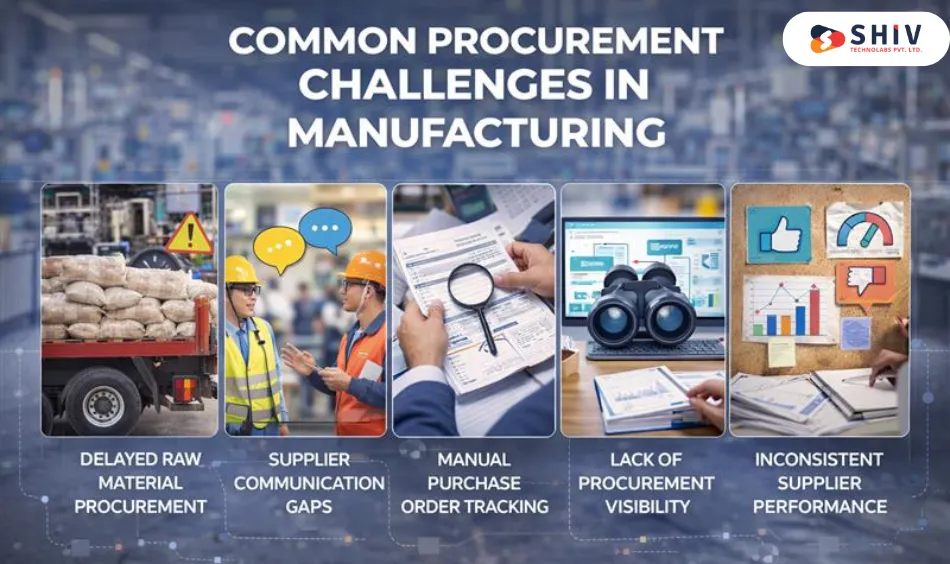
Manufacturers often face problems like these:
- Delayed raw material procurement
- Supplier communication gaps
- Manual purchase order tracking
- Lack of procurement visibility
- Inconsistent supplier performance
These issues raise costs and create tension between teams. Production waits for materials. Procurement follows up with suppliers. Managers try to find out where the delay started. When nobody sees the full picture, the same problems return again.
That is why many factories invest in procurement automation for factories. Automation lets buyers act sooner, follow approval rules correctly, and track orders without endless manual follow-up.
It also cuts avoidable errors and gives the business a steadier purchasing process.
How Does the Odoo Procurement Management System Automate Factory Purchasing?
Factory purchasing often slows down when teams depend on manual checks, email follow-ups, and delayed approvals. An Odoo procurement management system helps manufacturers handle buying in a faster and clearer way. It connects stock levels, supplier data, and production demand in one place.
When inventory drops below the set level, Odoo can trigger the next buying step. Buyers do not need to review each item by hand. This helps factories place orders on time and avoid raw material shortages.
The system also supports repeat buying for common materials and spare parts. It gives purchase teams a clear path from demand to order creation. That makes procurement automation for factories useful for businesses with frequent purchase cycles.
With Odoo purchase management, purchase teams get clear support for daily work. They can:
- Create purchase requests faster
- Generate orders from stock rules
- Follow approval flows inside the system
- Compare supplier prices before placing orders
- Track orders from request to receipt
This process reduces delays and cuts missed purchases. It also gives managers a better view of day-to-day buying activity.
Odoo purchase order management also supports production planning. When a production order creates fresh material demand, the purchase team can respond early. That helps factories avoid urgent buying and last-minute supply issues.
Automation Features of the Odoo Procurement Management System
| Feature | Function | Manufacturing Benefit |
|---|---|---|
| Automated Purchase Orders | Creates orders based on inventory rules | Prevents material shortages |
| Vendor Price Lists | Tracks supplier pricing | Better cost control |
| Procurement Rules | Creates buying triggers | Supports production planning |
| Purchase Approval Workflow | Multi-level approval system | Reduces buying mistakes |
| Supplier Tracking | Tracks vendor delivery performance | Better supplier reliability |
How Does Odoo Purchase Order Management Improve Supplier Coordination?
Supplier coordination affects every manufacturing business. If a vendor sends late materials or wrong quantities, production suffers. Odoo purchase order management helps manufacturers keep supplier communication clear and organized.
Buyers can work from one system instead of using separate files, calls, and inbox threads. This keeps order details, prices, and expected delivery dates in one place. It also reduces confusion when several vendors supply similar items.
With Odoo purchase management, buyers can manage supplier work in a more controlled way. They can:
- Review supplier quotations
- Compare prices and delivery dates
- Send approved purchase orders faster
- Track pending and completed orders
- Check the supplier’s delivery history
These steps help buyers choose vendors with more confidence. They also help managers spot supplier issues early.
Odoo also makes follow-up easier. Teams can check order progress without asking multiple people for updates. This saves time and helps factories stay on schedule.
What Purchase Order Features Do Manufacturers Get?
Manufacturers get several useful purchase order features. These include:
- Automated purchase order creation
- Supplier quotation comparison
- Vendor contract management
- Purchase approval routing
- Procurement status tracking
These features help companies keep supplier coordination simple and clear. They also support better order accuracy and better internal control.


What Benefits Do Manufacturers Gain from an Odoo Procurement Management System?
Manufacturers choose an Odoo procurement management system because it brings more control to purchasing. It helps teams buy faster, track supplier activity, and support production with fewer gaps.
The business value shows up in daily operations. Teams often see:
- Faster purchasing decisions
- Better supplier visibility
- Clearer approval control
- Fewer buying errors
- Stronger cost tracking
- Better support for production planning
This matters in procurement management for manufacturing because slow buying affects factory output very quickly. A delay in purchasing can stop machines, hold up orders, and raise costs. Odoo helps companies reduce those risks by keeping procurement work visible and organized.
Another major gain is stronger supplier control. Buyers can compare pricing, review order history, and check delivery performance before placing the next order. This helps companies make better supplier decisions based on real records.
Odoo also gives managers live procurement data. They can review open orders, pending approvals, and supplier trends without waiting for manual reports. That helps them act quickly when a problem appears.
Business Benefits of the Odoo Procurement Management System
| Benefit | Procurement Improvement | Business Impact |
|---|---|---|
| Automated purchasing | Faster procurement workflows | Reduced production delays |
| Supplier transparency | Better vendor tracking | Better supplier reliability |
| Procurement analytics | Real-time procurement data | Better purchasing decisions |
| Cost monitoring | Vendor price comparisons | Lower procurement costs |
| Integrated workflows | Procurement connected to inventory | Better production planning |
How Can Manufacturers Implement an Odoo Procurement Management System?
Manufacturers usually begin by reviewing their current buying process. They check how teams raise requests, approve purchases, track supplier replies, and record order status. This first step shows where delays, missed approvals, and manual errors happen most often.
A practical Odoo procurement implementation starts with clear process mapping. The business defines who can request materials, who can approve orders, and when the system should create a buying action. This gives the setup a clear structure from day one.
Most factories also need some level of Odoo procurement customization. One company may need plant-wise approval rules, while another may need supplier conditions by product type. A good setup reflects the real purchase process inside the factory.
Many companies hire Odoo developers when they want faster setup and cleaner workflows. An experienced team can connect procurement with inventory, production, and reporting without making the process hard for staff.
Steps to Implement Odoo Procurement Automation
Manufacturers usually follow these steps:
1. Review the current procurement workflow
2. Configure the procurement module
3. Add and organize the supplier database
4. Set purchase order rules and approval flows
5. Create dashboards and procurement reports
This step-by-step approach keeps the rollout clear. It also gives teams enough time to test the process before full use.
When Should a Manufacturing Company Upgrade to Procurement Automation?
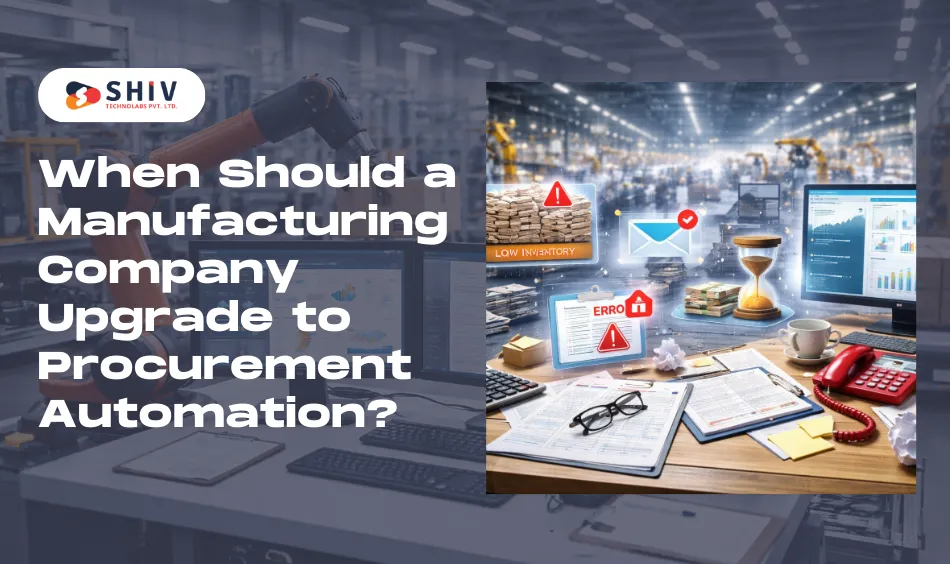
Many factories have kept using manual buying methods for too long. Purchase teams rely on spreadsheets, email approvals, and phone calls until the process becomes too hard to manage. By then, the business already feels the cost through delays and rushed buying.
A company should look at procurement automation for factories when daily purchasing starts slowing production or creating repeated errors. The warning signs usually appear in normal operations, not just in review meetings.
Common signs include:
- Frequent raw material shortages
- Manual purchasing through spreadsheets
- Supplier communication delays
- Procurement visibility issues
- Purchasing errors affecting production
These problems affect more than the purchase team. A missed order can stop production, delay delivery dates, and raise buying costs. An Odoo procurement management system gives teams one process they can track with more control.
Why Is Odoo Procurement Customization Important for Manufacturing Workflows?
Manufacturing companies do not all buy materials in the same way. A food business may need strict supplier checks and short lead times. An engineering company may need separate buying rules for spare parts, machine items, and raw materials.
This is where Odoo procurement customization becomes important. The system should fit the business process instead of forcing teams into a setup that does not match daily work. A better fit usually leads to fewer mistakes and faster approvals.
Manufacturers often customize areas such as:
- Approval levels by order value
- Supplier rules by material type
- Plant-wise buying workflows
- Manager dashboards and reports
- Links between procurement and production planning
These changes make the system more useful in real factory operations. Teams work better when the process feels familiar and clear.
Conclusion
Manufacturers choose an Odoo procurement management system because it gives them stronger control over daily purchasing. Teams can manage requests, approvals, suppliers, and orders from one connected system instead of working across scattered records.
This shift improves buying speed, supplier follow-up, and production support. It also gives managers better visibility into what the purchase team is doing at every stage. For many businesses, this becomes a strong reason to work with Shiv Technolabs and invest in Odoo ERP for manufacturing companies.
FAQs
What does the Odoo procurement management system do?
It manages supplier buying inside one business system. Teams can raise requests, approve orders, track suppliers, and review purchase activity without depending on manual files or long email chains.
How does Odoo automate purchase order management?
Odoo creates buying actions based on stock rules and production demand. It also sends orders through approval flows, so teams can track each step without constant manual follow-up.
Can Odoo manage supplier relationships?
Yes. Odoo stores supplier details, pricing, order history, and delivery records in one place. Buyers can review past performance before they place the next order.
Is the Odoo procurement module suitable for manufacturing companies?
Yes. Manufacturing businesses need close control over raw materials, timing, and supplier performance. Odoo supports that need by connecting procurement with inventory and production.
Do manufacturers need developers to implement Odoo procurement?
Some companies can start with a simple setup. Many factories, though, need custom approvals, supplier rules, and reports. That is why many businesses hire Odoo developers for setup and workflow changes.