Table of Contents
Digital demand is growing across all industries, and businesses are under pressure to deliver websites, SaaS, and digital products at the highest possible speed. Statista also indicates that global IT outsourcing is expected to exceed $777 billion by 2028, reflecting organizations’ increasing reliance on external technical providers to accelerate digital growth.
Many companies in the industry nowadays outsource web development rather than building massive in-house engineering departments. Such a strategy enables businesses to deploy digital-based products at a slower speed, cut operational expenses by 30% or 50%, and expand the development capacity without long-term employment commitments.
White-label development services are one of the most efficient models for this approach: another company creates websites or apps and sells them under its own brand.
Knowledge of industries that require white-label web development helps organizations develop services, manage high demand on projects, and handle complex technical tasks effectively.
What is white-label development?
White-label development is a partnership business model in which a single company creates digital products (websites, e-commerce stores, or web applications) and a different company markets and sells them under its own brand.
In this type of business model, organizations engage a technical partner, a company that specializes in web development projects and operates in the background. The company that communicates with the clients does branding and project management, and the development partner is involved in the coding, integrations, and technical implementation.
White label development services are usually applied by companies in projects like:
- Website design and development
- e-commerce platform development
- SaaS application development
- CMS implementation and customization
- API integrations
- Performance Optimization And Maintenance
The popular use of this model among agencies, startups, and consulting companies is that it enables them to scale development capacity without hiring substantial internal staff.
White-label collaboration offers flexibility, faster delivery, and specialized technical skills to many businesses that outsource web development.
10 Industries That Benefit From White Label Development Support
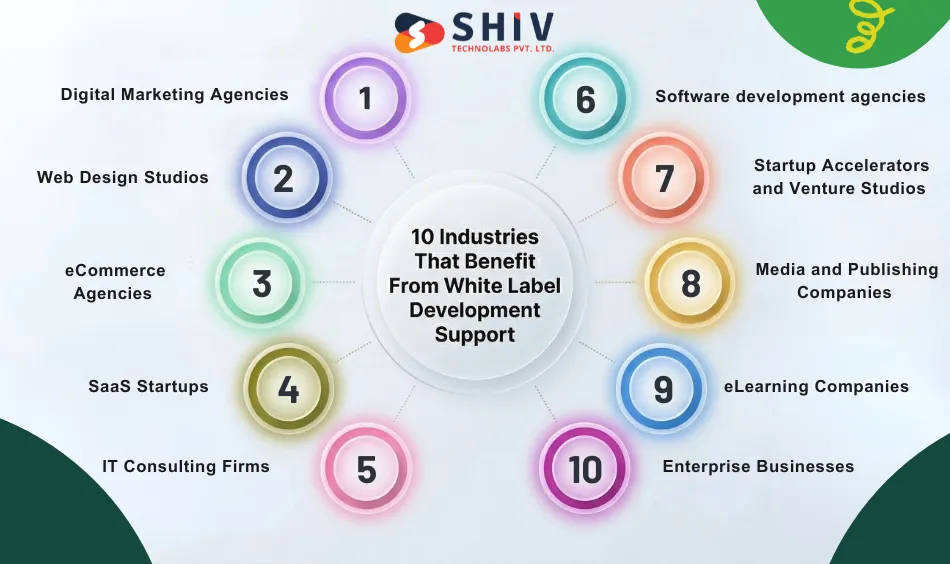
Most industries use white-label development to increase service offerings, accelerate project delivery, and maintain high technical standards without raising operational overhead.
1. Digital Marketing Agencies
Among the most widespread industries that require white-label web development are digital marketing agencies.
Examples of services that marketing agencies deal with include SEO, PPC advertising, branding, and lead generation. Such services usually need websites, landing pages, and marketing automation systems. Rather than employing large development teams, the agencies often outsource their web development to white-label partners.
This enables marketing organizations to:
- Offer Complete Digital Packages Including Development
- Launch SEO-Optimized Websites Quickly
- Manage Multiple Client Projects Simultaneously
- Increase Revenue Without Hiring Developers
2. Web Design Studios
Creative design agencies focus on branding, user experience, and/or UI design, but might fail to implement full-stack development due to a lack of technical proficiency. Most studios outsource their website development projects to white-label partners to transform their design ideas into functional websites.
White-label development assists in the design of agencies:
- Transform Figma or Adobe XD designs into responsive websites
- Build CMS based websites
- Develop Interactive Front-End Experiences
- Maintain Consistent Design Quality Across Projects
This is because designers can concentrate on creativity and developers on coding and technical implementation. This is especially useful when studios need help converting Figma files into production-ready builds, creating custom themes, or setting up content-driven websites through CMS development services.
3. eCommerce Agencies
The fast growth of e-commerce has generated a high demand for e-commerce development expertise. White-label development is a common service offered by e-commerce agencies to build online stores and marketplace platforms.
Some of the common services outsourced encompass:
- Shopify store development
- Magento customization
- Marketplace Platform Creation
- Payment Gateway Integrations
- Performance Optimization For High Traffic Stores
4. SaaS Startups
Startups that develop SaaS platforms do not always have the means to retain full engineering teams in their initial stages. Rather, many founders use white-label web development to speed up product development.
White-label development by startups is used to:
- build MVP products quickly
- test product-market fit
- Launch SaaS platforms faster
- scale development based on growth
This strategy will enable startups to incur lower upfront expenses and access seasoned developers who can build scalable applications.


5. IT Consulting Firms
IT consulting firms frequently create digital transformation strategies for enterprise clients. Nevertheless, such solutions need big development teams. White-label development services have a large number of consulting firms collaborating with them in the execution of complex technical projects.
These projects may include:
- enterprise web portals
- custom business applications
- cloud-based platforms
- API integrations with enterprise systems
The white-labeling arrangements allow consulting companies to focus on strategic planning, and development specialists to execute technical solutions.
6. Software development agencies
The agencies that specialize in software development also occasionally outsource web development projects when their internal facilities are otherwise engaged.
The development of white labels enables the agencies to:
- Scale Engineering Capacity Quickly
- Handle Peak Project Demand
- Deliver Projects On Tight Deadlines
- Access Specialized Technologies
The flexible development model allows the agencies to keep project schedules without growing permanent teams.
7. Startup Accelerators and Venture Studios
Startup accelerators usually release several companies at the same time. It is not very efficient to create development teams individually for each venture.
Several accelerators collaborate with the white-label developers to develop early products.
These partnerships support:
- MVP development
- prototype creation
- marketplace platforms
- SaaS product launches
This allows accelerators to provide services to multiple startups without requiring large engineering teams.
8. Media and Publishing Companies
The media organizations are so dependent on digital platforms to deliver content and increase advertising revenue. HPSs must be continually upgraded in terms of technical features, which is why development agreements are crucial. Development of white labels assists the media companies in developing:
- scalable content management systems
- subscription platforms
- high-traffic news websites
- digital advertising platforms
This enables publishers to work on content as development teams to handle platform performance and scalability. This often includes content management systems, subscription flows, ad-based platform features, and traffic-focused site improvements.
9. eLearning Companies
Video streaming, course management, and interactive learning systems are among the features that require significant development on online education platforms.
Many education providers engage white-label partners to outsource web development for scalable learning platforms.
The typical development projects are:
- LMS platform development
- course marketplace systems
- student dashboards
- online payment systems
10. Enterprise Businesses
Big companies are also using external development agencies to introduce new digital platforms or replace old ones.
Enterprises typically contract white-label services to develop specific projects or short-term projects despite their internal IT teams.
These projects may involve:
- Corporate Web Portals
- Internal Workflow Systems
- Customer Platforms
- Massive Web Applications
Concepts that have been applied through this model enable businesses to increase their ability to develop without additional permanent staffing expenses.
How to Choose a White Label Development Company?

It is important to choose the appropriate white-label development firm to preserve quality, reliability, and confidentiality.
Test the Technical Expertise
The development partner must have demonstrated their skill and competencies in various technologies, including React, Laravel, Shopify, and enterprise CMS systems. Past project reviews help confirm technical capabilities.
Check Development Processes
Dependable partners pursue organized growth strategies, such as agile processes and project management, and quality assurance methods.
Secure Confidentiality and Branding
Given that white-label partnerships are conducted in the background, it is critical to ensure confidentiality and stringent brand protection policies.
Evaluate Support and Communication
Communication helps keep projects on track with client expectations. Find partners that provide frequent updates, clear documentation, and reliable customer service.
Conclusion
White labeling has emerged as a potent tool for businesses interested in expanding their services without building extensive engineering teams within their companies.
Marketing agencies and design studios are just one example of the many industries that require a white-label web development company, and enterprise organizations are also among the companies that use outsourced technical resources to deliver their projects efficiently and at scale.
Shiv Technolabs offers professional white-label development services, enabling agencies and businesses to outsource website development work with high confidence while maintaining privacy and high development standards.
With an experienced team and a background in modern technologies, Shiv Technolabs can help the company expand its development capacity, deliver high-quality digital solutions, and increase its client base without adding internal teams.
Frequently Asked Questions (FAQs)
1. What industries commonly outsource web development?
Some of the industries that outsource development include digital marketing and e-commerce, SaaS startups, IT consulting, media publishing, and e-learning, in order to grow their services and handle complex digital projects without creating large in-house development departments.
2. Why do agencies use white-label development services?
White-label development is an approach agencies use to provide technical projects under their brand, code them, and have them implemented by external developers. This enables agencies to concentrate on strategy, marketing, and client relationships.
3. Is white-label development cost-effective for businesses?
Yes, white-label development can save 30-50% on operational costs compared to maintaining a full in-house engineering team while still providing access to experienced developers.
4. How do businesses maintain their branding through white-label development?
The developers of white labels are behind the scenes. The customer service company deals directly with customers and provides the final product under its brand.