Table of Contents
Estimating the cost of developing an iOS app often creates confusion for founders and product teams. Different companies give very different quotes for similar ideas. This happens because the app cost depends on features, design depth, integrations, and technical decisions.
Many businesses start with a rough budget but miss key components during planning. As development progresses, new requirements emerge, increasing both cost and timeline. A clear understanding of cost structure helps you avoid these issues and plan your investment properly.
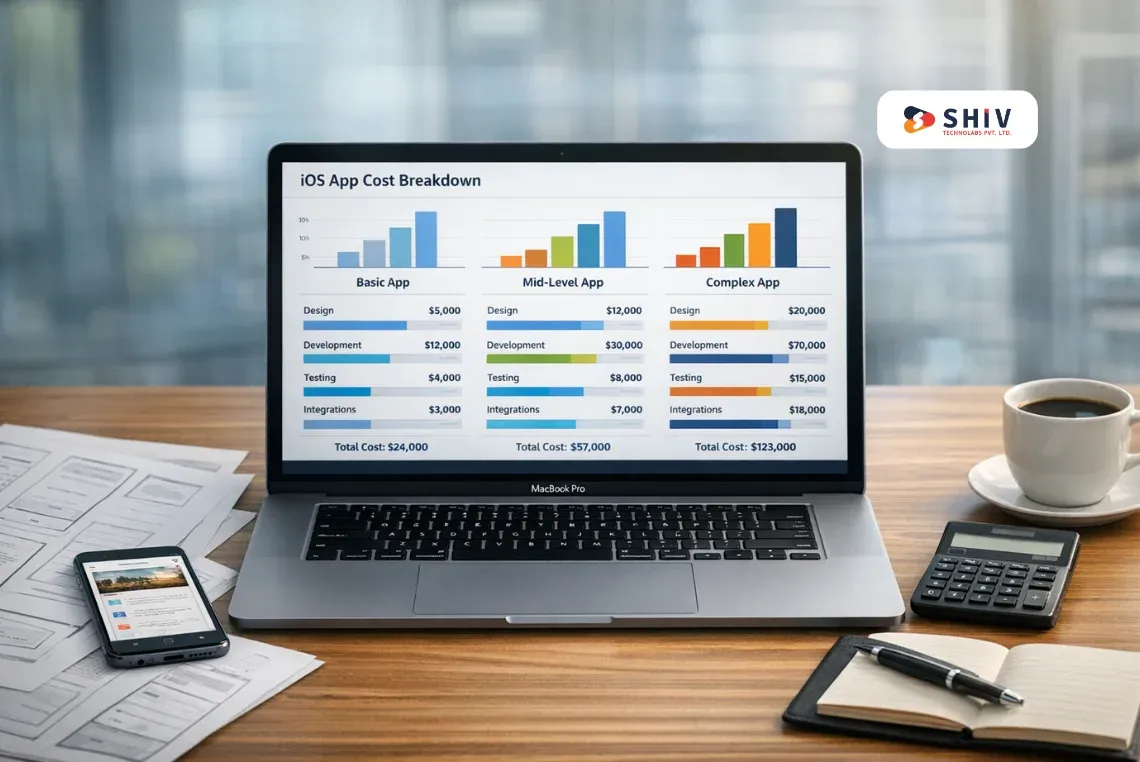
So basically, the average cost to develop an iPhone app starts around $15,000 for basic apps and can exceed $300,000 for advanced platforms. Most business apps fall between $40,000 and $120,000, depending on features, integrations, and development complexity. These ranges vary based on project scope and execution approach.
In this guide, you will get a clear view of how iOS app costs work from a practical point of view. You will find cost ranges, breakdowns, and real case scenarios that affect pricing. This will help you make better decisions before hiring an iOS app development company.
What Is the Average Cost to Develop an iOS App?
The cost of iOS app development varies based on the type of app you want to build. A simple app with basic functionality requires less effort than a product with advanced features and integrations. The more complex your app becomes, the higher the development cost.
To understand this clearly, look at how different types of apps are priced.
| App Type | Features Included | Estimated Cost |
|---|---|---|
| Basic App | Static screens, simple workflows | $15,000 – $40,000 |
| Business App | APIs, dashboards, user roles | $40,000 – $120,000 |
| Advanced App | Real-time data, integrations, scaling | $120,000 – $300,000+ |
Basic apps usually include a limited number of screens and minimal backend logic. These apps work well for simple use cases or internal tools. Business apps include user accounts, dashboards, and third-party integrations, which increase both effort and cost.
Advanced apps require real-time processing, strong backend systems, and high performance. These apps need careful planning and a structured development approach. That is why their cost increases significantly.
Public benchmarks also support this wide range. Many app projects fall into mid-five to low-six-figure budgets, depending on complexity and timeline. This shows that there is no fixed price for app development, and every project needs its own evaluation.
Why iOS App Development Costs Vary So Much?
Many founders ask why two companies quote completely different iOS app development costs for a similar idea. The answer lies in how each team understands the scope and builds the solution.
1. Scope changes everything
Two apps may look similar from the outside, but their internal structure can be very different. A basic booking app and a real-time logistics platform both fall under mobile apps, but their complexity is not the same.
If your app requires multiple user roles, dashboards, and integrations, the cost increases quickly. A simple idea can turn into a complex system when you define all requirements clearly.
2. Features are not equal
Every feature does not carry the same cost. A login screen is simple, but real-time chat or video streaming requires advanced systems. When you combine multiple high-complexity features, the cost increases rapidly.
Here are some elements that affect cost heavily:
- Real-time data processing
- Multiple user roles and permissions
- Payment and subscription systems
- Advanced analytics and reporting
- Offline functionality
- Third-party integrations
Each additional feature adds development time, testing effort, and maintenance needs.
3. Architecture drives cost silently
Many businesses focus only on screens and design. However, backend architecture and system structure affect cost more than visual elements.
A scalable backend requires proper database design, API structure, and security layers. If your app expects growth, the development team must plan this early. Poor planning at this stage leads to rework and higher costs later.
iOS App Development Cost Breakdown by Stage
To understand your total budget, you need to break the process into stages. Each stage contributes a portion of the overall cost.
| Development Stage | What It Includes | Estimated Share of Budget |
|---|---|---|
| Discovery | Scope definition, planning, and feature mapping | 5% – 10% |
| UI/UX Design | Wireframes, user flows, visual design | 10% – 20% |
| Frontend Development | iOS screens, interactions, app logic | 25% – 35% |
| Backend Development | APIs, database, authentication | 20% – 35% |
| Testing & QA | Bug fixing, performance testing | 10% – 15% |
| Launch | App Store submission and support | 3% – 7% |
This breakdown helps you see where you resolve your very big question, which is “how much does it cost to build an ios app”. Most of the cost is spent on development, but design and testing also play important roles.
1. Discovery and Planning
This stage defines your app’s structure and features. The team maps user flows, identifies technical requirements, and creates a development plan.
A strong discovery phase reduces confusion during development. It helps avoid scope changes and improves cost control.
2. UI/UX Design
Design shapes how users interact with your app. A clear and simple design improves usability and reduces friction, and that is how it affects the cost of iOS app development.
| Design Type | Description | Cost Range |
|---|---|---|
| Basic UI | Standard layouts | $2,000 – $5,000 |
| Custom UI | Brand-focused design | $5,000 – $15,000 |
| Advanced UX | Animations and interactions | $15,000 – $40,000 |
Apps with complex flows and custom interactions require more design effort. This increases both time and cost.
3. Frontend Development
Frontend development builds the visual part of the app. It includes layouts, animations, and user interactions.
This stage usually takes a large portion of the budget. Complex UI elements and dynamic features increase development effort.
4. Backend Development
Backend systems handle data, logic, and communication between systems. They support user accounts, APIs, and real-time features.
Backend cost increases when your app needs scalability and high performance. Strong backend architecture is critical for long-term success.
5. Testing and Quality Assurance
Testing ensures your app works correctly before launch. It identifies bugs and improves performance.
Apps with more features require more testing cycles. This increases cost but reduces risk after launch.
6. Launch and App Store Submission
The final stage includes preparing your app for the App Store. You need to follow Apple guidelines and complete the submission process.
The Apple Developer Program costs $99 per year. You may also spend time reviewing updates and improvements.

Cost Based on App Complexity
App complexity plays a major role in determining the final cost. As complexity increases, the need for advanced systems and integrations also increases.
| Complexity Level | Features Included | Timeline | Estimated Cost |
|---|---|---|---|
| Simple App | Static content, minimal logic | 2–4 months | $15,000 – $40,000 |
| Medium App | APIs, login, database | 4–8 months | $40,000 – $120,000 |
| Complex App | Real-time features, AI, integrations | 8–12+ months | $120,000 – $300,000+ |
Simple apps work well for early-stage ideas and internal tools. Medium apps support business operations and customer interactions. Complex apps require strong systems and long-term planning.
By now, you can identify the complexity level of your app. This clarity helps you estimate a realistic budget and get a clear answer to how much it costs to build an Apple app.
Feature-Based iOS App Development Cost Breakdown
Most founders think in terms of app ideas, but development teams think in terms of features. Each feature adds a specific amount of effort, and combining multiple features increases the total cost.
Instead of guessing the full price, it is better to break your app into feature components. This gives you better control over scope and budget.
| Feature | Complexity | Estimated Cost Impact |
|---|---|---|
| User login or social login | Low | $1,000 – $3,000 |
| User profile management | Low to medium | $2,000 – $6,000 |
| Push notifications | Low to medium | $1,500 – $4,000 |
| Payment gateway integration | Medium | $3,000 – $10,000 |
| GPS tracking and maps | Medium | $4,000 – $12,000 |
| In-app chat | Medium to high | $6,000 – $20,000 |
| Video streaming or calling | High | $15,000 – $40,000 |
| AI-based recommendations | High | $15,000 – $60,000+ |
| Admin dashboard | Medium to high | $5,000 – $20,000 |
You should not treat these features as isolated items. In real projects, features connect with each other and create additional complexity. For example, adding payments also requires security checks, user flows, and backend validation.
When you stack multiple medium or high-complexity features, the cost increases faster than expected. That is why feature prioritization plays a key role in cost control.
AI-Powered iOS App Development Cost
AI features are changing how modern iOS apps work and how much they cost to build. Adding AI increases both development effort and infrastructure requirements. The cost depends on the type of AI features, data processing needs, and system complexity.
Common AI features that impact cost
- AI chatbots for customer support or in-app assistance
- Recommendation engines based on user behavior
- Image recognition and object detection
- Voice assistants and speech processing
- Predictive analytics and data insights
- AI-based personalization systems
Each of these features requires data handling, model integration, and backend processing. Some apps use pre-built AI APIs, while others need custom models, which increases cost.
In most cases, adding basic AI features can increase your app budget by $10,000 to $40,000. Advanced AI systems with custom models and real-time processing can push costs beyond $50,000 or more.
Cost Based on Industry Use Case
The industry you operate in also affects development cost. Different industries require different levels of security, compliance, and functionality.
Some industries demand more advanced systems, which increases development effort and cost.
| Industry | Why Cost Changes | Estimated Cost Range |
|---|---|---|
| eCommerce | Product catalog, payments, user flows | $40,000 – $150,000 |
| Healthcare | Data security, compliance, patient systems | $80,000 – $250,000+ |
| FinTech | Transactions, security layers, reporting | $100,000 – $300,000+ |
| Logistics | Live tracking, route systems, dashboards | $70,000 – $220,000 |
| EdTech | Video, progress tracking, subscriptions | $50,000 – $180,000 |
For example, a healthcare app must handle sensitive data and follow strict security rules. A fintech app must manage transactions and prevent fraud. These requirements increase both development time and cost.
On the other hand, an eCommerce app focuses more on user experience and payment flow. While still complex, it usually requires fewer compliance layers compared to fintech or healthcare.
Key Cost Drivers You Must Understand Before Starting
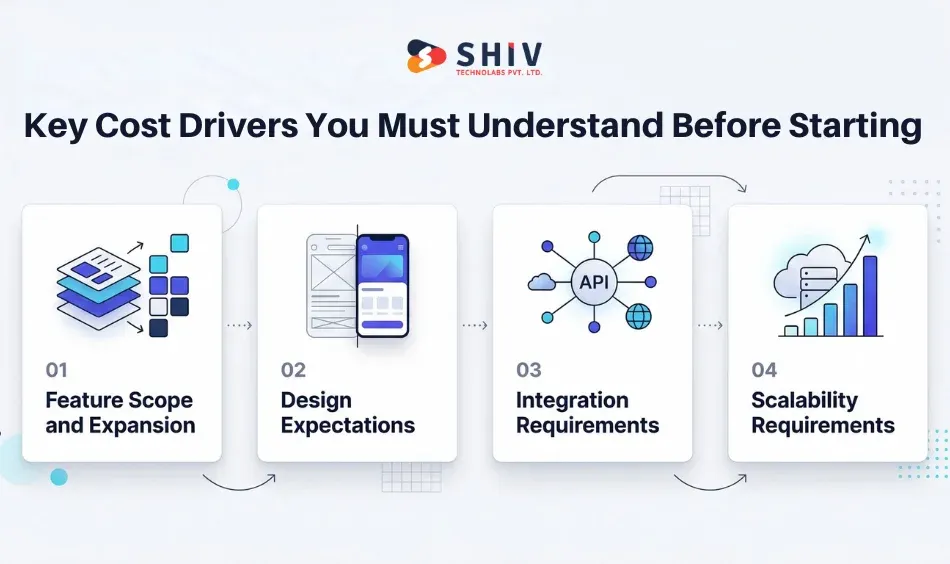
Even with all the breakdowns, certain factors have a stronger impact on cost than others. These factors often decide whether your project stays within budget or exceeds it.
1. Feature scope and expansion
Every additional feature increases development time, testing effort, and system complexity. Many projects fail because businesses keep adding features during development.
You should define a clear feature list before starting. Separate must-have features from future enhancements.
2. Design expectations
Simple designs cost less and take less time to implement. Custom designs with animations and transitions require more effort.
If your app depends heavily on user experience, you will need to invest more in design and frontend development.
3. Integration requirements
Third-party integrations such as payment gateways, CRMs, or analytics tools add complexity. Each integration requires development, testing, and maintenance.
You should only include necessary integrations in the first version of your app.
4. Scalability requirements
If you expect your app to grow quickly, you need a strong backend from the beginning. This increases initial cost but reduces future rework.
If you build without scalability in mind, you may need to rebuild parts of your system later.


Hidden Costs Most Businesses Ignore
Many businesses focus only on development costs and ignore long-term expenses. These hidden costs affect your app after launch and can become significant over time.
You need to plan for these costs early to avoid surprises.
| Hidden Cost | Frequency | Estimated Range |
|---|---|---|
| Apple Developer Program | Annual | $99/year |
| App maintenance | Annual | 15% – 20% of development cost |
| Server and hosting | Monthly | $100 – $5,000+ |
| Third-party services | Monthly | $50 – $2,000+ |
| Updates and improvements | Ongoing | Varies |
Maintenance includes bug fixes, performance improvements, and compatibility updates. As iOS versions change, your app must stay updated.
Server costs increase as your user base grows. Third-party tools also add recurring expenses that many businesses ignore during planning.
Dig Deeper: Converting iOS App to Android App
Cost to Develop an iOS App Based on the Team’s Location
The location of your development team plays a major role in your total budget. Different regions have different hourly rates, which directly affect the final cost.
| Country | Hourly Rate | Project Cost Range |
|---|---|---|
| United States | $100 – $250+ | $80K – $300K+ |
| United Kingdom | $80 – $180 | $70K – $250K |
| Germany | $70 – $160 | $60K – $220K |
| Poland | $40 – $100 | $40K – $150K |
| Ukraine | $40 – $100 | $40K – $140K |
| India | $20 – $50 | $20K – $100K |
US-based teams usually charge higher rates but offer strong domain experience. European teams provide a balance between quality and cost.
The iOS app development cost in India is lower and offers skilled iOS app developers. Many businesses choose offshore or hybrid models to reduce cost while maintaining quality.
MVP vs Full-Scale iOS App Development
One of the biggest decisions you will make is whether to build a full product or start with an MVP. Many successful apps begin with a smaller version that focuses only on core functionality.
An MVP allows you to test your idea with real users before making a large investment. It reduces risk and gives you feedback early in the process.
| Aspect | MVP App | Full Product |
|---|---|---|
| Goal | Validate the idea and user demand | Build a complete product with full features |
| Features | Core functionality only | Full feature set |
| Timeline | 2–4 months | 6–12+ months |
| Cost | $15,000 – $60,000 | $60,000 – $300,000+ |
| Risk | Lower upfront risk | Higher investment risk |
An MVP works well for startups and new ideas. It helps you understand what users need and what features matter most. You can improve the product in phases instead of building everything at once.
A full product approach makes sense when you already have validation, funding, or a clear business model. However, it requires a higher budget and longer development time.
1. When Should You Build an MVP?
You should consider an MVP approach if you are unsure about user demand or product direction. It helps you launch faster and learn from real usage data.
Here are common situations where MVP works best:
- You are testing a new business idea
- You want to reduce the initial investment
- You need a faster time to launch
- You want user feedback before scaling
An MVP focuses only on essential features. It avoids unnecessary complexity and keeps development focused.
Must Read: What Comes After MVP?
2. When Should You Build a Full Product?
A full product approach works better when your requirements are clear and validated. It suits businesses that already understand their users and workflows.
You can consider this approach when:
- You have confirmed user demand
- You have a defined feature roadmap
- You are building an internal business system
- You have sufficient budget and timeline
In such cases, building a complete product from the start may save time in later stages.
Cost Based on Development Timeline
The development timeline directly affects your budget. Longer projects require more resources, which increases cost.
Understanding timeline-based cost helps you plan your release strategy.
| Development Time | App Type | Estimated Cost |
|---|---|---|
| 1–2 months | Basic MVP | $15,000 – $40,000 |
| 3–5 months | Standard app | $40,000 – $100,000 |
| 6–9 months | Advanced app | $100,000 – $200,000 |
| 9+ months | Enterprise app | $150,000 – $300,000+ |
Short timelines are suitable for MVPs and simple apps. Longer timelines indicate more complex features and systems.
You should align your timeline with your business goals. A rushed project may lead to quality issues, while a well-planned timeline improves results.
How to Reduce iOS App Development Cost Without Compromising Quality?
Reducing cost does not mean cutting corners. It means making smart decisions that improve efficiency and avoid unnecessary work.
1. Start with clear planning
A clear scope reduces confusion during development. It helps the team focus on the right features and avoid rework.
2. Focus on essential features
Many apps fail because they try to include too many features in the first version. You should focus on core functionality and expand later.
3. Use reusable components
Developers can reuse existing libraries and frameworks to save time. This reduces development effort without affecting quality.
4. Avoid unnecessary integrations
Each integration adds complexity and cost. You should include only essential integrations in the initial version.
5. Work with experienced teams
Experienced teams understand common challenges and avoid mistakes. This reduces delays and improves overall efficiency.
Also Read: Mobile App Development Costs
Common Mistakes That Increase App Development Cost
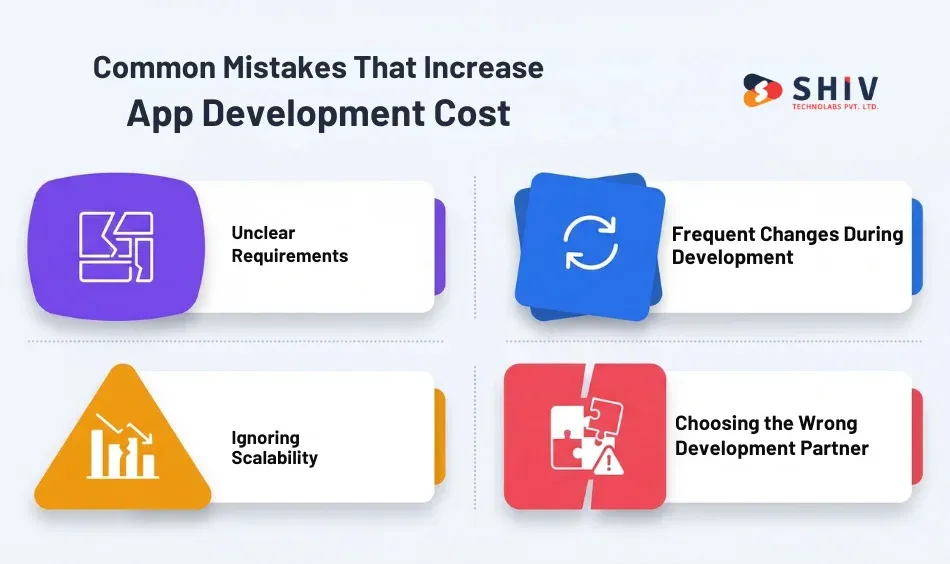
Many projects exceed budget due to avoidable mistakes. Understanding these mistakes helps you plan better.
1. Unclear requirements
When requirements are not defined properly, the team makes assumptions. This leads to rework and increased cost.
2. Frequent changes during development
Changing features during development disrupts the workflow. It increases both time and cost.
3. Ignoring scalability
Building a system without scalability leads to future problems. Fixing these issues later costs more than planning early.
4. Choosing the wrong development partner
An inexperienced team may offer lower pricing but deliver poor results. This often leads to delays and additional costs.
How to Choose the Right iOS App Development Partner?
Choosing the right development partner plays a major role in your project’s success. The wrong choice can lead to delays, poor quality, and higher costs over time.
You should not select a team based only on price. Instead, focus on their ability to understand your requirements and execute them properly.
What to evaluate before choosing a partner
- Experience with similar apps or industries
- Ability to define clear scope and timelines
- Strong communication and reporting process
- Understanding of scalability and long-term planning
- Post-launch support and maintenance capability
A good development partner helps you refine your idea and avoid unnecessary complexity. They guide you through the process instead of just writing code.
Development Approaches and Their Cost Impact
The approach you choose for development also affects cost, speed, and risk. Each model has its own advantages and limitations.
| Approach | Cost | Speed | Risk |
|---|---|---|---|
| In-house team | High | Slow | Medium |
| Freelancers | Low to medium | Unpredictable | High |
| Development agency | Medium | Fast | Low |
| Offshore or hybrid team | Medium | Fast | Low |
An in-house team gives you full control but requires high investment and time for hiring. Freelancers may reduce costs, but often create coordination challenges.
A development agency provides structured processes and reliable delivery. Offshore or hybrid models help balance cost and expertise.
Why Execution Matters More Than Estimation
Many businesses spend too much time comparing quotes and very little time planning execution. Even a well-estimated project can fail if execution is not structured.
Execution includes how the team manages development, handles feedback, and adapts to changes. A strong execution process reduces delays and keeps the project on track.
You should focus on:
- Clear communication during development
- Regular progress updates
- Defined milestones and deliverables
- Continuous testing and validation
These factors improve efficiency and reduce unexpected costs.
Why Businesses Choose Shiv Technolabs for iOS App Development
Shiv Technolabs focuses on delivering structured iOS app development services for startups and enterprises. The team follows a clear process that aligns development with business goals.
Businesses choose Shiv Technolabs because of their ability to combine planning with execution. The team works closely with clients to define scope, prioritize features, and deliver scalable solutions.
Key strengths
- Experience with 250+ completed projects
- Team of 55+ skilled developers
- Strong focus on a structured development process
- Ability to handle both MVP and full-scale applications
- Support for post-launch improvements and scaling
This approach helps businesses reduce risk and maintain clarity throughout the project.
Final Thoughts
The cost of developing an iOS app depends on multiple factors, including features, design, complexity, and development approach. There is no fixed price, but a structured understanding of these elements helps you plan effectively.
You should focus on building the right product instead of building everything at once. A clear scope, smart feature selection, and proper planning help you control cost and reduce risk.
Choosing the right development partner plays a critical role in turning your idea into a successful application. With the right strategy and execution, you can build an iOS app that delivers long-term value.
Contact Shiv Technolabs and schedule a free consultation call directly with the iOS experts today!
People Also Ask!
How much does it cost to build a basic iOS app?
A basic iOS app usually costs between $15,000 and $40,000. The cost depends on features, design, and development effort.
How long does it take to develop an iOS app?
Development time ranges from 2 to 12 months, depending on complexity. Simple apps take less time, while complex apps require longer development.
What affects iOS app development cost the most?
Feature complexity, integrations, backend systems, and design requirements have the biggest impact on cost.
Is it better to start with an MVP?
Yes, starting with an MVP reduces risk and helps validate your idea. It allows you to improve the product based on user feedback.
What are the ongoing costs after launch?
Ongoing costs include maintenance, hosting, third-party services, and updates. These costs are important for long-term success.