
Table of Contents
Many brands choose laravel development services to plan and build secure apps for scale and growth steadily. A modern Laravel Web Application uses a clean MVC structure, strong security, and steady performance under real traffic. This stack supports quick releases, clear testing, and practical features without heavy maintenance or fragile plugins.
Our team builds on proven patterns that keep budgets predictable and delivery timelines steady across milestones. We plan modules that match real operations, then ship in phases with clear goals and testing gates. You gain maintainable code, reliable security, and tools that scale as adoption grows across teams over time.
This blog explains ten models for a Laravel Web Application that support growth across common business cases. From eCommerce to CRM, we cover features, add-ons, and steps that help projects start strong and scale reliably. Use these examples to shape scope, timelines, and releases that match your current roadmap well.
Why Choose Laravel for Modern Web Application Development?
Every Laravel build benefits from Laravel Web Application Development methods that favor clarity, speed, security, and scale.
How Laravel Simplifies Web App Creation
- MVC pattern with clean code
- Built-in routing and caching
- Strong authentication and CSRF protection
Benefits That Make Laravel a Developer Favorite
- Scales for large projects
- API and microservice support
- Blade templates for quick views
What Are the 10 Types of Laravel Web Applications You Can Build?
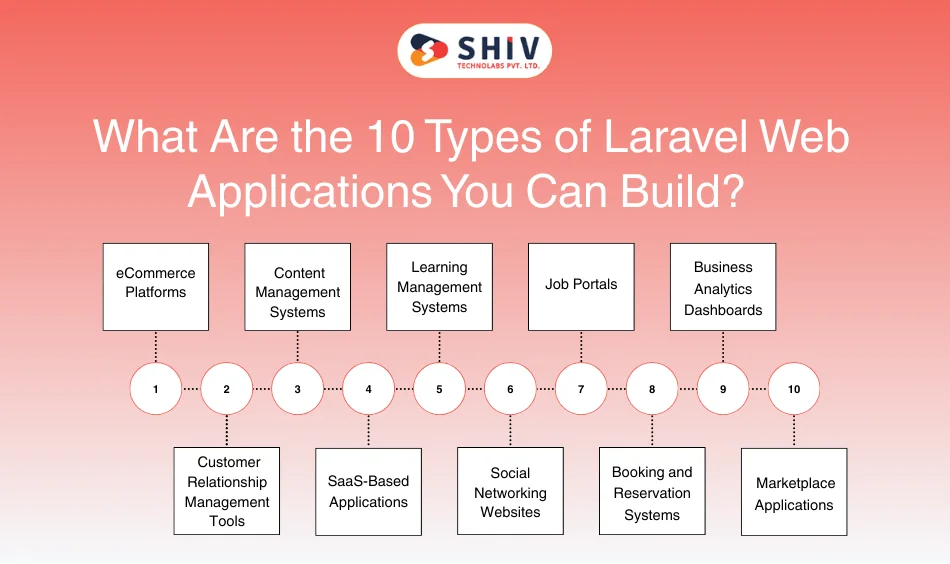
1) eCommerce Platforms
Laravel gives your store solid control across products, carts, coupons, taxes, and role-based admin tasks daily. Add gateways, refunds, shipping rates, and order tracking that match real operations, regional rules, and carrier rules. Stock sync, backorders, and low-stock alerts keep orders moving during campaigns and seasonal peaks without delays for customers.
Multi-vendor modules support vendor onboarding, commissions, payouts, catalog limits, and settlement cycles with clean reporting and audit trails. ERP, POS, and marketing tools connect through APIs for steady data and accurate stock positions and purchase orders. Plan phased releases for subscriptions, loyalty, and warehouses as sales grow and budgets allow over time with minimal risk.
Link it to your stack with eCommerce development. For third-party sellers, use Marketplace App Development.
2) Content Management Systems (CMS)
Laravel suits dynamic content across teams and brands with workflows that match real editorial needs and branding rules. Editors get roles, drafts, approvals, and media libraries that keep publishing clean, auditable, and fast at scale. Design page types, blocks, and menus with Blade for consistent layouts and rapid template work during sprints.
Multilingual content, SEO fields, and sitemap jobs support steady organic growth across regions and channels over time. Scheduled posts and webhooks align campaigns with launches and keep feeds current across platforms for customers. Teams add forms, gated assets, and newsletters without heavy custom code or fragile extensions when required. Pair with WordPress development for headless or hybrid builds.
3) Customer Relationship Management (CRM) Tools
Laravel helps sales teams track leads, accounts, deals, and tasks in one clear workspace daily. Pipelines show progress, while activity logs record calls, notes, meetings, and follow-ups across stages accurately. Managers view reliable forecasts and conversion rates for reviews that drive actions and better conversations.
Score leads, route contacts, and notify reps when actions are due or missed automatically today. Email, phone, and chat integrations centralize outreach and reduce costly context switching for teams significantly. APIs connect billing, support, and data warehouses, while queues keep background jobs responsive during peaks.
4) SaaS-Based Applications
Laravel suits multi-tenant SaaS with clean separation across tenants, roles, and plans for predictable growth. You can add subscription billing, coupons, metered usage, tax handling, and dunning without tangled code or painful rewrites. Background jobs process invoices, emails, and file tasks so users get quick screens during heavy load.
Admins gain audit logs, feature flags, and health checks for safer releases across regions and tiers. Public APIs connect with analytics, support desks, and finance tools for accurate records and faster reporting throughout quarters. Our team can ship an MVP, map a clear roadmap, and expand modules once adoption grows steadily. See SaaS development services for patterns and add-ons.
5) Learning Management Systems (LMS)
Laravel helps teams publish courses, lessons, quizzes, and certificates with clear authoring tools and role controls. Students track progress with dashboards, reminders, and badges that keep motivation strong during longer programs and cohorts. You can add bundles, subscriptions, and payment gateways with refunds and taxes for multiple regions.
Video hosting, transcripts, and caption support improve access while protecting content for paid students across markets. Admins view cohort analytics, quiz stats, and churn signals to plan better sessions across the calendar. Webhooks and APIs link LMS data with CRM, email tools, and classrooms for organized operations across departments.


6) Social Networking Websites
Laravel supports profiles, posts, comments, and follows with clear privacy settings and reporting tools for moderation. Real-time channels power chat, typing states, reactions, and alerts that feel quick during busy hours each day. Feeds can rank items by recency, signals, or groups without fragile workarounds or risky patterns.
Media uploads handle images, clips, and documents with queues, thumbnails, and storage tiers for costs and speed. Admin dashboards track growth, abuse flags, and content trends that help teams make better decisions. Public APIs and mobile SDKs keep partners and apps aligned with the network’s features as communities expand. Use Social media app development to guide chat, feed, and content pipelines.
7) Job Portals
Laravel helps candidates search for roles with filters for skills, salary bands, locations, and work formats. Companies post jobs, invite applicants, and review stages inside employer dashboards with notes and team comments. Resume upload supports parsing, saved profiles, and quick apply flows that reduce friction during busy hiring cycles.
Credit packs, sponsorships, and subscriptions create clear revenue paths for different customer sizes and niches. Integrations link roles with ATS tools, calendars, and messaging, so teams keep work in one place. Reporting covers application sources, time-to-hire, and campaign performance to guide smarter budget decisions each quarter.
8) Booking and Reservation Systems
Laravel supports bookings for hotels, clinics, events, and rentals with clear calendars and time slots. Teams manage pricing rules, add-ons, refunds, and confirmation emails without fragile hacks or risky manual edits. Gateways, taxes, and coupons work across regions, while reminders reduce no-shows and late cancellations.
Admins see occupancy, revenue, and source breakdowns that guide pricing and campaigns across seasons. APIs connect listings with OTAs, CRMs, and message tools so staff keep work in one place daily.
9) Business Analytics Dashboards
Laravel helps teams view live KPIs through charts, filters, and comparisons that support quick reviews. Data lands from CRMs, ERPs, and ad platforms into unified views with role-based access and audit trails. Schedulers refresh reports on intervals, while exports share results with managers and partners during reviews.
Alert rules flag anomalies, slowdowns, and churn risks so teams act before targets slip. Embeddable widgets bring critical metrics into portals, intranets, and mobile apps without duplicated work.
10) Marketplace Applications
Laravel supports multi-vendor catalogs, carts, commissions, and settlements with vendor portals and dispute workflows. You can add shipping rules, service fees, returns, and refunds that match real policies and partner needs. Ratings, questions, and private messages build trust, while fraud checks protect buyers and sellers during peaks.
Public APIs help partners sync stock, prices, and orders across channels with steady accuracy. Admins track revenue, seller health, and repeat rates to guide growth without guesswork or unclear signals.
Type of Laravel Web Applications
| Type of Application | Key Features | Best Use Case |
|---|---|---|
| eCommerce Platform | Inventory, checkout, API | Retail businesses |
| CMS | Content roles, SEO tools | Publishers, agencies |
| CRM Tool | Leads, analytics | Sales teams |
| SaaS App | Multi-tenant, scalable | Subscription products |
| LMS | Courses, assessments | Education firms |
| Social Network | Messaging, profiles | Communities |
| Job Portal | Resume upload, filters | Recruitment |
| Booking System | Calendar, payments | Hotels, travel |
| Analytics Dashboard | Reports, charts | Enterprises |
| Marketplace | Vendors, order tracking | eCommerce startups |
How Much Does It Cost to Build Web Applications with Laravel?

Budgets depend on scope, integrations, and timelines, plus hosting and security choices after launch. The ranges below help with planning, then we refine numbers during discovery and technical scoping.
| Application Type | Estimated Cost (USD) | Timeline |
|---|---|---|
| Basic Web App | $3,000 – $6,000 | 3–4 weeks |
| Medium App (CRM/LMS) | $8,000 – $15,000 | 6–10 weeks |
| Enterprise Solution | $20,000+ | 12+ weeks |
How Laravel Development Services Add Value to Businesses
Faster Development Cycles
Packages, queues, and artisan tools cut build time, test cycles, and release risk. Teams ship MVPs sooner, then add modules based on data from real users.
High-End Security and Stability
CSRF protection, hashed passwords, and vetted packages protect accounts and transactions. Logs and audits support compliance needs across regions and industries without painful rework.
Easy Maintenance and Scalability
Modular code, queues, and caching patterns support growth without large rewrites. Version upgrades follow a clear path, which keeps future costs predictable for stakeholders.
How to Choose the Right Team for Your Laravel Web Application Project
For solid results in Laravel Web Application Development, shortlist proven teams such as Shiv Technolabs with clear delivery records. Review past work and speak with client references to understand scope control and problem-solving. Ask about testing depth, documentation standards, and handover steps after launch for smooth operations across teams.
- Check portfolio quality and recent releases
- Validate communication habits and reporting cadence
- Confirm QA coverage, staging access, and roll-back plans
- Request post-launch support terms and response times
Conclusion
Laravel gives teams a clear path to build secure, fast apps that match real business needs. Its MVC structure, rich packages, and tooling support quick releases without risky shortcuts or fragile plugins. You get readable code, steady performance, and security patterns that hold during traffic spikes and audits.
Projects move faster when modules reflect operations, budgets stay predictable, and testing gates protect each milestone. Queues, caches, and APIs keep screens responsive while background work clears in order, even under load. Roles, logs, and audits give managers confidence during changes, reviews, and handoffs across squads and vendors.
Your next step is choosing a partner who knows Laravel patterns, risks, and delivery tradeoffs very well today. Work with a trusted laravel development company to plan scope, phase features, and support growth after launch. That partnership cuts risk, speeds feedback, and delivers measurable outcomes with clear accountability across your roadmap and teams.
FAQs – Related to Laravel Web Application Development
Q1. Why pick Laravel for a new web app?
Laravel offers a clean structure, strong security, and reliable packages. Teams ship faster, test better, and maintain code confidently across releases.
Q2. How long does a typical project take?
Small apps land within four weeks, while CRM or LMS builds need six to ten weeks. Enterprise platforms require phased delivery over longer timelines.
Q3. Can Laravel connect to third-party services?
Yes, gateways, CRMs, analytics, and shipping tools connect through stable APIs. Teams keep data consistent across systems without duplicate entry or brittle scripts.
Q4. Is Laravel suitable for large organizations?
Yes, queues, caching, and modular design support large workloads. Role controls and audits help teams meet policy and compliance needs across departments.
Q5. What affects the overall project cost the most?
Scope, integrations, and security choices drive cost. Discovery workshops reduce surprises and set realistic milestones for budgets and teams.