Table of Contents
Agencies today are under constant pressure to deliver mobile and web applications faster, without increasing internal team size or operational risk. Clients expect full-scale app solutions, but building and maintaining a large in-house development team is not always practical or cost-effective.
This is where white-label application development becomes a reliable delivery model. Instead of hiring, training, and scaling internal resources, agencies work with an external development team that builds applications under the agency’s brand. The agency remains the primary point of contact for the client, while the technical execution happens behind the scenes.
Used correctly, white-label app development allows agencies to take on more projects, meet tight timelines, and expand service offerings without compromising quality or control. In this guide, we’ll break down how the model works, when it makes sense, and what agencies should evaluate before choosing a white-label app development partner.

What Does White-Label App Development Mean?
In app development, white label refers to a delivery model where a development team builds an application that is branded, presented, and delivered under another company’s name. The end client never interacts with the external development team and experiences the project as if it were handled entirely in-house by the agency.
To put it simply, a white-label app is developed by one team but sold and supported by another. The agency manages client communication, requirements, pricing, and delivery timelines, while the white-label partner focuses on technical execution.
This model is different from standard outsourcing. In typical outsourcing, the development vendor is often visible to the client and may operate independently. With white-label application development, the agency retains full ownership of the client relationship, branding, and positioning. Source code ownership, IP rights, and confidentiality are clearly defined through agreements, allowing agencies to maintain long-term control over the product.
For agencies looking to expand app services without building new teams, white label development provides a structured, low-risk way to deliver complex applications while staying fully client-facing.
How the White Label Model Works for Agencies?

The white label model is designed to fit smoothly into an agency’s existing workflow. Instead of changing how you sell or manage clients, it strengthens the delivery side of your business while keeping your brand fully visible.
Below is a typical flow agencies follow when working with a white-label development team.
1. Discovery and Scope Planning
The process starts with understanding the client’s requirements, timelines, and technical expectations. The agency gathers all project details and aligns internally before sharing a clear scope with the white-label team. This avoids rework and keeps delivery predictable from the start.
2. Team Alignment and Onboarding
Once the scope is finalized, a dedicated development team is assigned. This team works as an extension of the agency, following its communication style, reporting structure, and delivery standards. NDAs and confidentiality agreements are finalized at this stage to protect client data and IP.
3. Development and Feature Execution
The white label app development team handles everything based on the pre-approved scope. The agency remains in control of client updates, while progress is shared through regular internal check-ins, task boards, and milestone reviews.
4. Testing, Branding, and Review
Before delivery, the application goes through quality checks to ensure stability, performance, and consistency with the agency’s branding. Any feedback from internal reviews is addressed before the client sees the product.
5. Launch and Ongoing Support
After approval, the app is launched under the agency’s name. Post-launch support, updates, and enhancements can continue through the same white-label team, allowing agencies to offer long-term maintenance without expanding in-house resources.


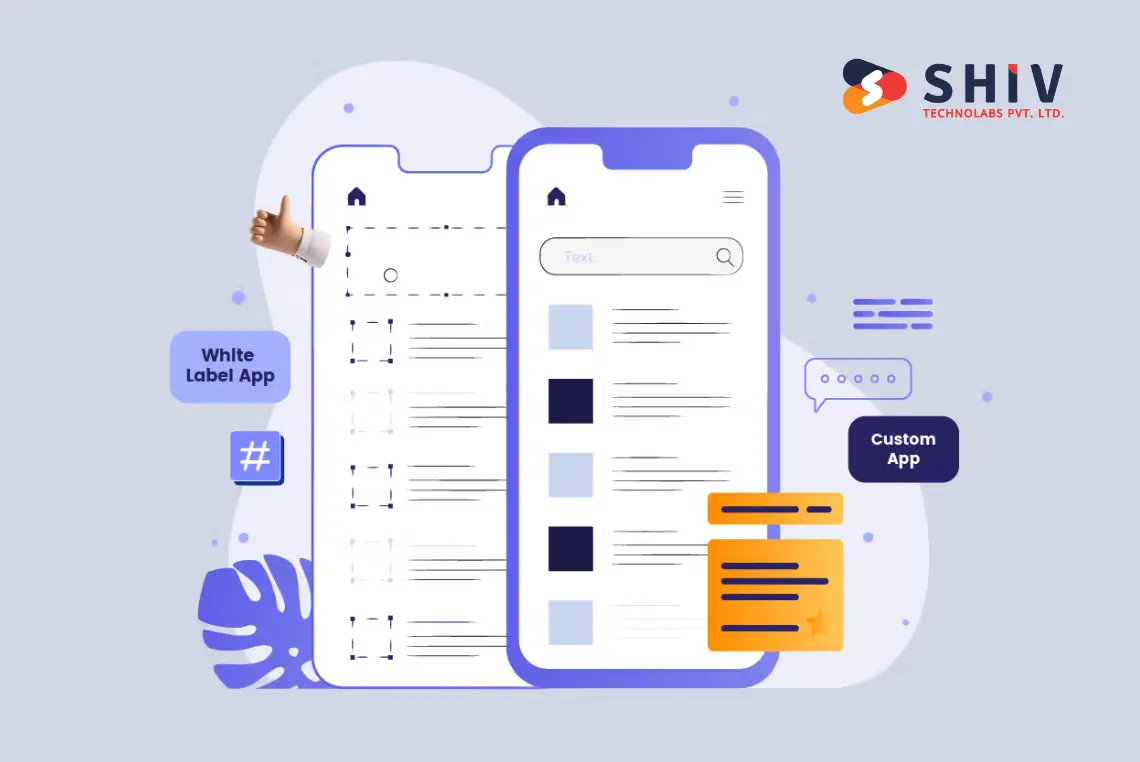
White-Label App Development vs Custom-Built Applications
Agencies often evaluate white-label app development against fully custom-built applications when planning long-term delivery strategies. Both approaches have valid use cases, but they serve different business needs depending on timelines, resources, and scale.
The table below highlights the key differences agencies should consider before choosing a model.
| Aspect | White Label Development | Custom-Built Development |
|---|---|---|
| Time to Start | Quick onboarding with an existing team | Requires hiring or internal team setup |
| Delivery Ownership | Agency remains client-facing | The agency manages both the client and the development |
| Cost Structure | Predictable, engagement-based | Higher upfront and long-term staffing costs |
| Team Scalability | Easy to scale up or down per project | Scaling requires recruitment and training |
| Customization Level | Moderate to high, based on scope | Fully tailored from the ground up |
| Best Fit For | Agencies handling multiple client projects | Agencies with stable, long-term internal teams |
For agencies managing fluctuating workloads or entering new app development services, white-label app development provides flexibility without the commitment of building and maintaining a large in-house team. Custom development, on the other hand, works better when an agency has consistent demand and dedicated technical leadership in place.
Situations Where Agencies Choose This Model
White label development is not meant for every scenario, but it becomes highly effective when agencies face specific operational or growth challenges. Below are common situations where this model makes practical business sense.
- Sudden increase in project volume: Agencies often see spikes in demand after winning large accounts or running successful sales campaigns. White-label teams help absorb this workload without rushing internal hires.
- Limited in-house mobile expertise: Many agencies specialize in web or design, but receive client requests for mobile applications. White-label mobile app development allows agencies to offer these services without building a new technical department.
- Tight delivery timelines: When projects have fixed launch dates, relying on an experienced external team reduces the risk of delays caused by hiring, onboarding, or skill gaps.
- Entering new service offerings: Agencies expanding into app-based solutions can test demand and build a portfolio before committing to permanent internal teams.
- Cost control and predictable margins: White-label engagement models provide clearer cost structures, helping agencies maintain margins while scaling delivery.
In these scenarios, white-label development acts as a controlled extension of the agency rather than a temporary outsourcing solution.
Industries Using White Label App Solutions

Agencies across many industries rely on white-label development to meet client expectations while maintaining delivery speed and consistency. The model works especially well in sectors where application demand is high and timelines are tight.
- SaaS and Product Platforms: SaaS-focused agencies often use white-label teams to build customer-facing dashboards, admin panels, and mobile apps without slowing down product release cycles.
- Healthcare and Wellness: From appointment scheduling to patient engagement apps, agencies serving healthcare clients use white-label development to handle complex builds while meeting compliance and security requirements.
- Fintech and Payment Solutions: Fintech projects require precision, performance, and strong data protection. White label development supports agencies delivering secure apps for payments, lending, and financial management.
- eCommerce and Marketplaces: Agencies building apps for online stores and marketplaces rely on white-label solutions for features like order management, user accounts, and mobile commerce experiences.
- Logistics and Field Services: Tracking, scheduling, and fleet management apps are commonly developed through white-label teams, allowing agencies to deliver operational tools without internal capacity strain.
- Education and Learning Platforms: EdTech agencies use white-label development for learning apps, content delivery platforms, and user management systems, especially when rapid scaling is required.
Common Challenges Agencies Face (And How They Solve Them)
While white label development offers flexibility and scale, agencies need to be aware of potential challenges to avoid delivery or relationship issues. Understanding these risks upfront helps agencies use the model effectively.
1. Customization Limitations
Some white-label solutions, especially app builders or pre-built frameworks, may restrict how deeply an application can be customized. Agencies address this by working with partners that support custom feature development rather than fixed templates.
2. Dependency on External Teams
Relying on an external team can feel risky if communication or availability is inconsistent. Agencies reduce this risk by setting clear reporting processes, dedicated points of contact, and defined response times from the start.
3. Source Code Ownership and IP Concerns
Unclear ownership terms can create problems during future updates or client handovers. Strong white-label partnerships clearly define source code ownership, IP rights, and usage terms in formal agreements.
4. Maintaining Consistent Quality
When delivery is handled outside the agency, quality control becomes critical. Regular code reviews, testing standards, and internal checkpoints help agencies maintain consistency across all projects.
5. Communication Gaps
Misaligned expectations between agencies and white-label teams can slow delivery. Agencies solve this by using shared project management tools, structured updates, and clear documentation.
Handled correctly, these challenges become manageable operational considerations rather than blockers to growth.
How to Choose the White Label App Development Partner?
Choosing the right white-label app development partner plays a major role in delivery quality, client satisfaction, and long-term scalability. Agencies should evaluate partners beyond technical skills and focus on how well they can integrate into existing workflows.
1. Technical Depth and Platform Coverage
A reliable partner should have experience across platforms such as iOS, Android, and web applications. This allows agencies to take on diverse projects without worrying about skill gaps or rework.
2. Experience Working Under White Label Models
Not every development team is comfortable working behind the scenes. Agencies should look for partners who understand white-label delivery, follow agency branding guidelines, and respect client confidentiality at every stage.
3. Security, NDA, and IP Protection
Strong confidentiality practices are essential. NDAs, data protection policies, and clear IP ownership terms help agencies protect client trust and avoid future legal complications.
4. Communication and Reporting Structure
Regular updates, shared dashboards, and defined escalation paths prevent misunderstandings. A partner that communicates clearly reduces delivery risk and keeps projects on track.
5. Scalability and Team Continuity
As project volume changes, the partner should be able to scale teams up or down without disrupting ongoing work. Consistent team allocation also helps maintain code quality and project familiarity.
A structured evaluation process ensures agencies choose partners that support growth rather than create operational friction.
Cost Factors Agencies Should Evaluate
The cost of white label development varies based on multiple project and engagement factors. Rather than focusing on fixed pricing, agencies benefit more from understanding what influences overall cost and long-term value.
Key factors to consider include:
- Project complexity: Applications with advanced workflows, third-party integrations, or custom features require more development effort than basic builds.
- Platform requirements: Costs can differ depending on whether the project includes iOS apps, Android apps, web applications, or a combination of platforms.
- Engagement model: Pricing may follow hourly, monthly, or dedicated team models. Each option offers different levels of flexibility and cost predictability.
- Customization depth: Greater customization often increases development time, especially when moving beyond pre-built components or standard modules.
- Ongoing support and maintenance: Post-launch updates, bug fixes, and feature enhancements add to long-term costs but help maintain app stability and client satisfaction.
By evaluating these factors early, agencies can choose a delivery model that aligns with their budget, project scope, and growth goals.
Why This Model Helps Agencies Scale Faster?
For agencies handling multiple client projects, growth is often limited by delivery capacity rather than demand. White-label development services remove this bottleneck by separating client management from technical execution.
With an external team handling development, agencies can onboard new clients faster without waiting to hire or train additional staff. This leads to more predictable delivery timelines and better control over project commitments.
The model also reduces operational risk. Instead of carrying long-term hiring costs, agencies can scale resources based on active projects. This flexibility helps maintain stable margins, especially during fluctuating workloads.
Most importantly, agencies gain the freedom to focus on sales, strategy, and client relationships. By offloading execution to a trusted white-label partner, teams spend less time managing technical overhead and more time building long-term client value.
White Label Application Development by Shiv Technolabs
Shiv Technolabs supports agencies with white-label application development that fits directly into existing delivery workflows. Our teams work behind the scenes, allowing agencies to stay fully client-facing while maintaining control over quality, timelines, and ownership.
We collaborate closely with agency teams to handle application development across mobile and web platforms, following defined processes, security standards, and confidentiality requirements. This approach helps agencies manage higher project volumes without internal capacity strain.
What agencies get with Shiv Technolabs:
- Dedicated white-label development teams
- Clear IP ownership and NDA-backed delivery
- Flexible engagement models based on project needs
- Structured communication and progress reporting
- Long-term support for ongoing client projects
Talk to Our White Label Team or Contact Shiv Technolabs today!
Final Thoughts
White-label application development gives agencies a practical way to scale delivery without increasing internal complexity. By separating client management from technical execution, agencies can take on more projects, meet tighter deadlines, and maintain consistent quality.
Like any delivery model, success depends on how it’s implemented. Clear processes, strong communication, and well-defined ownership terms play a major role in long-term results. When agencies choose the right development partner and use the model strategically, white-label development becomes a stable foundation for sustainable growth.
For agencies navigating rising client expectations and limited internal capacity, this approach offers flexibility without sacrificing control.
Frequently Asked Questions
What is white-label application development?
White-label application development is a delivery model where an external development team builds an app that is branded and delivered under an agency’s name. The agency manages the client relationship while the development work happens behind the scenes.
Is white-label app development different from outsourcing?
Yes. In standard outsourcing, the development vendor may interact directly with the client. In a white-label model, the agency remains the sole client-facing entity, and the development partner operates fully in the background.
Who owns the source code in white-label projects?
Source code ownership is typically defined in the contract. In most white-label arrangements, agencies retain full ownership so they can maintain, scale, or transfer the application as needed.
Can white-label apps be customized after launch?
Yes. White-label applications can be enhanced or modified over time, depending on the scope, architecture, and agreement with the development partner.
Is this model suitable for enterprise clients?
Many agencies use white-label app development for enterprise projects, especially when timelines are tight or specialized skills are required. Clear processes and strong communication are key at this scale.
How do agencies manage clients while working with white-label teams?
Agencies handle all client communication, while internal updates and progress reports come from the white-label team. This keeps the experience consistent and professional for the client.
Are white-label app builders a good long-term option?
App builders can work for simple use cases, but agencies often prefer custom white-label app development for better flexibility, scalability, and long-term control.