Table of Contents
A startup may have a strong app idea but still struggle with two practical questions: how much will it cost, and how long will it take? Building every planned feature at once often creates a large budget, a long delivery schedule, and a product that has not yet been tested with real users.
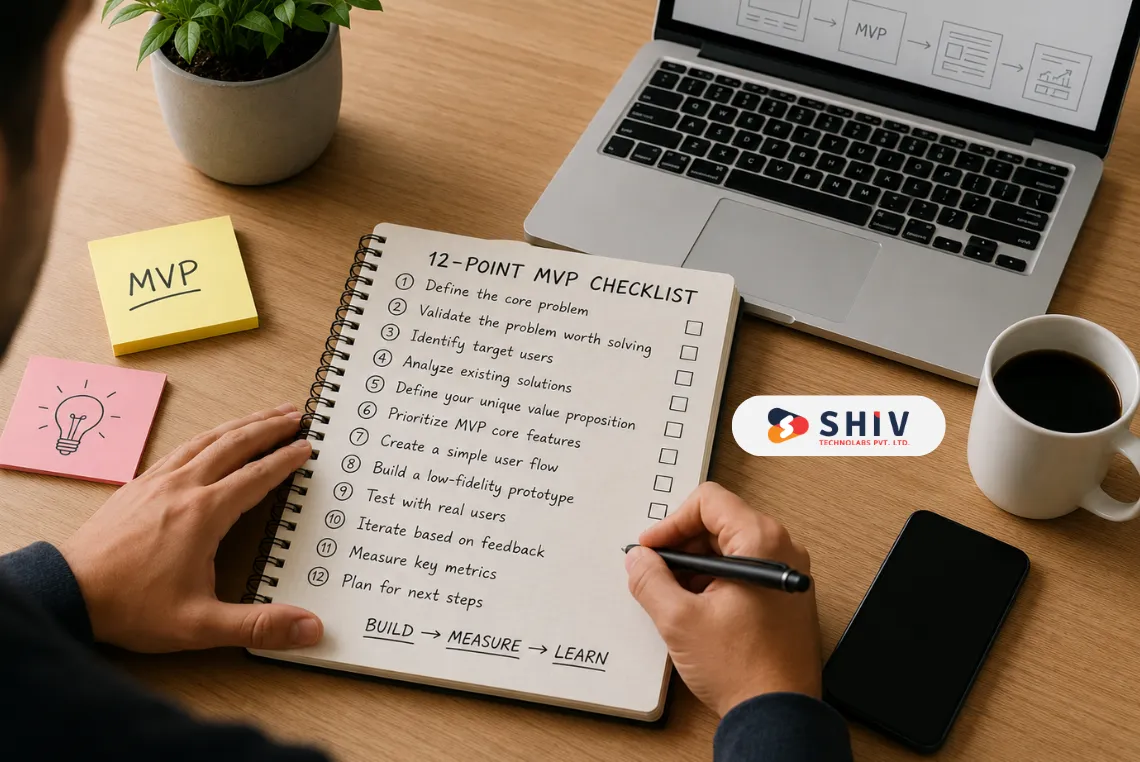
A minimum viable product, or MVP, offers a more practical route. It gives users one complete solution to a clear problem while leaving secondary features for later releases. Founders can test demand, collect feedback, and make better product decisions before committing more money.
This guide explains the expected MVP app development cost in 2027, common delivery timelines, cost factors, technology choices, AI-assisted development, and post-launch expenses. The figures are planning estimates based on late-2026 development conditions, not fixed industry prices.
Quick answer: MVP app development in 2027 may cost between $15,000 and $50,000 for a focused custom application and take approximately 8–16 weeks. Complex applications with AI features, multiple integrations, or advanced security requirements may cost over $100,000. The final budget depends on product complexity, technology, development team, and post-launch requirements.
Note: All 2027 development costs and timelines in this guide are illustrative planning estimates, not confirmed industry averages or fixed project quotations.
What Is an MVP App, and Why Should Startups Build One?
A minimum viable product is the smallest functional version of an application that allows businesses to test their core product idea with real users. It includes the essential features customers need to complete a specific task while helping founders collect feedback and understand whether the product addresses a genuine problem.
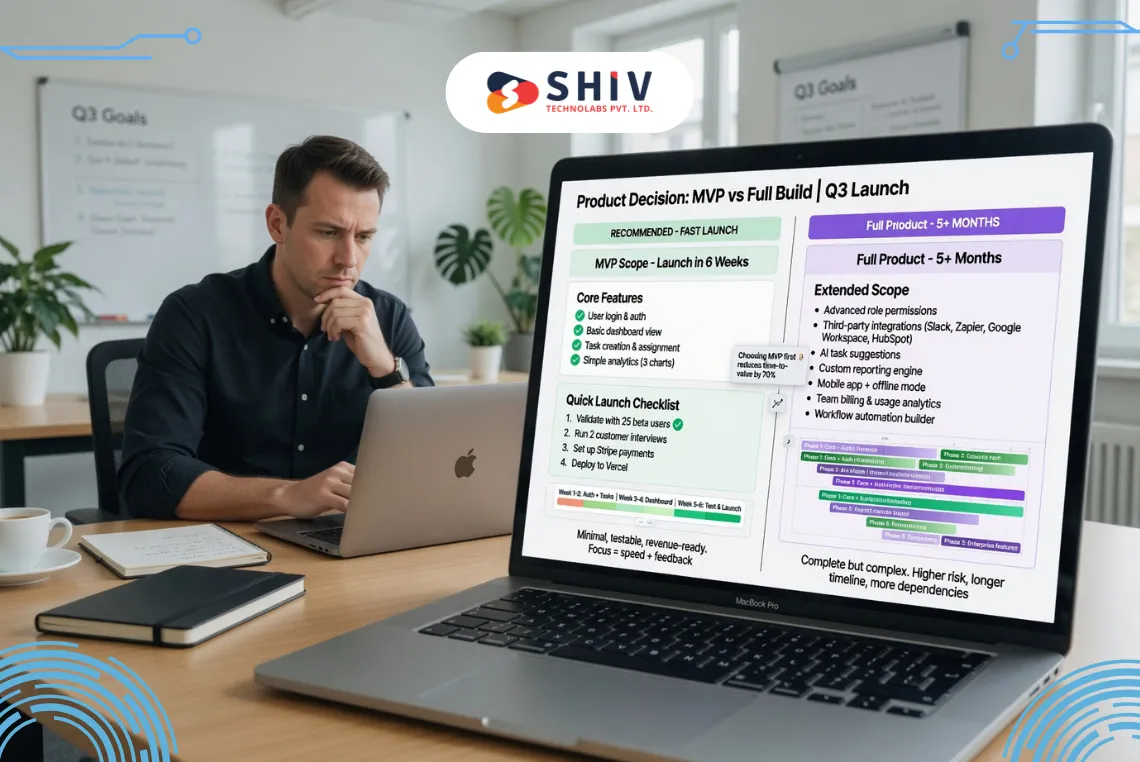
Unlike a full-scale application, an MVP focuses on validating business assumptions rather than offering every planned feature. This approach allows startups to manage their initial investment and make future development decisions based on customer behavior.
MVP vs. Prototype vs. Full Product
| Comparison | Prototype | MVP | Full Product |
| Primary purpose | Test a concept | Validate a business idea | Serve a wider customer base |
| Functionality | Limited or simulated | Essential working features | Extensive functionality |
| Target users | Internal teams and testers | Early customers | Broader audience |
| Development cost | Lower | Moderate | Higher |
| User feedback | Design and usability | Product value and demand | Customer satisfaction and growth |
| Launch readiness | Generally not production-ready | Ready for limited public use | Ready for wider commercial use |
How Does an MVP Benefit Startups?
An MVP helps founders identify whether customers are willing to use or pay for a product before committing additional resources. It also provides early evidence that can support discussions with investors, guide product improvements, and reduce uncertainty around future development.
Key benefits of MVP development include:
- Lower initial development investment
- Faster product validation
- Early customer feedback
- Reduced development risks
- Better feature prioritization
- Evidence for investor discussions
- Clearer product development roadmap
Expert insight: An MVP should have fewer features, not lower quality. Customers must be able to complete the core workflow reliably for their feedback to provide meaningful business insights.
How Much Does MVP App Development Cost in 2027?
The estimated cost of building an MVP app in 2027 ranges from $15,000 to $50,000 for a focused custom application. Startups can spend less by using no-code platforms for early validation, while applications with complex business logic, real-time functionality, and advanced integrations require a larger investment.
As a broader reference point, Clutch reports that many mobile app projects fall between $10,000 and $49,999, with common agency rates between $25 and $49 per hour. These figures cover mobile development generally and should be treated as a benchmark rather than a confirmed MVP average. Clutch’s app development pricing guide provides further context on project budgets and rate differences.
MVP App Development Cost by Complexity
| MVP Type | Estimated Cost | Development Timeline | Suitable For |
| Prototype or no-code validation | 3,000–15,000 | 2–6 weeks | Early business idea testing |
| Focused custom MVP | 15,000–50,000 | 8–16 weeks | Startups with defined requirements |
| Integration-heavy MVP | 50,000–100,000 | 3–6 months | SaaS platforms and marketplaces |
| Complex AI or regulated MVP | $100,000+ | 4–9+ months | AI, fintech, and regulated applications |
All costs are in USD and represent estimated planning ranges.
Simple MVP Development
A simple MVP focuses on one primary user problem and includes limited screens, basic functionality, and minimal integrations. Startups can use no-code platforms or lightweight development frameworks to validate customer interest. This approach works well when founders need early feedback before investing in custom software.
Medium-Complexity MVP Development
A medium-complexity MVP may include user authentication, payment processing, notifications, an administrative dashboard, and third-party integrations. These applications require more development and testing because several components must work together. Founders can review this detailed MVP development cost guide to understand how technical requirements and team structures influence project estimates.
Complex and AI-Powered MVP Development
Complex MVPs involve advanced functionality such as real-time communication, multiple user roles, AI-powered recommendations, sensitive data processing, or custom integrations. These requirements increase the work involved in application architecture, backend development, security, and quality testing. The cost also depends on whether the team uses existing AI APIs or develops custom machine learning models.
How Long Does It Take to Build an MVP App?
Most focused custom MVP applications take approximately 8–16 weeks to develop. Simpler validation applications may take just a few weeks, while products with complex integrations, regulatory requirements, or advanced AI functionality may require several months.
A realistic MVP development timeline covers more than coding. Founders must allocate sufficient time for requirements planning, design approval, infrastructure setup, testing, and launch preparation. Some activities can run simultaneously when responsibilities and technical dependencies are clear.
A 12-Week MVP Development Timeline
| Development Phase | Timeline | Expected Deliverable |
| Discovery and planning | Weeks 1–2 | Approved product requirements |
| UI/UX design and architecture | Weeks 3–4 | Prototype and technical plan |
| Core application development | Weeks 5–8 | Functional MVP |
| QA and integration testing | Weeks 9–10 | Tested release candidate |
| User acceptance and launch preparation | Weeks 11–12 | Launch-ready application |
Discovery and Requirements Planning
The development team begins by understanding the target audience, business objectives, and core product requirements. Founders should identify the problems users face and determine which features help solve them. A documented scope gives the team a clear direction and provides a reliable foundation for estimating development costs.
UI/UX Design and Prototyping
Designers create user flows, wireframes, and interactive prototypes to establish how customers will interact with the application. Reviewing designs before development helps teams identify confusing workflows and resolve usability concerns without making expensive code changes. Particular attention to mobile UI design can help establish consistent navigation, readable interfaces, and accessible interactions.
Core Application and Backend Development
Developers build the application interface, database, business logic, APIs, and essential integrations during this stage. The team may divide development into short sprints so founders can review working functionality regularly. Frequent demonstrations also help identify differences between documented requirements and business expectations.
Testing and User Acceptance
Quality assurance teams review application functionality, device compatibility, performance, security, and integration behavior. Founders and selected users should test the application against agreed acceptance criteria. Structured software quality assurance services can help identify defects before the product reaches its intended audience.
Application Launch and User Feedback
Once testing is complete, the team prepares the production environment, monitoring tools, analytics, and application store submissions. Startups should also establish a process for collecting customer feedback and reporting technical problems. Google Play has specific testing requirements for eligible new personal developer accounts, which founders should consider when planning public release dates.
Consider: A 12-week development schedule does not automatically guarantee public availability within 12 weeks. External approvals, integration dependencies, and application store reviews may affect the final launch date.
How Is AI-Assisted Development Changing MVP Costs and Timelines in 2027?
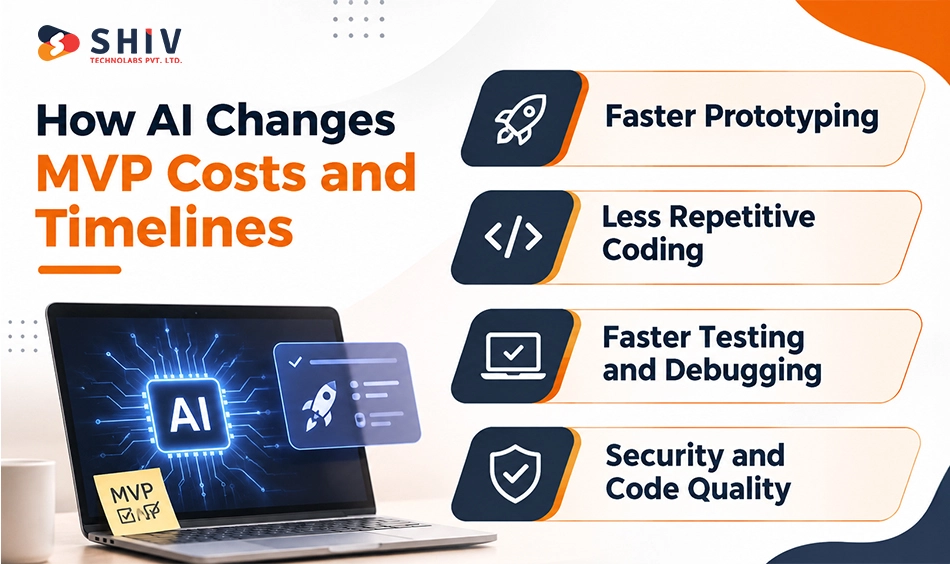
AI-assisted development can reduce the time developers spend writing repetitive code, preparing documentation, creating interface components, and generating test cases. This gives development teams more time to focus on complex business logic, application architecture, and technical decisions that require human expertise.
However, using AI coding tools does not automatically make every MVP cheaper. The financial benefits depend on the quality of generated code, project requirements, developer experience, and the time required for reviewing and testing AI-generated outputs.
Faster Prototyping and UI Development
AI tools can help designers and developers create initial interface layouts, reusable components, and interactive prototypes. Startups can review different design concepts before committing to a particular user experience. This makes early product discussions more productive and can reduce unnecessary design revisions during development.
Reduced Repetitive Coding Work
AI coding assistants can generate routine functions, suggest code improvements, and help developers understand existing codebases. Tools such as GitHub Copilot support several activities throughout the software development process. Developers must still evaluate generated code against application requirements, security standards, and architecture decisions.
Better Testing and Debugging Support
AI tools can suggest test scenarios, identify potential coding problems, and assist with debugging. These capabilities can reduce some manual preparation work, but generated test cases may not cover every business scenario. Development teams should combine AI assistance with automated testing, manual testing, and human code reviews.
Traditional vs. AI-Assisted MVP Development
| Development Activity | Traditional Development | AI-Assisted Development |
| Requirements documentation | Manual preparation | AI-supported initial drafts |
| UI development | Manual component creation | Generated component suggestions |
| Application coding | Developer-written code | Assistance with routine code |
| Software testing | Manually prepared test scenarios | AI-suggested test cases |
| Debugging | Manual investigation | AI-supported error analysis |
| Code review | Human-led review | AI suggestions with human verification |
| Product validation | Customer research | Assistance with feedback analysis |
Security and Code Quality Remain Essential
AI-generated code may contain incorrect logic, security vulnerabilities, or unsuitable dependencies. GitHub’s responsible use guidelines for Copilot recommend reviewing and testing generated outputs before accepting them. Startups should include this verification effort in their development estimates instead of assuming that generated code is ready for production.
Expert insight: AI can help developers write code faster, but clear product requirements determine whether that code solves the right problem. Founders should measure AI-assisted development by accepted functionality, defect rates, and total delivery effort rather than the volume of code generated.
What Factors Affect MVP Development Cost and Timeline?
The cost of developing an MVP depends on the amount of technical work required to deliver a reliable product. Two applications with a similar number of screens can have very different development budgets because of differences in backend logic, integrations, security, and data processing requirements.
Understanding these factors before requesting development proposals helps startups prepare more accurate budgets and identify opportunities to reduce unnecessary expenses.
1. Number and Complexity of Features
Every feature requires planning, development, integration, and testing. Basic registration and profile management typically require less effort than real-time messaging, automated scheduling, or complex payment workflows. Founders should evaluate the business value of each proposed feature before including it in the initial release.
2. Application Platform
Developing an MVP for iOS, Android, and web browsers can increase costs because each platform introduces additional development and testing requirements. Cross-platform frameworks may reduce duplicate implementation work when mobile operating systems share similar business requirements. Startups should initially focus on the platform their target customers are most likely to use.
3. UI/UX Design Requirements
Applications using standard interface components generally require less design effort than products with custom interactions, animations, and complex navigation. However, reducing design expenditure should not come at the expense of usability. A clear interface helps customers understand the product and provides more reliable feedback during validation.
4. Backend Development and API Integrations
Database architecture, business logic, payment gateways, external APIs, and administrative tools can significantly influence MVP development costs. Each integration introduces technical dependencies that developers must manage during implementation and testing. Founders should identify essential integrations during discovery to avoid unexpected development work.
5. AI Features, Security, and Compliance
Adding AI functionality may introduce expenses for model usage, data preparation, response evaluation, and monitoring. Applications handling financial, healthcare, or personal information may also require additional privacy and security controls. These requirements should form part of the initial project scope rather than being treated as later additions.
6. Development Team Size and Location
Developer rates vary according to location, technical expertise, experience, and engagement model. Larger teams may complete independent tasks simultaneously, but they also require more coordination. Comparing hourly rates alone does not provide a complete picture of development costs because productivity, code quality, and rework also affect the final budget.
Which Development Approach Should Startups Choose for an MVP?
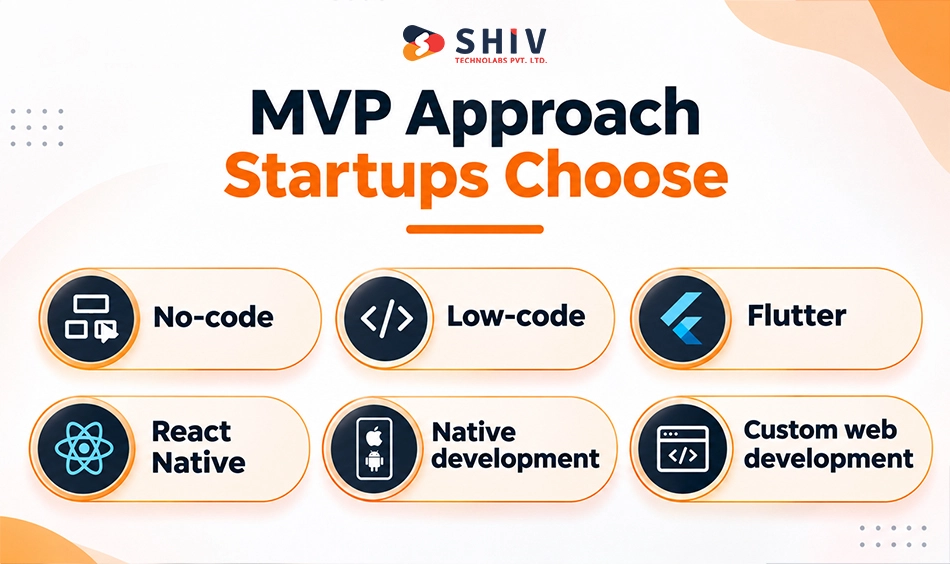
The best MVP development approach depends on what the startup needs to validate, how customers will access the product, and which technical requirements are essential. No-code platforms can support early testing of straightforward concepts, while custom development provides greater control over business logic, data, and future functionality.
Founders should consider both initial development expenses and the long-term cost of maintaining or extending the chosen technology.
| Development Approach | Best For | Key Advantage | Important Consideration |
| No-code | Simple product validation | Faster initial setup | Customization limitations |
| Low-code | Workflow-based applications | Reduced manual coding | Platform dependencies |
| Flutter | iOS and Android MVPs | Shared mobile codebase | Native plugin requirements |
| React Native | Cross-platform mobile apps | JavaScript ecosystem | Native integration effort |
| Native development | Device-specific applications | Direct platform access | Separate platform development |
| Custom web development | SaaS and browser-based products | Broad device accessibility | Device-specific limitations |
No-Code and Low-Code MVP Development
No-code and low-code platforms allow startups to create functional applications with less manual programming. They are suitable for simple booking systems, internal tools, customer portals, and early-stage product experiments. Solutions such as FlutterFlow for mobile app development can support rapid prototyping when requirements fit within the platform’s capabilities.
Before choosing this approach, founders should review subscription costs, data ownership, source code availability, integration limits, and migration requirements.
Cross-Platform MVP Development
Cross-platform development allows teams to share a significant portion of application code across iOS and Android. Frameworks such as Flutter and React Native support this approach and can help startups manage development effort when both mobile platforms are essential.
The choice between these frameworks depends on team expertise, interface requirements, existing technology, and device-specific functionality. Both approaches still require platform-specific testing and may involve additional native development.
Native Mobile App Development
Native development uses platform-specific technologies such as Swift for iOS and Kotlin for Android. This approach is suitable for applications requiring direct access to device features, advanced graphics, or specialized platform functionality. Startups should consider whether these capabilities justify the additional development investment before selecting native development for multiple platforms.
Custom Web and SaaS MVP Development
A web-based MVP allows users to access the product through a browser without installing a mobile application. It is often suitable for SaaS platforms, business dashboards, marketplaces, and subscription-based products. Founders can initially launch a responsive web application and introduce dedicated mobile apps when customer behavior supports the investment.
Consider: AI-assisted development is not a separate application platform. Developers can use AI coding tools alongside Flutter, React Native, native development, and custom web technologies.
Which Features Should Startups Include in Their MVP?
An MVP should include the minimum functionality required to solve a specific customer problem and validate the startup’s business assumptions. Adding too many features before collecting user feedback can increase costs without providing meaningful evidence of product demand.
Founders should start by identifying the primary user journey and determining which features are necessary to complete it. Security, reliability, and essential data protection should remain part of the initial scope, even when other functionality is postponed.
MVP Feature Prioritization Checklist
| Include in the Initial MVP | Consider After Validation |
| Core product functionality | Advanced personalization |
| Essential authentication | Additional login options |
| Basic user management | Complex permission structures |
| Required payment functionality | Loyalty and reward programs |
| Essential notifications | Advanced notification preferences |
| Basic product analytics | Detailed reporting dashboards |
| Security and error handling | Decorative animations |
| User feedback collection | Nonessential integrations |
Define MVP Success Metrics Before Development
An MVP needs measurable objectives so founders can determine whether the product deserves further investment. Development teams should include the necessary analytics events and feedback mechanisms before launch. The selected metrics should reflect the business problem rather than focusing only on downloads or registrations.
Depending on the application, startups can track:
- Activation rate: Users who complete the first meaningful action.
- Task completion rate: Users who successfully complete the core workflow.
- User retention: Customers who return after their initial interaction.
- Paid conversion rate: Users who become paying customers.
- Customer feedback: Recurring concerns, expectations, and feature requests.
- Application reliability: Errors, crashes, and failed transactions.
Expert insight: Before approving a feature, ask whether removing it would prevent the startup from testing its core business assumption. If the answer is no, consider moving that feature to a future release.
What Costs Should Startups Budget for After MVP Launch?
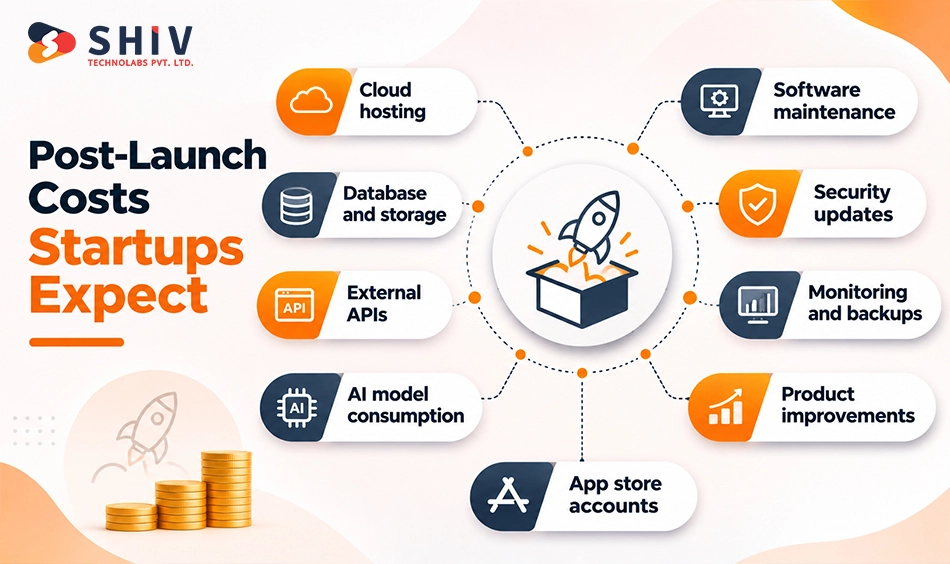
The initial development quotation represents only part of the total cost of owning an application. Once an MVP becomes available to customers, startups must cover infrastructure expenses, technical maintenance, third-party services, and product improvements.
Planning for the first three to six months after launch gives founders the financial flexibility to respond to customer feedback without interrupting product operations.
Hosting and Cloud Infrastructure
Applications require hosting, databases, storage, backups, and monitoring systems to remain accessible and reliable. Infrastructure expenses depend on application architecture, traffic volume, and data processing requirements. Startups should select a setup that supports current usage while allowing capacity increases as customer demand grows.
Third-Party API and AI Usage Fees
Payment gateways, messaging platforms, mapping services, authentication providers, and AI models may charge subscription or usage-based fees. These expenses can increase as more customers interact with the application. Founders should estimate service consumption under different usage scenarios when preparing operational budgets.
Application Maintenance and Security Updates
Software maintenance includes fixing reported defects, updating dependencies, monitoring application performance, and maintaining compatibility with operating system changes. Security updates also help address vulnerabilities discovered after the initial release. A defined maintenance agreement allows startups to manage these activities without repeatedly arranging technical support.
User Feedback and Product Improvements
Early customer feedback often reveals usability concerns or missing functionality that teams cannot fully anticipate during planning. Startups should reserve development resources for reviewing this feedback and making necessary improvements. Feature expansion should follow evidence of customer demand rather than assumptions about what users might need.
App Store Fees and Publishing Requirements
Mobile application publishing may involve developer account charges, platform approval requirements, and applicable transaction fees. According to current official pricing, the Apple Developer Program charges $99 annually, while Google Play developer registration requires a one-time payment of $25. Startups should check the latest platform policies before budgeting for a 2027 release.
Post-Launch MVP Cost Checklist
| Expense | Cost Structure |
| Cloud hosting | Monthly or usage-based |
| Database and storage | Usage-based |
| External APIs | Subscription or usage-based |
| AI model consumption | Usage-based |
| Software maintenance | Monthly or project-based |
| Security updates | Recurring or project-based |
| Monitoring and backups | Monthly or usage-based |
| Product improvements | Project-based |
| App store accounts | Annual or one-time |
How Can Startups Calculate Their MVP Development Budget?
Startups can calculate their MVP development budget by estimating the work required for discovery, design, coding, testing, infrastructure setup, and launch. The calculation should also include a contingency allowance for unexpected technical requirements and a separate reserve for post-launch operations.
A cost estimate based on individual development activities provides greater transparency than a single project quotation. It also helps founders understand how changes to the feature list affect the total investment.
MVP Development Cost Formula
Total MVP budget = Initial development cost + Additional expenses + Contingency + Post-launch reserve
The initial development cost should account for approved functionality, design requirements, and technical implementation. Additional expenses may include platform charges, external services, infrastructure configuration, and testing when they are not already covered in the development quotation.
Example of an MVP Development Budget
Consider a startup building a booking application with customer registration, appointment scheduling, payment integration, and a basic administrative dashboard. The application uses an established payment provider and does not require advanced AI functionality or industry-specific regulatory controls.
| Development Activity | Estimated Cost |
| Discovery, design, and development (600 hours × $40) | $24,000 |
| QA and launch testing | $4,000 |
| Infrastructure setup and integration expenses | $2,000 |
| Development subtotal | $30,000 |
| Contingency allowance (15%) | $4,500 |
| Initial MVP budget | $34,500 |
| Illustrative three-month post-launch reserve | $4,500 |
| Total planned investment | $39,000 |
This is a hypothetical project estimate, not a fixed quotation. Testing is budgeted separately from the 600 hours, and the contingency and post-launch allowances should be adjusted according to project risks and operational requirements.
How Can Startups Reduce MVP Development Costs Without Compromising Quality?
Reducing MVP development costs requires better planning rather than removing essential testing or security activities. Startups can manage their investment by limiting initial functionality, selecting suitable technologies, and reviewing development progress against measurable business objectives.
The following practices help founders maintain budget control throughout the development process.
- Validate demand before development: Conduct customer interviews, test prototypes, and collect early feedback before committing to custom development.
- Prioritize essential functionality: Include features that directly support the primary user journey and business validation goals.
- Launch on one platform first: Focus on the platform preferred by your target customers before expanding to additional devices.
- Reuse established technologies: Use reliable frameworks, existing components, and suitable third-party services instead of building every component from scratch.
- Approve requirements early: Review user flows and technical dependencies before developers begin implementation.
- Set milestone-based deliverables: Review completed functionality regularly to identify problems before they affect later development stages.
- Manage scope changes: Evaluate the cost, timeline, and business impact of each new feature request before approving it.
Founders can also follow a structured MVP software development process for startups to connect technical planning with product validation and release objectives.
Expert insight: The lowest development quotation does not always result in the lowest total project cost. Unclear requirements, repeated revisions, and poorly tested functionality can increase expenses beyond the initial savings.


What Should You Check Before Hiring an MVP Development Partner?
Choosing an MVP development company involves more than comparing hourly rates and delivery promises. Startups need a partner who understands product validation, can explain technical decisions, and provides clear visibility into development progress.
Reviewing relevant project experience and delivery practices helps founders identify whether a development team can support both the initial MVP and future product growth.
MVP Development Partner Evaluation Checklist
| Evaluation Area | What to Check |
| Startup experience | Relevant MVP projects and case studies |
| Technical expertise | Experience with required technologies |
| Cost transparency | Detailed estimates and exclusions |
| Delivery process | Milestones and progress reporting |
| Quality assurance | Testing methods and acceptance criteria |
| Code ownership | Source code and intellectual property rights |
| Data security | Access controls and development practices |
| Post-launch support | Maintenance and technical support terms |
Fixed-Price vs. Time-and-Materials Development
A fixed-price agreement is suitable when product requirements, deliverables, and acceptance criteria are clearly defined. A time-and-materials agreement offers greater flexibility when requirements may change based on customer research or technical discoveries.
Whichever model founders choose, the contract should explain how additional feature requests affect development costs and delivery timelines. Reviewing how an experienced startup app development company builds MVPs can also help founders establish realistic expectations before selecting a development partner.
How Shiv Technolabs Helps Startups Build MVP Applications
Shiv Technolabs supports startups in turning business ideas into functional applications through structured product planning, design, development, and testing. The development team helps founders identify essential features, evaluate technology choices, and establish project milestones based on business requirements and available budgets.
Through its mobile app development services, Shiv Technolabs can support startups at different stages of product development, from initial concept validation to custom application development and subsequent improvements.
MVP development support includes:
- Product discovery
- Feature prioritization
- UI/UX design
- Mobile development
- Web development
- Backend integrations
- AI integration
- Quality assurance
- Post-launch support
Final Verdict: Build the Smallest Product That Can Prove the Idea
MVP app development in 2027 requires a balance between development costs, technical requirements, product quality, and business validation. AI-assisted coding and cross-platform technologies may reduce certain development activities, but clear requirements, reliable functionality, and customer feedback remain essential.
Startups should prepare budgets that cover both initial development and post-launch operations. By prioritizing essential features, selecting appropriate technologies, and establishing measurable success criteria, founders can make informed investment decisions and build a product that provides genuine value to customers.
Frequently Asked Questions
1. How much does MVP app development cost in 2027?
A focused custom MVP may cost between $15,000 and $50,000 in 2027. Simple no-code validation projects may require a smaller investment, while complex applications involving advanced integrations, AI functionality, or regulatory requirements can exceed $100,000.
2. How long does it take to develop an MVP app?
A focused MVP typically requires an estimated 8–16 weeks for planning, design, development, testing, and launch preparation. Complex applications may take several months, depending on feature requirements, external integrations, security controls, and development team availability.
3. Can startups build an MVP in 8 weeks?
Yes, startups can build a focused MVP in eight weeks when requirements are clearly defined, functionality is limited, and suitable technologies are available. Complex integrations, frequent requirement changes, and external approval processes may extend the development timeline.
4. Has AI-assisted development reduced MVP development costs?
AI-assisted development can reduce effort associated with routine coding, documentation, prototyping, and test preparation. However, overall savings depend on project complexity and code quality. Human review, security testing, architecture planning, and product validation remain necessary.
5. What is the difference between an MVP and a prototype?
A prototype demonstrates how a proposed product may look or function, while an MVP provides working functionality that real customers can use. Startups use prototypes to test concepts and designs, whereas MVPs help validate customer demand and product value.
6. What factors affect MVP development costs?
The main factors affecting MVP development costs include feature complexity, application platforms, UI/UX requirements, backend architecture, API integrations, security, and developer rates. Changes to approved requirements and additional testing needs can also increase the final development budget.
7. Is no-code or custom development better for an MVP?
No-code development is suitable for testing simple concepts and workflows with limited budgets. Custom development is generally more suitable for applications requiring complex business logic, specialized integrations, greater architectural control, and long-term product expansion.
8. Is Flutter or React Native better for MVP development?
Both Flutter and React Native support cross-platform MVP development. Flutter uses Dart and its own rendering system, while React Native works with JavaScript or TypeScript and native platform components. The better choice depends on team expertise and application requirements.
9. How much should startups budget after launching an MVP?
Startups should prepare a separate operational budget covering at least the first three to six months after launch. The required amount depends on hosting, API consumption, maintenance, customer support, security updates, and product improvements based on user feedback.
10. What is the most expensive part of MVP development?
Core application and backend development often represent the largest portion of an MVP budget because they include business logic, databases, integrations, and application functionality. For regulated or technically complex products, security, compliance, and testing may also represent substantial expenses.
11. Can I build an MVP app for under $10,000?
Yes, building an MVP for under $10,000 may be possible using no-code platforms or simple custom applications with limited functionality. This budget is more suitable for early validation than applications requiring advanced integrations, complex security controls, or multiple platforms.