Table of Contents
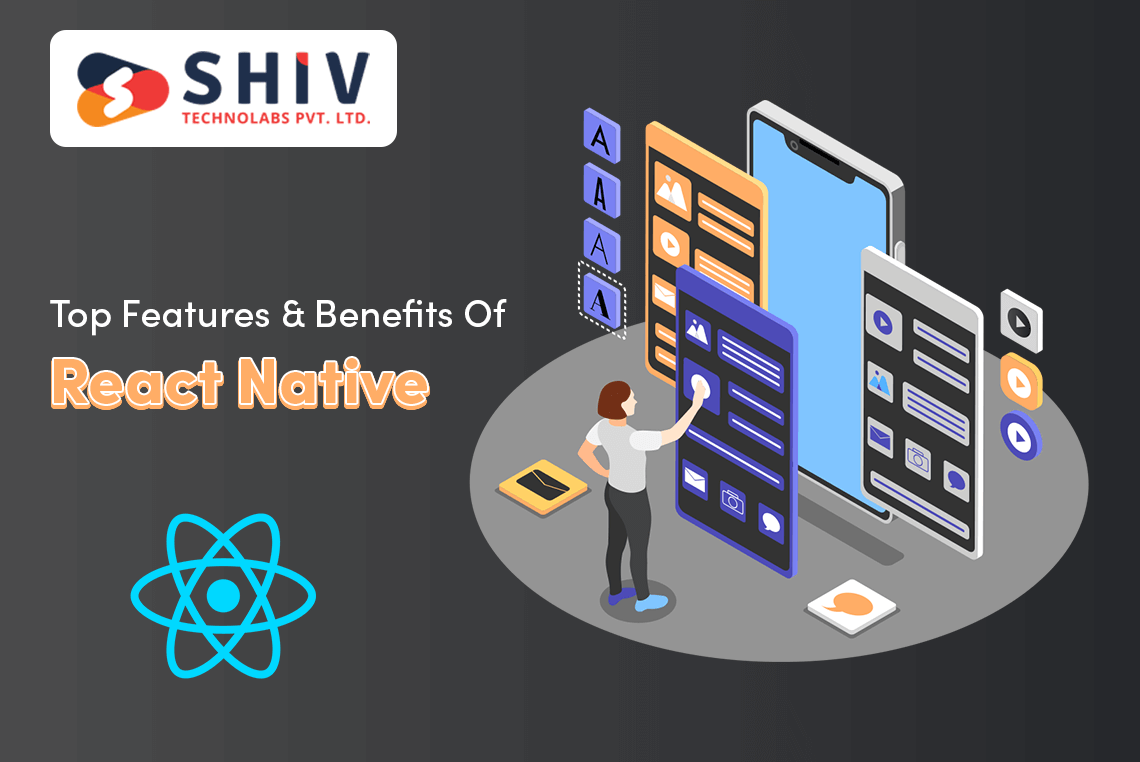
When developing a mobile app, the first question most businesses face is: do we build for iOS, Android, or both? React Native answers that with a single codebase that covers both.
The benefits of React Native for business go well beyond saving development hours. Businesses choose it to get one codebase that runs on both platforms, near-native performance, a faster path from idea to launch, and a smaller ongoing maintenance burden.
This guide covers every key feature and real business benefit, backed with practical context, so you can make a confident decision for your next mobile project.
Quick Answer:
The benefits of React Native start with cost. Businesses cut mobile development spend by 30–50% by building one codebase that runs on both iOS and Android. Teams deploy faster, reuse 60–80% of their code across platforms, get near-native performance without a native price tag, and push live updates to users without waiting for app store approvals.
What is React Native and Why Does It Matter for Your Business?
React Native was built and open-sourced by Meta in 2015. It lets mobile app developers write code in JavaScript using the same component model as React. The apps do not run in a browser. They compile to actual native UI components on each platform, which is what separates React Native from older hybrid frameworks.
For business owners, this matters for one simple reason -you stop paying for two separate development teams, two codebases, and two release cycles. For technical teams, it means one language, one architecture, and one set of tools for both iOS and Android.
1. How React Native Differs from Hybrid Apps
Frameworks like Ionic and Cordova are used for hybrid app development. They wrap a web page inside a browser shell on the device. React Native is not a hybrid framework. It maps JavaScript components directly to the device’s native UI elements, which means your users interact with real iOS and Android controls, not a web simulation.
The result is an app that looks, feels, and performs like a native app while being built with cross-platform JavaScript. For businesses, this removes the traditional trade-off between development cost and product quality.
2. Who Uses React Native in Production?
React Native powers apps for Meta, Microsoft, Shopify, Coinbase, Bloomberg, and Walmart, among many others. These are high-traffic, mission-critical products that have been running in production for years. The framework has been battle-tested at enterprise scale for over a decade. Choosing React Native means joining a proven, mainstream technology stack.
What Are The Key Benefits of React Native for Business?
The technical features above translate into measurable outcomes for your business. Here is how each benefit affects your timeline, budget, and product quality in practical terms.
1. Lower Development Cost
Building two separate native apps, one in Swift for iOS and one in Kotlin for Android, requires different teams for QA cycles and to release pipelines. React Native collapses all of this into one workflow.
Projects built with React Native typically cost 30% to 50% less than equivalent dual-native builds. The exact savings depend on feature scope and how much platform-specific code is required. For a startup or a mid-market business launching a new mobile product, that cost difference is often the deciding factor in whether a project is financially viable.
Cost estimate:
A basic React Native MVP typically ranges from $15,000 to $40,000. A mid-complexity app with custom integrations and a backend API generally runs $40,000 to $120,000. Comparable dual-native projects often cost 40–50% more.
2. Faster Time to Market
React Native development cycles are shorter than native development for most app categories. Features are built once, tested once, and shipped to both platforms simultaneously. Your iOS and Android users get the same release on the same day.
A React Native MVP can typically be built and deployed in 3 to 6 months, depending on complexity. A comparable dual-native build often takes 6 to 12 months. Getting to market faster matters in competitive categories where a few weeks can be the difference between capturing early users and losing them to a competitor.
Timeline estimate:
Simple MVP: 2 to 4 weeks. Mid-complexity app with integrations: 4 to 8 weeks. Enterprise-grade app with multiple third-party APIs: 6 to 12 weeks.
3. Code Reuse Across Web and Mobile
If your business already runs a React web application, React Native shares the same component patterns, state management approach, and JavaScript business logic. Your existing web team can contribute to the mobile codebase from day one. API calls, utility functions, data models, and validation logic can often be shared across web and mobile with minimal changes.
This has a compounding effect over time. Any investment in web app development with React gives return on mobile side as well. Updates to shared business logic flow to both platforms without duplicating work across two separate teams.
4. Near-native Performance For Most Business Apps
React Native apps do not run in a browser. The framework renders actual native UI components on iOS and Android. For most business app categories, including eCommerce, SaaS tools, marketplaces, on-demand services, healthcare, and fintech, React Native performance is indistinguishable from a fully native app.
Where React Native can fall short is in extremely graphics-intensive scenarios like high-end 3D games or real-time video processing. But for typical business and consumer apps, performance is not a limitation.
5. Larger Hiring Pool and Easier Team Scaling
Finding JavaScript developers is significantly easier than finding experienced Swift or Kotlin engineers. The global pool of JavaScript talent is larger, hiring cycles are shorter, and rates are more competitive. This also makes it easier to scale your team up for a major feature sprint or bring in specialist contractors for specific components.
For businesses without an in-house mobile team, this makes working with a React Native development partner more practical. You are not locked into a narrow specialisation that limits your options.
6. Consistent UI Across Both Platforms
React Native gives you control over visual design across iOS and Android from a single component library. Brand colors, typography, spacing, and interaction patterns are consistent on both platforms without building them separately. This reduces QA scope and prevents the common problem where an app looks or behaves differently depending on which device a user is holding.
7. Simplified Long-term Maintenance
One codebase means one place to fix bugs, one place to add features, and one place to manage dependencies. When a security vulnerability is discovered in a library, you patch it once. When a new API is added, you implement it once.
Over a 2 to 3 year product lifecycle, the maintenance cost savings of a single codebase are often larger than the initial development savings. This makes React Native particularly attractive for businesses that plan to invest in their mobile product over the long term.
What Are The Core Features of React Native?
The business benefits of React Native come directly from its technical features. Understanding what is under the hood helps you evaluate whether this framework is right for your project.
1. Single Codebase for iOS and Android
React Native lets your team write one set of components and one set of business logic that runs on both platforms. Cross-platform React Native projects typically share between 60% and 80% of their code. The remaining portion handles platform-specific UI details or direct device API access.
In practice, this means one sprint cycle, one QA process, and one release pipeline for two app stores. You do not run a separate iOS team and Android team in parallel.
2. JavaScript With React Component Model
React Native uses JavaScript, the most widely used programming language globally. Most web developers already know it. This significantly increases the available talent pool for your project. A front-end web developer can start contributing to a React Native project without a lengthy retraining period.
The component-based architecture also means your UI is modular. Individual screens, form elements, and navigation flows are built and tested independently, which makes iterating on features faster and safer.
3. Hot Reloading and Live Reloading
Hot reloading lets developers inject code changes into a running app without losing the current app state. If a developer is editing a checkout form, they do not restart the app and navigate back to that screen after every change. Changes appear in real-time.
Live reloading performs a full refresh when a file changes, useful for structural changes. Together, these two tools compress the feedback loop from minutes to seconds and make UI development noticeably faster across the entire project.
4. Direct Access to Native Device APIs
React Native gives developers access to device hardware and operating system features, including the camera, GPS, push notifications, Bluetooth, biometrics, and accelerometer. This happens through a bridge between JavaScript and native modules, with a newer architecture called JSI that removes the bridge bottleneck entirely.
For most app categories, your React Native app can do everything a fully native app can do without requiring your team to write separate Swift or Kotlin code for each platform.
5. Third-party Library Ecosystem
React Native has one of the largest open-source mobile ecosystems available. Community libraries cover navigation, state management, payment gateways, maps, analytics, biometric authentication, camera access, and much more. Most standard mobile app requirements already have a tested, maintained solution.
This reduces the amount of custom code your team writes from scratch, which directly reduces development time, bugs, and project risk.
6. Over-the-air Updates with CodePush
Using tools like Microsoft CodePush, React Native apps can push JavaScript and asset updates directly to users without going through the Apple App Store or Google Play Store review process. Bug fixes, content updates, and minor feature changes can reach users in minutes.
For businesses that operate in fast-moving environments, this is a significant operational advantage. You fix a critical bug on a Tuesday afternoon instead of waiting five business days for app store approval.
7. Active Maintenance by Meta and a Large Community
React Native is maintained by Meta and contributed to by thousands of developers globally. When Apple or Google releases a major OS update, the React Native community responds quickly. Security patches, performance improvements, and compatibility updates come regularly.
Choosing a framework with active, long-term maintenance reduces the risk of your app becoming unsupported as mobile platforms evolve. The new React Native architecture, featuring JSI and the Fabric renderer, has been steadily rolling out and brings significant performance improvements.
When is React Native The Right Choice for Your Project?
React Native is not the right answer for every mobile project, but it is the right answer for a wide majority of business use cases. Here is how to match your situation to the framework.
Startups building an MVP: You need to ship fast, stay on budget, and reach both iOS and Android users from day one. React Native lets you do all three. Most startup app categories, including marketplaces, on-demand app development services, SaaS tools, and consumer apps, are squarely within React Native’s performance range. An MVP on React Native typically costs 30 to 50% less than dual-native and ships in roughly half the time.
Mid-market businesses adding mobile to an existing web product: If you already have a React or JavaScript web application, React Native is the fastest path to mobile. Your existing team, codebase patterns, and architecture transfer directly. You can often reuse authentication logic, API clients, and data models with minimal rework.
Enterprises managing multiple internal or customer-facing apps: Large organisations with multiple apps benefit from a unified mobile development stack. One framework, one team, and shared component libraries reduce the total cost of ownership significantly. Cross-team knowledge transfer is also easier when everyone works in the same language and framework.
Businesses where iteration speed matters: If your product strategy requires frequent releases, A/B testing, and rapid responses to user feedback, React Native’s hot reloading and CodePush OTA updates give you a meaningful operational advantage. You ship, measure, and improve faster than a native team can.
Projects where dual native is cost-prohibitive: For businesses where the budget does not support two full native teams, React Native provides a professional, production-quality mobile app at a cost that makes the project viable. It is not a compromise solution. It is the right tool for the budget and the requirement.
React Native vs Flutter: Which Framework Fits Your Business?
Flutter is the primary alternative to React Native and a frequent point of comparison during technology decisions. Both are strong choices. Here is an honest, side-by-side comparison to help you decide.
| Factor | React Native | Flutter |
|---|---|---|
| Language | JavaScript | Dart |
| Learning curve | Low – most web devs already know JS | Medium – Dart is not widely known |
| Performance | Near-native for most business apps | Near-native, slight edge on animations |
| Talent pool | Very large (all JS developers) | Smaller but growing steadily |
| Web + mobile code sharing | Strong – React web logic transfers | Limited – Dart is not used on the web |
| OTA updates | Yes, via CodePush | Not officially supported |
| Ecosystem maturity | Large, 10+ years of production use | Younger, robust, and growing |
| Community backing | Meta – very large open source community | Google – strong and growing |
| Best for | Teams with JS experience, web+mobile sharing | Custom UI, animation-heavy apps |
React Native has the edge if your team already works in JavaScript, if you need to share logic with a React web application, or if OTA update capability matters to your operations. Flutter has an edge for apps that require highly custom, animation-heavy UI that needs to look identical across both platforms.
If you are not sure which is right for your project, Shiv Technolabs can help you evaluate both based on your specific requirements, team, and budget.
For more info: Flutter vs. React Native
How Shiv Technolabs Builds React Native Apps for Growing Businesses?
Shiv Technolabs is a React Native development company with clients across the US, UK, Australia, and Canada. Our team has delivered cross-platform mobile apps for eCommerce, healthcare, on-demand services, fintech, SaaS, and enterprise categories.
We work with startups launching their first app, mid-market businesses replacing legacy native builds, and enterprises managing multiple apps across teams. Our process covers discovery, architecture, UI/UX design, development, QA testing, app store submission, and post-launch support. We are ISO certified and have over 500+ projects delivered across 30+ countries.
Our React Native services include:
- Custom React Native App Development
- React Native MVP Development
- React Native Migration
- Dedicated React Native Developer
- React Native Support and Maintenance
Frequently Asked Questions About React Native
What Are the Main Benefits of React Native?
The main benefits of React Native include code sharing between iOS and Android, lower development cost compared to building two native apps, faster time to market, near-native performance, and a large talent pool of JavaScript developers. Businesses also benefit from over-the-air update capability through CodePush, which lets teams push fixes without waiting for app store reviews.
Is React Native Good for Business Apps?
Yes. React Native is a strong fit for most business app categories, including e-commerce, SaaS, marketplaces, on-demand services, fintech, and internal enterprise tools. It delivers native-quality performance at a lower cost and shorter timeline than dual native development. Companies like Shopify, Coinbase, Bloomberg, and Walmart use it in production at scale.
How Much Does a React Native App Cost to Build?
A basic React Native MVP typically ranges from $15,000 to $40,000. A mid-complexity app with custom integrations, backend development, and advanced UI generally ranges from $40,000 to $120,000. React Native typically costs 30 to 50% less than building separate native iOS and Android apps, because one team builds and maintains one codebase for both platforms.
How Long Does it Take to Build a React Native App?
A simple React Native MVP typically takes 2 to 4 months. A mid-complexity app with third-party integrations and a backend API generally takes 4 to 8 months. Timeline depends on team size, feature scope, and how much logic can be shared from existing web applications. React Native is consistently faster to deliver than comparable dual-native builds.
What is the Difference Between React Native and Flutter?
React Native uses JavaScript and renders native platform UI components. Flutter uses Dart and renders its own UI layer. React Native suits teams with JavaScript experience and projects sharing logic with a web application. Flutter has a slight advantage for visually complex, animation-heavy apps that require a fully custom look on both platforms.
Can React Native Apps be Published to Both the App Store and Google Play?
Yes. React Native apps compile to native code for both iOS and Android and can be submitted to both the Apple App Store and Google Play Store following their standard guidelines. One development team manages the build and submission process for both platforms simultaneously.
Is React Native Still a Good Choice in 2026?
Yes. React Native remains one of the two dominant cross-platform mobile frameworks. It is actively maintained by Meta, receives regular updates, including the new JSI and Fabric architecture rollout, and has a large global community. It is a sound, long-term technology choice for most mobile app categories.
Can a React Native App Access Native Device Features Like the Camera or GPS?
Yes. React Native provides access to native device APIs, including the camera, GPS, push notifications, biometrics, Bluetooth, and accelerometer. Most hardware features are supported either through the core framework or through well-maintained community libraries. Platform-specific native modules can also be written where needed.