Table of Contents
When businesses plan to build a mobile app, one of the first decisions they face is which framework to build on. Building separate native apps for iOS and Android means two codebases, two development teams, two maintenance cycles, and a budget that doubles before a single user has opened the app. That trade-off is exactly why React Native for app development has become the go-to choice for startups and established businesses alike across the US, UK, Canada, and Australia.
React Native solves the platform divide without asking you to compromise on quality. A single codebase powers both iOS and Android apps, development timelines shrink considerably, and the end product feels and performs like a fully native app because it renders real native components, not web views dressed up to look like one.
If you are evaluating frameworks and want a clear, practical answer about whether React Native is the right fit for your project, this guide covers what actually matters, from real performance benchmarks and business benefits to cost ranges and the companies already running React Native in production at scale.
React Native lets teams build one app that runs on both iOS and Android using JavaScript. It cuts development time by up to 40%, reduces cost significantly, and delivers near-native performance. Meta, Microsoft, and Shopify all use it in production. For startups and businesses that want speed without sacrificing quality, React Native is a proven choice.
What Makes React Native Different from Other Frameworks?
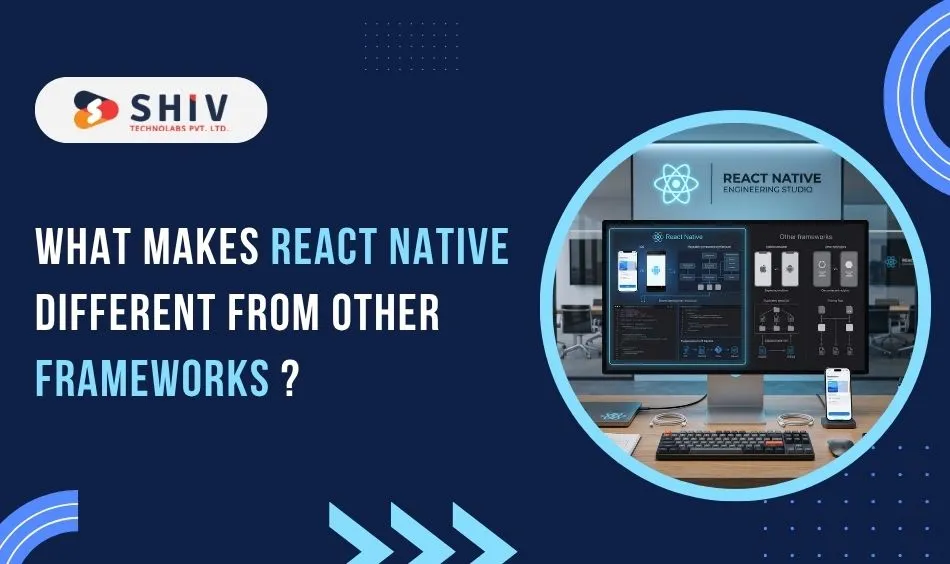
Most cross-platform frameworks compile to a single shared UI layer. React Native takes a different approach. It renders actual native components, not web views wrapped in a shell. That means your app looks and feels like a native app because it uses the same building blocks as one.
It uses real native components
React Native maps JavaScript components directly to native iOS and Android UI elements. A button in React Native is not a styled web element. It is a real native button. This gives users the performance and feel they expect from a platform-built app.
The gap between React Native and fully native apps has narrowed significantly. With the New Architecture (JSI + Fabric), React Native handles complex animations, gestures, and real-time data with the same smoothness as Swift or Kotlin-built apps.
It works with your existing JavaScript team
React Native uses JavaScript and React, the same skills your web developers already have. You do not need a separate iOS team and a separate Android team. One team builds both apps in parallel, which cuts your hiring cost and project timeline.
For most businesses, this is the single biggest advantage. Mobile talent is expensive. React Native makes one developer productive across both platforms.
What Are the Real Business Benefits of React Native?
The case for React Native is not just technical. It is financial and operational. Here are the benefits that directly affect your business.
Shared codebase cuts development cost
With React Native, roughly 70% to 90% of your code runs on both platforms. You write the logic once. You build the UI once. Only platform-specific elements need separate handling.
For a mid-sized app, this can cut development costs by 30% to 50% compared to building two separate native apps. For startups working with tight budgets, that difference matters a great deal.
Faster time to market
React Native’s Hot Reload and Fast Refresh features let developers see changes instantly without rebuilding the app. This speeds up iteration and testing significantly.
A standard React Native app for both platforms typically takes 3 to 6 months to build, depending on feature complexity. A comparable dual-native build often takes 6 to 12 months with separate teams working in parallel.
One codebase is easier to maintain
Bug fixes, feature updates, and design changes apply to both platforms in one go. You do not patch Android, then patch iOS separately. One update covers both, which reduces your ongoing maintenance cost and team workload.
For growing products, this matters more over time. Keeping two separate codebases in sync is expensive and error-prone. React Native removes that problem entirely.
Large open-source ecosystem
React Native has a mature library ecosystem. Need camera access, maps, push notifications, payment gateways, or analytics? There are well-maintained libraries for all of these.
You also get community support from Meta, Microsoft, Shopify, and thousands of contributors. This means issues get resolved faster, and the framework keeps improving.
Get more details: Benefits of React Native
Popular Apps That Use React Native
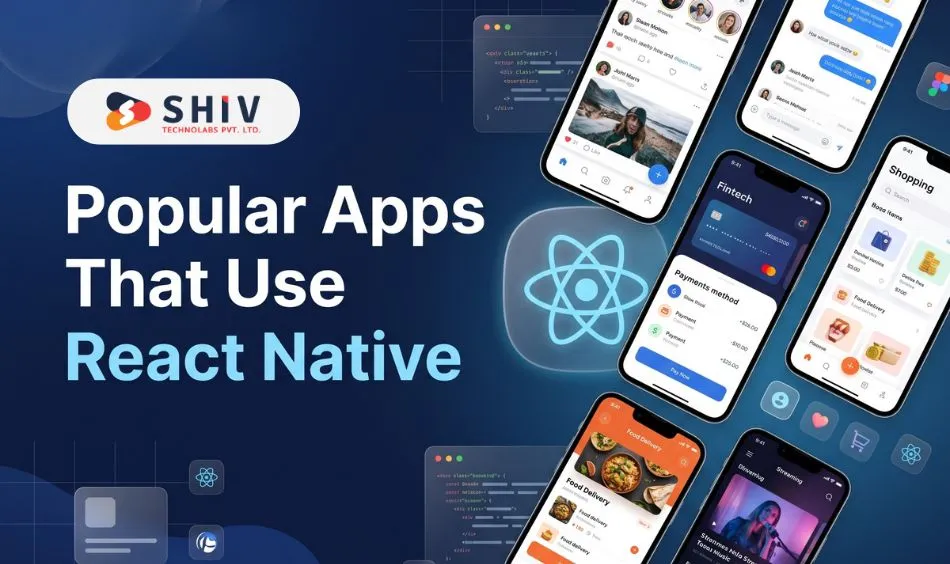
React Native is not a framework being tested by small startups. Some of the most-used apps in the world run on it. That matters because it proves React Native can handle scale, performance, and complexity.
- Meta (Facebook and Instagram): Meta built React Native and runs core parts of its flagship apps on it. Facebook and Instagram use React Native for key screens and flows, handling hundreds of millions of daily users.
- Microsoft: Microsoft uses React Native for parts of Xbox Game Pass, Microsoft Teams, and other products. They actively contribute to the framework and support its development.
- Shopify: Shopify rebuilt its mobile app entirely in React Native. Their engineering team has published detailed reports on how it improved their development speed and app quality.
- Walmart: Walmart rebuilt its iOS and Android apps using React Native. They reported dramatically improved code sharing across platforms and faster feature shipping.
- Bloomberg: Bloomberg’s mobile app delivers real-time financial data, live market feeds, and personalized news. They chose React Native to ship consistent experiences across iOS and Android without maintaining separate native codebases for a data-heavy, performance-critical product.
- Discord: Discord uses React Native for significant parts of its mobile app, handling real-time messaging, voice channels, and server navigation for hundreds of millions of users. Their engineering team has publicly documented how React Native helped them move faster across both platforms.
- Coinbase: Coinbase built its consumer mobile app on React Native, managing complex financial data, live crypto prices, and secure transaction flows. The app runs smoothly for millions of users across both platforms with no meaningful performance difference from a native build.
- Pinterest: Pinterest migrated parts of its mobile app to React Native to speed up feature development and reduce the effort of maintaining separate iOS and Android teams. The visual-heavy, scroll-intensive nature of the app made it a strong proof point for React Native’s rendering capabilities.
These are production apps with millions of users and zero tolerance for performance issues. If React Native can power them, it can power your app.
React Native vs Native Development: A Practical Performance Comparison
Performance is the most common concern when businesses evaluate React Native. The honest answer is that for the majority of commercial apps, the difference is negligible in day-to-day use. Here is a clear breakdown of where each approach stands.
| Factor | React Native | Native (Swift / Kotlin) |
|---|---|---|
| Codebase | Single shared codebase for iOS and Android | Separate codebase per platform |
| Language | JavaScript / TypeScript | Swift (iOS), Kotlin (Android) |
| UI Rendering | Real native components via JSI + Fabric | Direct native components |
| Performance | Near-native for most app types | Full native performance ceiling |
| Development Speed | 30 to 50% faster across both platforms | Slower due to parallel builds |
| Team Requirement | One cross-platform team | Separate iOS and Android teams |
| Cost | Significantly lower | Higher due to dual team and dual codebase |
| Maintenance | Single codebase updates both platforms | Separate updates per platform |
| Best For | Business apps, eCommerce, on-demand, social | 3D games, AR/VR, hardware-heavy apps |
| Community & Ecosystem | Large, backed by Meta and Microsoft | Platform-native SDKs and tooling |
What Types of Apps Are Built Well With React Native?
React Native fits a wide range of app categories. Here are the types of apps where it consistently delivers strong results.
- eCommerce and retail apps: Product listings, cart flows, payments, and order tracking all work smoothly in React Native. The framework handles complex UI layouts and API-driven content with no performance drop.
- On-demand service apps: Delivery apps, ride-sharing apps, and booking platforms need real-time location data, notifications, and fast UI updates. React Native handles all of these with well-supported native modules.
- Healthcare and fitness apps: React Native works well for patient portals, appointment schedulers, fitness trackers, and wellness tools. It supports HealthKit and Google Fit integrations for biometric data.
- Social and community apps: Chat, feeds, media uploads, and real-time notifications are standard React Native territory. Libraries like React Native Firebase make these features fast to build and reliable in production.
- Business and productivity tools: Internal tools, dashboards, CRM apps, and field service tools all benefit from React Native’s cross-platform reach. Companies can ship one app that works for both iOS and Android users in their workforce.
What Does It Cost to Build a React Native App?
Cost depends on your app’s complexity, feature set, and the development team you work with. The table below reflects current global development standards to help you plan your budget realistically.
| App Type | Features Included | Estimated Cost | Timeline |
|---|---|---|---|
| Simple App | 3 to 5 screens, authentication, basic UI, API connection, push notifications | $8,000 to $20,000 | 2 to 3 months |
| Mid-Complexity App | 10 to 20 screens, payment integration, third-party APIs, user roles, admin panel, real-time features | $20,000 to $60,000 | 3 to 6 months |
| Complex / Enterprise App | 20+ screens, custom modules, AI/ML features, heavy integrations, complex data pipelines | $60,000 to $150,000+ | 6 to 12 months |
Working with an experienced React Native development company in India typically reduces these costs by 40 to 60 percent compared to US or UK-based teams, with no compromise on delivery quality or output standards.
Why Do Global Clients Choose Shiv Technolabs for React Native Development?
Shiv Technolabs is a React Native development company based in Ahmedabad, India, serving clients across the US, UK, Canada, and Australia. Our team has built production-grade apps for eCommerce, healthcare, fitness, on-demand, and enterprise use cases.
Dedicated React Native developers available for hire
You can hire dedicated developers on a full-time or part-time basis. Your developer works in your time zone, attends your standups, and fits directly into your team. No middlemen, no handoffs.
End-to-end delivery from UI design to App Store launch
We handle UI/UX design, React Native development, QA testing, and deployment. You get a complete team, not just coders. We manage the project so you can focus on your product.
Transparent pricing with no surprise costs
We give you a detailed estimate before any work starts. Our pricing is milestone-based, so you pay for what is delivered. No surprise invoices midway through the project.
Conclusion
React Native is not a shortcut. It is a strategic choice. It lets you ship quality apps for both iOS and Android without doubling your budget or timeline.
The framework has proven itself at scale. Major companies use it. The ecosystem is mature. The performance is strong. And the cost savings are real.
If you are building a mobile app and want a reliable, cost-effective way to reach both platforms, React Native is one of the best choices available right now.
FAQ
Why should I choose React Native over Flutter?
React Native uses JavaScript, which most web development teams already know. This makes hiring easier and allows faster project starts. Flutter uses Dart, which requires a separate learning curve. Both are capable frameworks, but React Native fits better for teams with existing JS skills.
Is React Native good for large-scale apps?
Yes. Meta, Shopify, and Microsoft use React Native in their production apps at a massive scale. The New Architecture, released in recent versions, handles complex rendering and data flows reliably.
How much does it cost to build a React Native app?
A basic app costs between $8,000 and $20,000. A mid-complexity app runs from $20,000 to $60,000. Enterprise-grade apps start at $60,000 and scale upward based on features and integrations.
Can React Native apps be published on both the App Store and Google Play?
Yes. React Native produces separate builds for iOS and Android from a single codebase. Both builds can be submitted to their respective stores independently.
How long does it take to build a React Native app?
A simple app takes 2 to 3 months. A mid-complexity app takes 3 to 6 months. Complex or enterprise apps take 6 to 12 months, depending on scope.
Does React Native support third-party integrations?
Yes. React Native has a large library ecosystem covering payments (Stripe, PayPal), maps (Google Maps), analytics, push notifications, and the most common third-party services.
Can I hire a dedicated React Native developer from Shiv Technolabs?
Yes. Shiv Technolabs offers dedicated React Native developers for hire on a full-time or part-time basis. Developers work in your time zone and integrate directly into your team.
Is React Native still relevant in 2026?
Yes. React Native remains one of the top two cross-platform frameworks alongside Flutter. Active backing from Meta, Shopify, and Microsoft ensures it keeps improving. The New Architecture has resolved most older performance concerns.